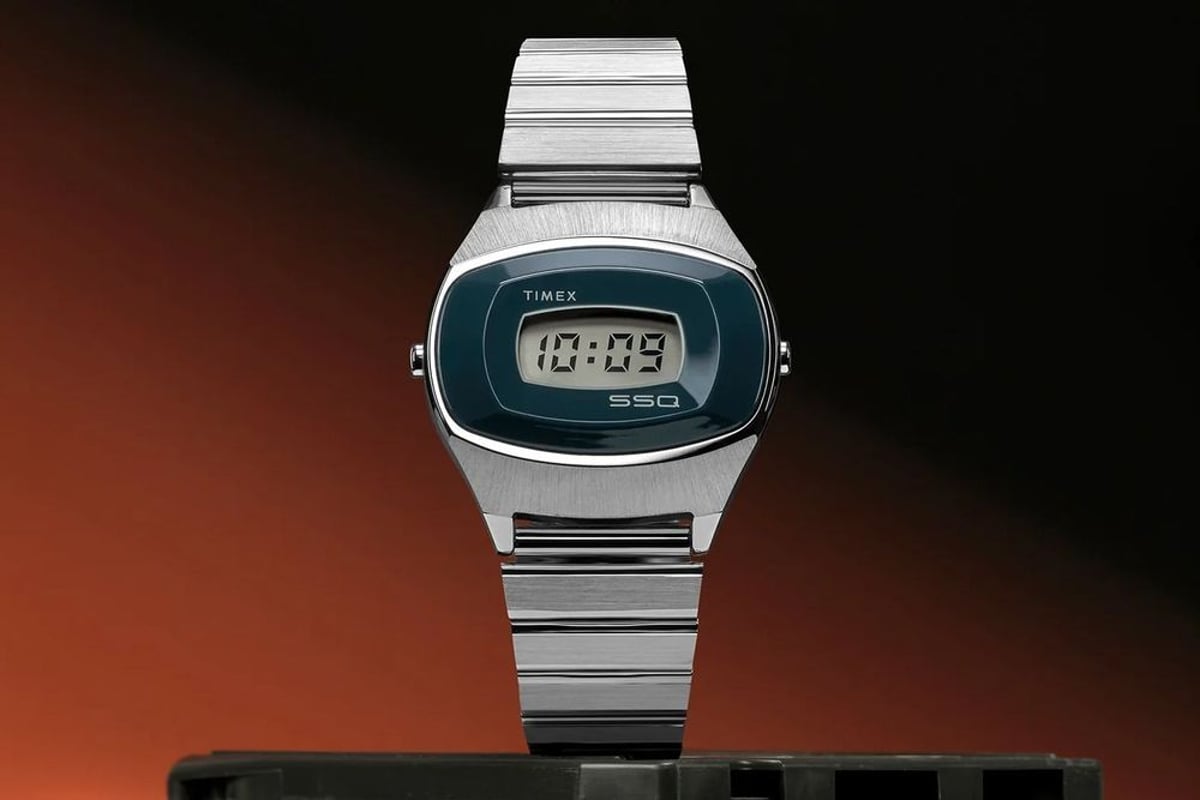
Timex is bringing back the watch that changed everything. The company just announced it's reissuing its groundbreaking SSQ Digital from 1975 - the timepiece that helped prove LCD displays could work in wearables. While smartwatches dominate today's market, this retro revival taps into nostalgia for simpler times when showing the time was enough.
Timex just pulled off something most tech companies only dream about - successfully bringing back a 50-year-old product that still feels relevant today. The watchmaker's announcement of the SSQ Digital Reissue taps into a fascinating moment in wearable history, when the simple act of displaying time continuously was revolutionary.
Back in 1975, digital watches were still figuring out their identity. Hamilton's Pulsar Time Computer had launched three years earlier as the first commercial digital watch, but its LED screen was a battery vampire that only lit up when you pressed a button. Timex's SSQ changed the game by introducing an always-on LCD display that sipped power instead of guzzling it.
The timing for this revival couldn't be more interesting. While Apple and Samsung battle over smartwatch features - heart rate monitoring, GPS tracking, cellular connectivity - there's a growing counter-movement toward digital minimalism. The SSQ Digital Reissue embraces this philosophy completely, offering nothing more than the time in a chunky, retro package.
Timex hasn't created an exact replica. The reissue features modern electronics wrapped in a recycled stainless-steel case with a brushed bracelet and navy blue acrylic bezel. The original's single crown has been replaced with pusher buttons on either side, making time-setting slightly easier. It's water-resistant to 50 meters, though Timex warns that pressing those buttons underwater might compromise the seal.
The market response has been telling. The watch launched at $159 on Timex's US site but quickly sold out, while Japanese customers can preorder starting October 17 for 28,600 yen (about $187). That price gap reflects different market strategies, but both suggest solid demand for nostalgic tech.
This isn't just about nostalgia - it's about function following a very specific form. The original SSQ represented a crucial pivot point when digital displays became practical for everyday wear. Before LCD technology matured, digital watches were either too power-hungry or too dim to read in daylight. The SSQ solved both problems with its always-visible, low-power display.
What makes this reissue particularly interesting is how it contrasts with today's wearable landscape. Modern smartwatches pack incredible computing power but often struggle with battery life - the same challenge that plagued those early LED watches. The SSQ Digital Reissue sidesteps this entirely by doing one thing well rather than many things adequately.
The broader trend toward retro tech revivals has been building momentum. From Nokia's feature phone comebacks to vinyl record sales, consumers are increasingly drawn to products that prioritize simplicity over connectivity. The SSQ fits perfectly into this movement, offering digital functionality without digital overwhelm.
For collectors and tech history enthusiasts, the reissue represents more than just a watch - it's a wearable piece of the LCD revolution that would eventually power everything from calculators to smartphones. The original SSQ helped prove that liquid crystal displays could be both practical and commercially viable, paving the way for the digital world we inhabit today.
The SSQ Digital Reissue succeeds because it understands something many modern tech products miss - sometimes less really is more. In an era of notification-heavy smartwatches, Timex is betting that consumers will pay for the privilege of digital simplicity. The quick sellout suggests they might be right, and that there's real appetite for technology that knows its limits and embraces them confidently.