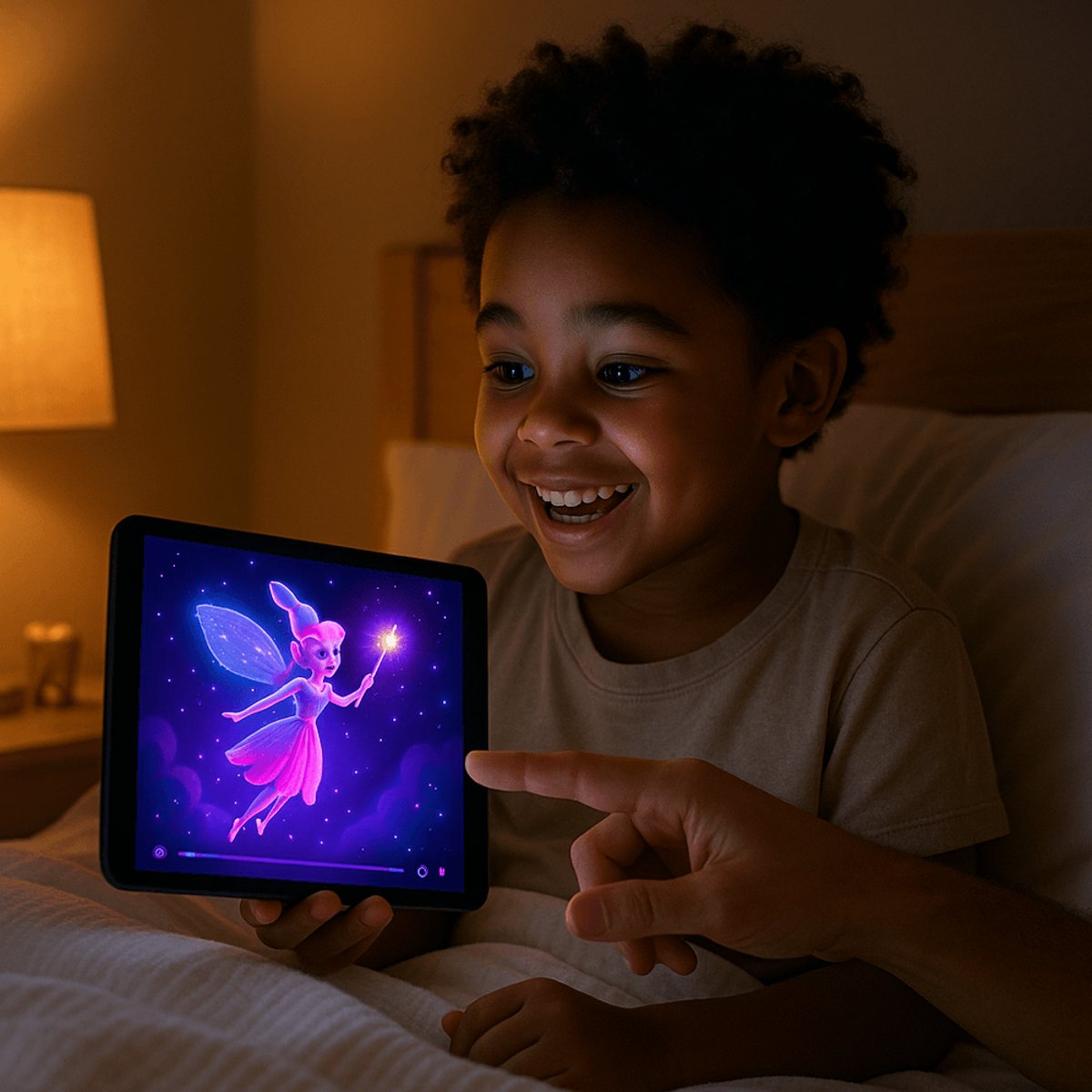
There's a new character kids can track from their bedroom. Oliver Finel spotted a hole in the market after creating a personalized Tooth Fairy video for his nephew - while Santa trackers proliferate, nothing existed for the Tooth Fairy. Now his free Tooth Fairy Tracker is capitalizing on the fact that Generation Alpha expects interactive experiences as a birthright, launching premium features in 2026.
Oliver Finel had a realization while making a personalized Tooth Fairy video for his nephew. Parents obsess over Santa trackers during the holidays, he thought. Kids get countdown apps and real-time updates showing jolly old Saint Nick making his way around the globe. But when it comes to one of childhood's other magical milestones - losing a tooth - nothing quite matches that level of interactive magic. That gap became the foundation for Tooth Fairy Tracker, a free experience that's already resonating with families prepping their kids for bedtime.
The premise is straightforward but designed to build genuine anticipation. When a child loses a tooth, parents visit the website and enter their email. That kicks off a series of video updates throughout the evening showing Kiki the Tooth Fairy preparing for her mission. Kids see her getting ready at headquarters, departing with flight speed information, sending vlog-style check-ins, and dropping cute selfies along the way. The entire experience lives on the site with countdowns between videos, turning a single event into an all-evening countdown to sleep. The final morning update congratulates the child and cues them to check for a special gift under their pillow.
What makes this work is understanding how Generation Alpha actually engages with content. These kids don't just watch TV passively - they expect to interact, to feel seen, to get real-time updates. Finel's tracker taps directly into that expectation while grounding it in a timeless childhood ritual. The evening videos supposedly help motivate kids to brush their teeth and actually get to bed on time, which, frankly, parents will pay good money to solve.
Launched in October 2025, the site's already gearing up for a redesign hitting soon. Finel says the core experience stays the same but the visual presentation becomes "more playful and immersive for kids." That's clearly just the foundation though. His 2026 roadmap reveals much bigger ambitions. The premium version, priced at $20 for six Kiki visits, will include serious personalization. Kiki will say each kid's name, reference their hobbies, include their actual photo in every video, and hand out custom certificates for each lost tooth. There's also an oral-care education angle coming, with Kiki teaching healthy brushing habits through video.
Beyond the U.S. market, Finel's plotting international versions for Latin America and Western Europe. The reason's simple: the Tooth Fairy might own American childhoods, but other cultures have their own versions. France, Spain, and Russia have the Tooth Mouse. Making Kiki culturally relevant across regions opens entirely new markets.
The most intriguing partnership strategy involves pediatric dentists. Imagine a dentist's office offering kids a pre-appointment Kiki video to ease anxiety about the visit, then a post-visit reward video to make the experience feel special rather than scary. That's the kind of value-add that could turn a single experience into a recurring relationship with families. Dental offices get better patient retention. Kids get to meet Kiki again. Finel builds a distribution channel.
The long-term vision gets even more ambitious - branded toothbrushes and toothpaste where each product comes with a personalized video of Kiki choosing bristles, picking colors, and assembling it specifically for that child. It's the classic playbook of taking a single viral moment and extending it into a product ecosystem, but executed with genuine attention to what actually matters to kids.
What's also notable is that the free version requires no app, no account creation, and no login friction. Parents just visit a URL, enter an email, and the experience kicks off. That removes every barrier to trying it, which explains why it's gained traction since launch without any obvious marketing push beyond word-of-mouth. It's simple enough to share, magical enough to matter, and free enough that the activation energy is basically zero.
What Finel's built taps into something parents and kids both want - a sense of occasion around moments that matter, delivered through the mediums kids actually engage with. The $20 subscription model feels inevitable given the personalization roadmap, and the international expansion makes sense once you realize the Tooth Fairy concept transcends U.S. borders. What started as a single personalized video for one nephew could easily become a multi-country, multi-product brand if Finel executes on even half this roadmap. The real test comes in 2026 when premium features launch and dentist partnerships roll out - that's when we'll know if this is a novelty or the start of something bigger in the kids' tech space.