Audio streaming service TuneIn just became your dashboard's emergency broadcast system. The company partnered with the Federal Emergency Management Agency to push real-time disaster warnings directly to drivers through car infotainment systems, marking a significant expansion of how Americans receive critical safety information on the road.
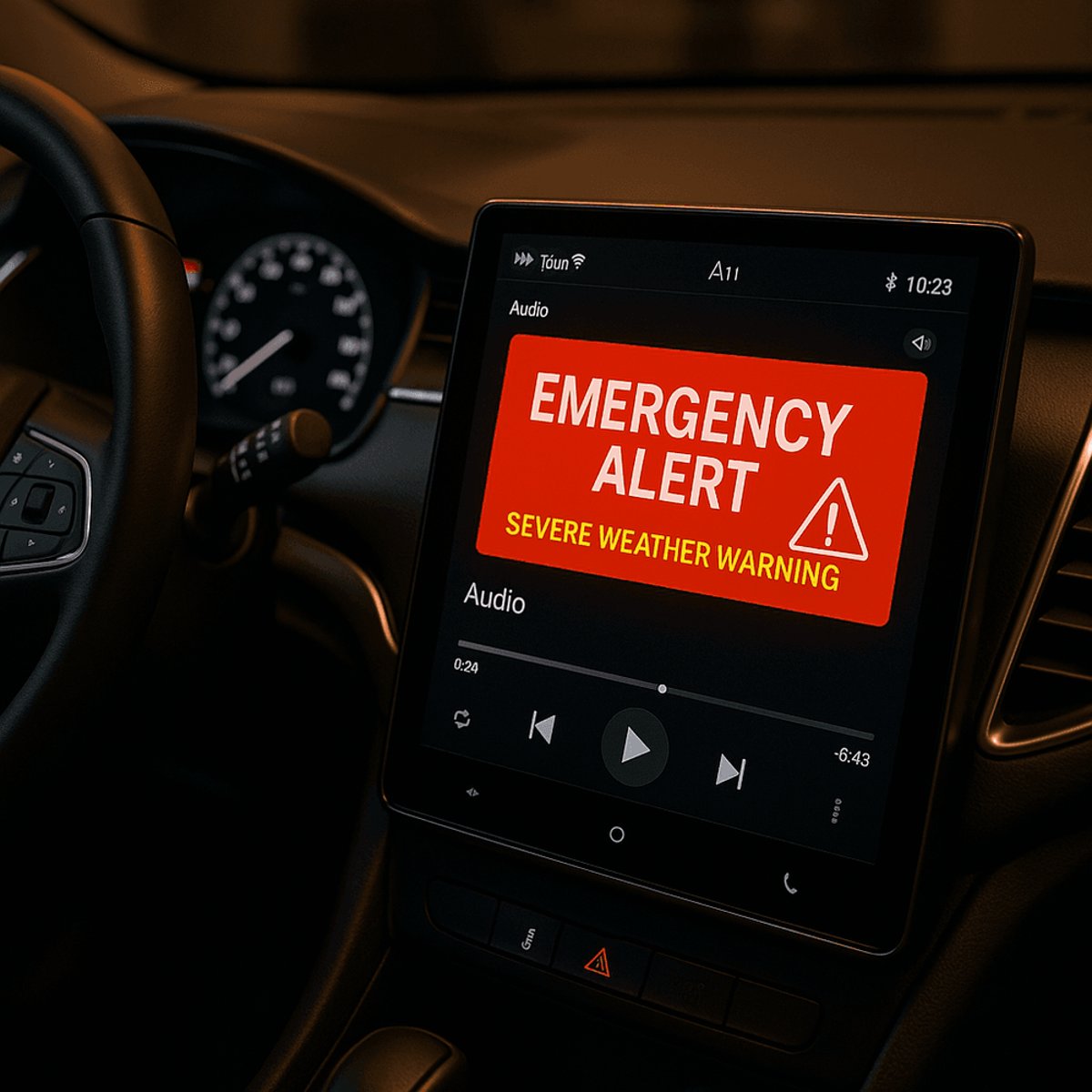
TuneIn just plugged directly into America's emergency warning infrastructure. The audio streaming service announced Thursday it's now compatible with FEMA's Integrated Public Alert and Warning System (IPAWS), meaning drivers tuned into their favorite stations will get real-time alerts about everything from tornadoes to wildfires without touching their phones.
The integration represents a smart play for both sides. TuneIn gets deeper automotive partnerships while FEMA gains access to millions of drivers who might miss traditional emergency broadcasts. The system delivers verified alerts from local, state, tribal, and federal agencies directly through car infotainment systems, creating a new layer of public safety infrastructure.
What makes this interesting is the severity-based prioritization. Minor threats trigger brief notifications that don't interrupt your podcast, but serious emergencies will cut through whatever you're listening to with both audio and visual alerts. It's a thoughtful approach that balances safety with user experience - something emergency systems often struggle with.
The timing raises eyebrows though. This partnership launches during what Reuters calls a period of "uncertainty" about FEMA's direction under the Trump administration. According to GAO reports, nearly 2,500 employees left FEMA between January and June this year, including several senior executives.
Homeland Security Secretary Kristi Noem pushed back against concerns in August, telling reporters that FEMA "has become more responsive since implementing organizational changes." She claims the agency now gets "personnel on the ground and approving grants nearly twice as quickly as previous administrations did" after cutting what she calls "bureaucratic bloat."
But here's the real kicker - this system will reach drivers across a surprisingly wide range of vehicles. TuneIn already integrates with infotainment systems from Tesla, Rivian, Lucid, Mercedes, Volvo, Jaguar, and Land Rover, among others. That's potentially millions of drivers who'll now get emergency alerts through their car's dashboard.
The automotive angle matters more than you might think. Traditional emergency alert systems rely heavily on cell phone towers and local broadcast infrastructure that can fail during major disasters. Car-based systems create redundancy, especially for people who might be traveling through unfamiliar areas where they don't know local radio stations.
For TuneIn, this partnership strengthens its position in the increasingly competitive automotive audio space. While Spotify and Apple Music dominate personal listening, TuneIn's live radio focus gives it unique advantages in cars where drivers often want local content and news.
The integration also highlights how emergency management is evolving beyond traditional broadcast systems. IPAWS itself represents a shift toward multi-channel alert distribution, and partnerships like this one show how government agencies are adapting to reach people where they actually spend their time - increasingly, that's in cars.
What remains to be seen is how well this works in practice. Emergency alert systems have a mixed track record with false alarms and technical glitches. The challenge will be ensuring accurate, timely information reaches drivers without creating alert fatigue or dangerous distractions while driving.
This partnership signals a broader evolution in how emergency information reaches Americans. By embedding safety alerts directly into the driving experience, TuneIn and FEMA are creating infrastructure that could prove crucial during the next major disaster. The real test will be whether the system can deliver accurate, actionable information without overwhelming drivers or creating new safety risks. As weather events become more frequent and severe, innovations like this could become essential public safety tools - assuming the underlying agencies have the resources to support them.