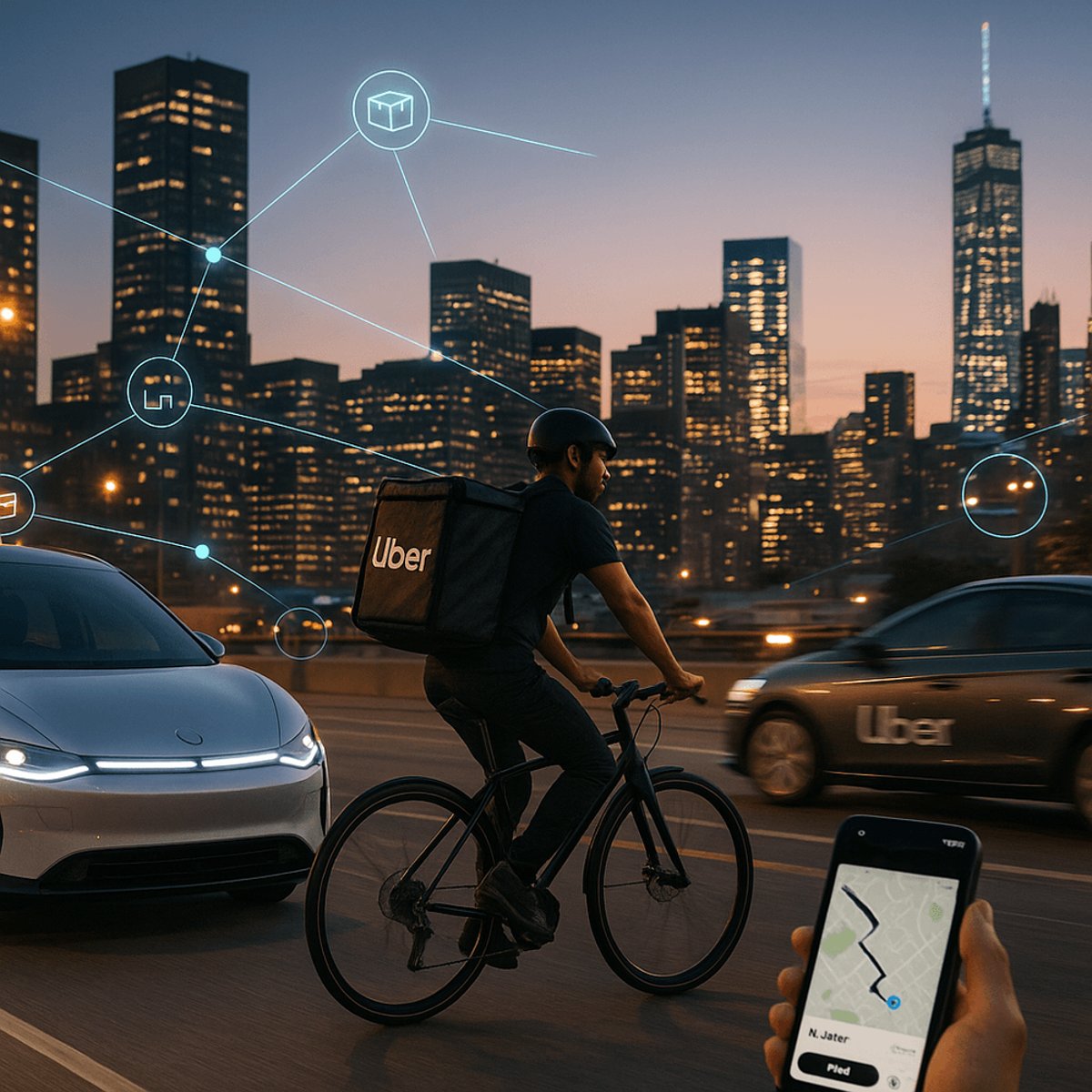
Uber just proved its dual-platform strategy is working. The company posted $14.37 billion in Q4 revenue, beating Wall Street's $14.32 billion estimate, powered by a stunning 30% surge in its delivery business. While shares dipped premarket, the results reveal a company successfully pivoting from ride-hailing dependence to a diversified mobility and logistics powerhouse. With autonomous vehicles now rolling out across multiple cities and AI integrations with ChatGPT expanding discovery, Uber is positioning itself at the intersection of consumer tech's biggest trends.
Uber delivered a beat-and-raise quarter that underscores a fundamental shift in how the company makes money. The ride-hailing pioneer reported $14.37 billion in revenue for Q4 2025, surpassing analyst expectations of $14.32 billion according to LSEG consensus estimates. But the real story is what's happening under the hood - delivery is now outpacing rides by a massive margin.
The company's delivery segment, which evolved from restaurant orders to encompass groceries and retail, exploded 30% year-over-year to $4.9 billion. That crushed StreetAccount's $4.72 billion estimate. Meanwhile, mobility - the ride-hailing business that built Uber - generated $8.2 billion, up a respectable 19% but slightly below the $8.3 billion analysts projected.
CEO Dara Khosrowshahi highlighted that delivery growth peaked in the Europe, Middle East, and Africa region during 2025, according to prepared remarks. Strategic partnerships are driving that expansion. Deals with OpenTable, Shopify, and major retailers like Loblaws in Canada, Biedronka in Poland, Seiyu in Japan, and Coles in Australia are transforming Uber Eats from a food delivery app into a full-spectrum logistics network.
Gross bookings hit $54.1 billion for the quarter, beating the $53.1 billion estimate. Looking ahead, Uber expects first-quarter gross bookings to climb at least 17% year-over-year to between $52 billion and $53.5 billion. Adjusted earnings came in at 71 cents per share, though net income dropped to $296 million from $6.88 billion a year earlier due to a $1.6 billion pre-tax headwind from equity investment revaluations.
Despite the solid numbers, shares fell in premarket trading - a familiar pattern for tech companies whose valuations already price in aggressive growth. Revenue increased from $12 billion in Q4 2024, marking a 20% overall jump that reflects Uber's expanding footprint beyond its core ride-hailing roots.
But Khosrowshahi is looking past today's numbers toward a future dominated by autonomous vehicles. "I'm even more convinced that AVs will unlock a multi-trillion dollar opportunity," he said in shareholder materials, adding that "autonomy fundamentally amplifies the strengths of our existing platform."
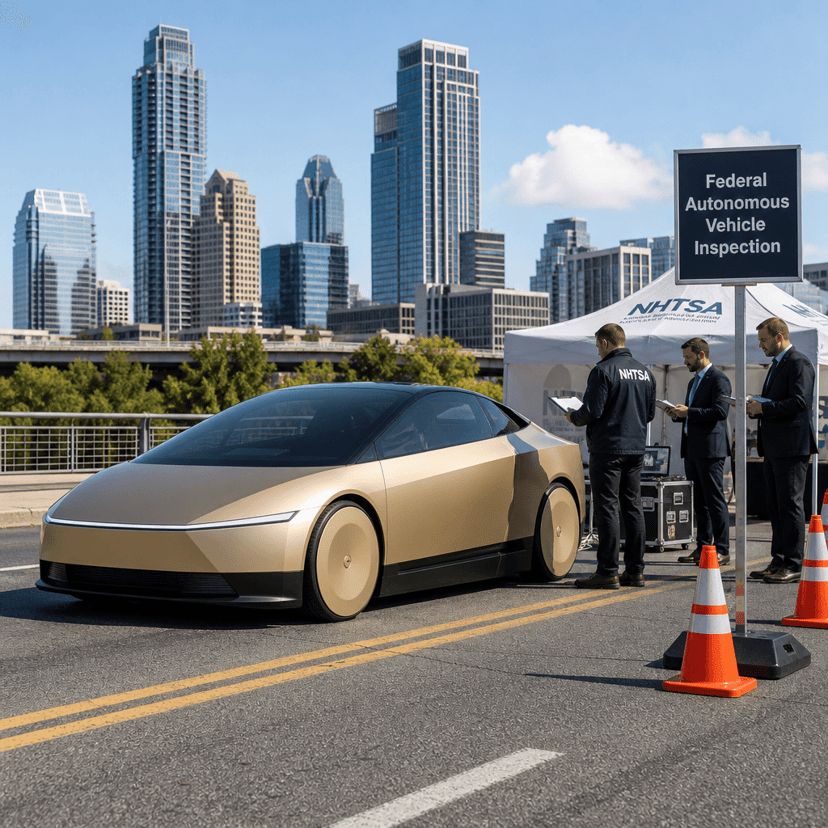
The data backs him up. In Atlanta and Austin, where Uber began offering autonomous rides in 2025, overall trip growth "significantly accelerated" - even for human drivers, according to the company's shareholder deck. In San Francisco, where Alphabet's Waymo has operated driverless rides via its own app since 2024, the addition of AV supply has grown the entire category. Waymo now offers robotaxi rides exclusively through the Uber app in some markets.
By the end of 2026, Uber expects to facilitate AV trips in up to 15 cities globally, split between the U.S. and international markets. The roster includes Houston, Los Angeles, San Francisco, London, Munich, Hong Kong, Zurich, and Madrid. "And by 2029, we intend to be the largest facilitator of AV trips in the world," Khosrowshahi declared.
But he's tempering expectations. "Autonomous vehicles are likely to remain a very small portion of the rideshare category for many years to come," he cautioned, citing technological, regulatory, and infrastructure hurdles. That's a realistic assessment given the complexity of deploying self-driving tech at scale across diverse urban environments.
Uber is simultaneously doubling down on its subscription and advertising businesses. The Uber One membership program is driving higher engagement, with subscribers booking more rides and ordering more items after they sign up. The company is also building out its advertising platform, capitalizing on the valuable transaction data flowing through both mobility and delivery.
In a nod to the generative AI boom reshaping consumer tech, Uber announced it's integrating with ChatGPT to "expand discovery and reach new customers." The integration lets users discover services and restaurants before completing checkouts, essentially turning OpenAI's chatbot into a discovery layer for Uber's marketplace.
The move mirrors similar partnerships across the industry as companies race to embed AI assistants into everyday transactions. For Uber, it's about reducing friction in the discovery-to-purchase journey while potentially capturing demand that might otherwise go to direct competitors or restaurant websites.
What's emerging is a company that's less about ride-hailing and more about logistics infrastructure. The 30% delivery growth versus 19% mobility growth tells that story clearly. Uber is becoming the connective tissue between consumers and everything from sushi to groceries to retail goods, powered by a network of drivers, bikers, and increasingly, autonomous vehicles.
The strategic question is whether Uber can maintain its platform advantage as AV technology matures. Companies like Waymo could theoretically bypass Uber entirely once autonomous fleets scale. But Khosrowshahi is betting that Uber's existing customer base, routing algorithms, and demand-supply matching will make it the preferred distribution channel even in an autonomous future.
Wall Street will be watching how quickly AV trips ramp as a percentage of total rides, and whether those trips carry similar margins to human-driven ones. The company's guidance for Q1 gross bookings growth of at least 17% suggests confidence that momentum is sustainable, even as it invests heavily in new technologies and market expansion.
Uber's Q4 results reveal a company in transition - from ride-hailing specialist to diversified logistics platform. The 30% delivery growth isn't just impressive, it's strategic validation that Uber can monetize its network beyond transportation. As autonomous vehicles roll out across 15 cities by year-end and AI integrations deepen customer engagement, Uber is positioning itself as infrastructure rather than just an app. The challenge ahead is maintaining platform dominance as AV technology commoditizes, but with $54.1 billion in quarterly gross bookings and expanding partnerships across retail and dining, Uber has the scale and data advantage to stay ahead. Investors will be watching whether AV economics improve margins or compress them - that answer will define Uber's next chapter.