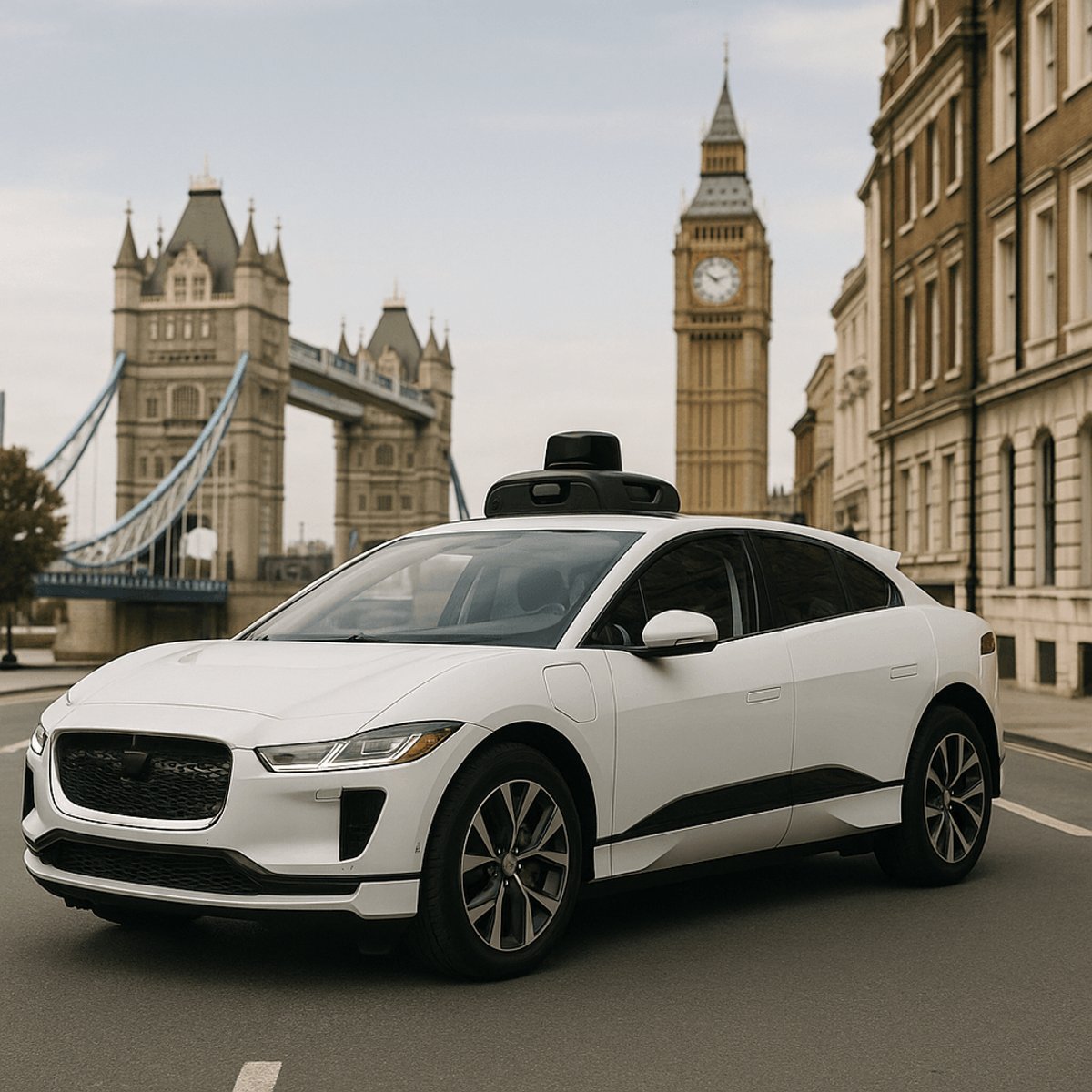
Waymo just announced its biggest international bet yet - a commercial robotaxi service launching in London by 2026. The Google-owned company is already deploying its all-electric Jaguar I-Pace fleet on London streets this month, marking its second global expansion after Tokyo and potentially reshaping urban transportation across Europe.
Waymo is betting big on London becoming its European launchpad for autonomous vehicles. The Alphabet-owned company announced Wednesday it's bringing commercial robotaxi service to the UK capital in 2026, sending ripples through the global self-driving industry.
The move isn't entirely surprising - weeks of speculation built around London-based job postings finally paid off. But the scale and timing caught competitors off guard. While Tesla continues promising full self-driving "next year" and Cruise rebuilds after its San Francisco setbacks, Waymo is quietly expanding its geographic footprint at breakneck speed.
"We're starting with human safety drivers behind the wheel before launching driverless testing and eventually inviting the public to hail our robotaxis," Waymo spokesperson Ethan Teicher confirmed to TechCrunch. It's the same playbook that worked in Phoenix and San Francisco - methodical testing, gradual autonomy, then commercial launch.
Waymo already has deep UK roots through its 2019 acquisition of Latent Logic, an Oxford University spinout that uses imitation learning to make self-driving simulations more realistic. That deal established Waymo's Oxford engineering hub and gave the company crucial European talent and regulatory insights.
Now those investments are paying dividends. Waymo's all-electric Jaguar I-Pace vehicles will start testing on London's notoriously complex road network within weeks. The city presents unique challenges - narrow medieval streets, aggressive cyclists, and driving on the left - that could validate Waymo's technology for broader European deployment.
The partnership structure mirrors Waymo's recent strategic shift toward lighter asset models. Moove, the African mobility fintech already managing Waymo's Phoenix fleet, will handle London operations including charging, maintenance, and cleaning. It's the same outsourcing approach Waymo uses with Uber in Austin and Atlanta, where Uber manages the vehicles while Waymo focuses on the autonomous technology.
"Waymo has increasingly tapped partners to share the load of operating a robotaxi service," according to the original TechCrunch report. The strategy reduces capital requirements while accelerating geographic expansion - crucial as the autonomous vehicle race intensifies globally.
The London launch represents Waymo's second international market after Tokyo, where the company has been testing since 2021. But London feels different - it's a massive English-speaking market with established ride-hailing infrastructure and regulatory frameworks that could fast-track approval processes.
Timing will depend on UK government approvals, which are still being finalized. The Department for Transport has been surprisingly progressive on autonomous vehicles compared to other European regulators, potentially giving Waymo a regulatory advantage over continental competitors.
For London's transportation ecosystem, Waymo's arrival could accelerate the shift away from traditional black cabs and private car ownership. The city already leads Europe in ride-hailing adoption, making it an ideal testbed for autonomous services.
Meanwhile, Waymo continues expanding aggressively across the US with planned launches in Miami, Nashville, and Washington DC. The company has ramped operations dramatically over the past two years, spreading from its original Phoenix market to Austin, Atlanta, Los Angeles, and San Francisco.
Waymo's London expansion signals the autonomous vehicle industry is entering its global phase. While competitors struggle with technical challenges and regulatory hurdles, Waymo is methodically building an international robotaxi network. The London launch will be a crucial test - if successful, it could unlock the entire European market and validate autonomous vehicles as a mainstream transportation solution. For riders, it means potentially cheaper, safer rides are coming sooner than expected.