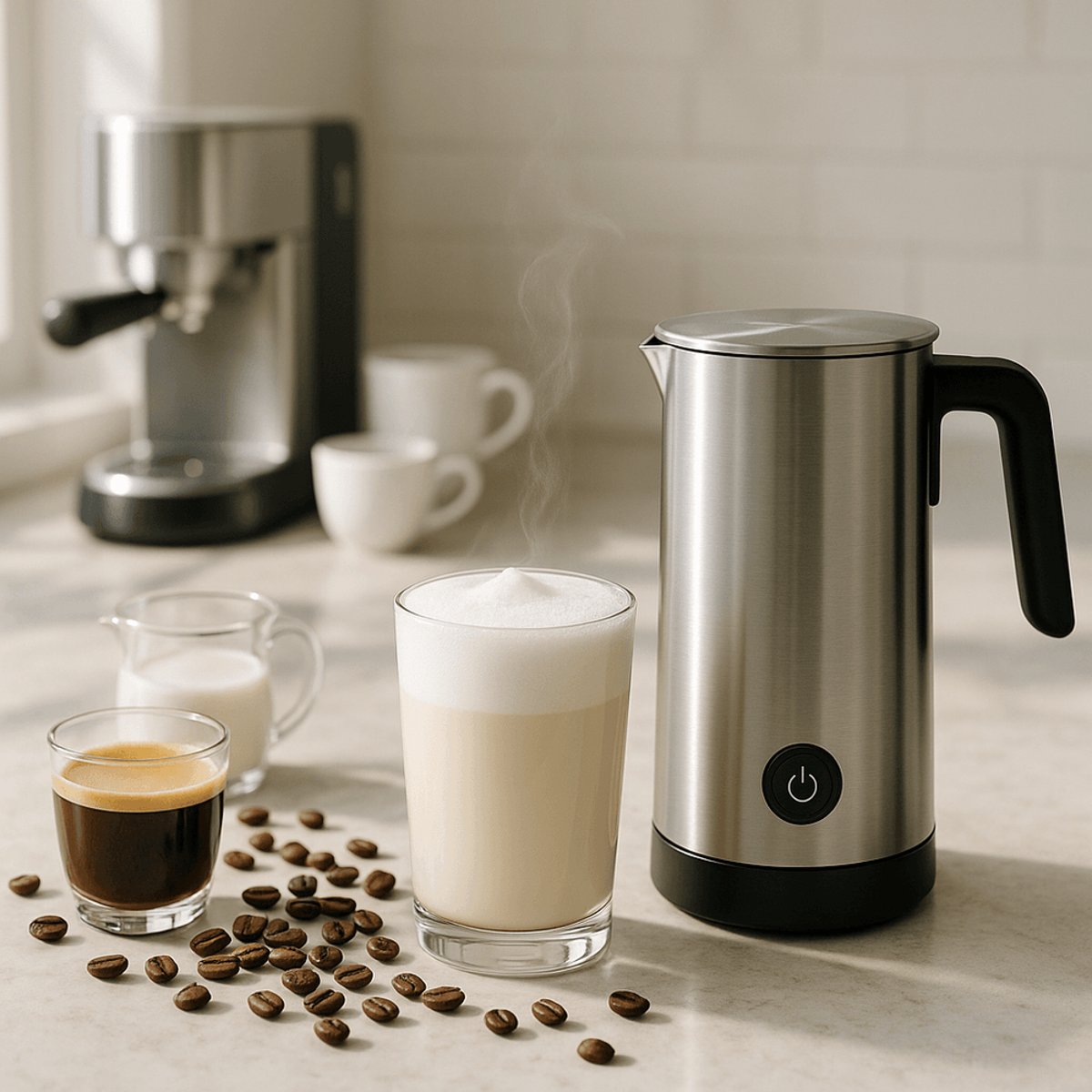
Coffee gear testing just got serious. WIRED put seven milk frothers through rigorous testing to help home baristas level up their espresso game, crowning Subminimal's NanoFoamer Pro as the champion. The comprehensive review tested everything from $10 battery-powered wands to $113 premium units, measuring foam quality, temperature consistency, and real-world usability across multiple brewing sessions.
WIRED's latest kitchen gadget showdown settles a heated debate among home coffee enthusiasts - which milk frother actually delivers cafe-quality results without the cafe price tag. After weeks of testing with organic whole milk and rigorous temperature monitoring, the tech publication's gear team has declared Subminimal's NanoFoamer Pro the clear winner.
The testing methodology was refreshingly scientific. Each frother faced identical conditions - 8 ounces of whole milk pulled straight from the fridge at exactly 45 degrees Fahrenheit. No nondairy alternatives cluttered the testing ("we'll probably be done with the hip alternative milk of the hour by the time this is published," notes reviewer Pete Cottell with characteristic WIRED snark). Every unit got three separate trials, with detailed measurements of cycle time, final temperature, and foam texture.
The NanoFoamer Pro impressed testers by consistently hitting 141°F in just over three minutes, creating the kind of microfoam that actually allows for latte art - a benchmark that separated serious contenders from kitchen counter decorations. The unit handles 4-8 ounces efficiently, making it perfect for single-serving enthusiasts who want consistent results.
But WIRED's testing revealed some surprising budget alternatives. The Dreo BaristaMaker series performed admirably, with the standard model reaching 130°F in under four minutes and the Air variant pushing to 165°F for those who prefer their drinks scalding. Even the humble $28 Instant Pot milk frother earned honorable mention status, proving you don't need to drop $100-plus for decent foam.
The testing wasn't kind to every contender. Bodum's Barista Electric Milk Frother landed squarely in the "Not Recommended" category after repeatedly overflowing during testing and producing what Cottell described as "layer upon layer of gooey 160-degree foam that could almost be folded over like a French omelet." The unit's single-button interface should have been foolproof, but somehow managed to create more mess than microfoam.
The review process highlighted a crucial divide in the milk frother market. Premium units like the Nespresso Aeroccino 4 Refresh at $113 delivered speed - producing thick foam in just 1:45 - but sacrificed the foam gradient necessary for proper latte art. Meanwhile, budget options like the $10 Zulay Kitchen battery wand only produce cold foam, limiting their utility for serious coffee preparation.
Cottell's testing revealed that capacity matters more than marketing suggests. The Breville Milk Cafe Frother handles up to 18 ounces but took nearly two minutes to reach just 136°F, making it better suited for large batches than quick morning routines. The sweet spot seems to be 8-10 ounce capacity units that balance speed with volume.
The home coffee equipment market has exploded as consumers seek cafe experiences without leaving their kitchens. According to industry data, milk frother sales have surged alongside espresso machine adoption, with many buyers treating frothers as essential companions to their brewing setups rather than optional accessories.
Testing also exposed the importance of proper technique. Several units that initially disappointed performed better once testers learned to bang the steaming pitcher on the counter or decant into proper frothing pitchers. The Melitta Montalatte suffered from a weak magnet that detached the agitator during pouring, creating unnecessary complexity for what should be a simple process.
WIRED's comprehensive testing proves that great milk foam doesn't require a massive investment, but it does demand the right tool for your specific needs. The NanoFoamer Pro earns its top spot by delivering consistent results that satisfy both casual coffee drinkers and aspiring latte artists. For budget-conscious buyers, the Dreo lineup offers solid performance at half the price, while the Instant Pot option provides reliable basics for occasional use. The key lesson: avoid units that prioritize flashy features over fundamental foam quality, and don't assume the most expensive option will deliver the best results for your morning routine.