WIRED just dropped their definitive smart display buying guide for 2025, crowning Google's Pixel Tablet as the top pick among three recommended devices. The timing couldn't be more interesting - the guide comes as the entire smart display category faces an uncertain future, with Meta shuttering Portal devices and Amazon preparing to charge $20 monthly for its enhanced Alexa+ service.
The smart display market just got a reality check from one of tech's most influential publications. WIRED's comprehensive 2025 buying guide doesn't just recommend products - it questions whether the entire category has a future.
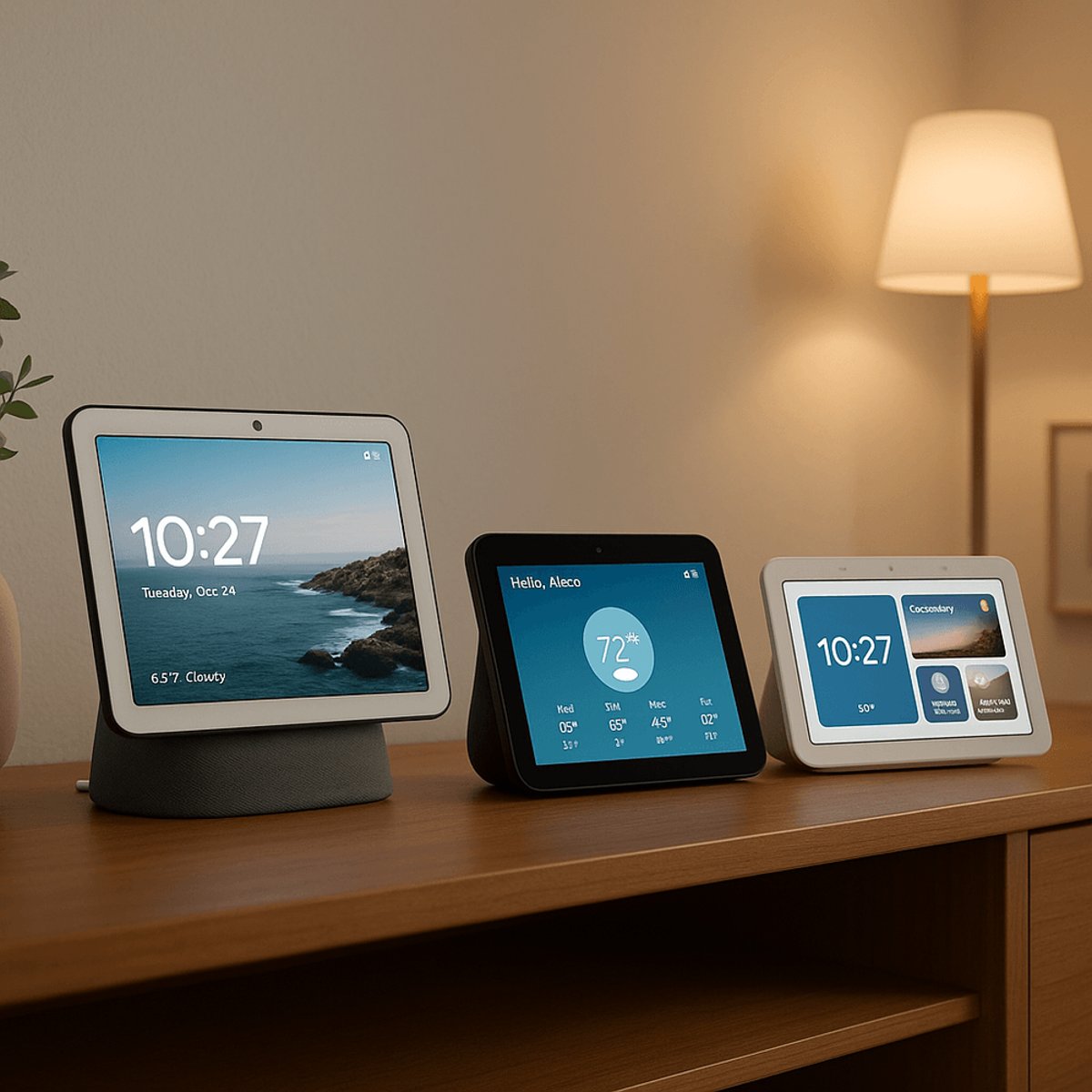
Google's Pixel Tablet emerged as the clear winner at $379, but it's telling that WIRED's top pick isn't technically a smart display at all. The device doubles as both a premium Android tablet and a smart home hub when docked to its charging speaker base. "Google recently stopped issuing software updates for some third-party displays," the guide notes, "and it seems to have shifted focus to its new Pixel Tablet."
The recommendation comes at a fascinating inflection point for the industry. Meta completely exited the space by discontinuing its Portal lineup, devices that WIRED had previously endorsed. Meanwhile, Amazon lost a staggering $10 billion in 2022 due to Alexa-related failures, yet continues pushing forward with new Echo Show models.
WIRED's second choice, Amazon's Echo Show 8 at $130, faces a major transition next month. The device will be among the first to receive Alexa+, Amazon's AI-powered voice assistant that requires a $20 monthly subscription (free for Prime members). The upgrade promises more conversational interactions and complex task execution, but comes with a significant privacy trade-off - all voice recordings will be sent to Amazon for processing.
The publication's third recommendation, Google's Nest Hub at $100, represents the category's more traditional approach. The 7-inch camera-free display includes sleep tracking and unique radar-based gesture controls, but lacks the video calling capabilities that many users expect.
Tech journalist Nena Farrell, who conducted the testing, didn't mince words about the category's challenges. The guide specifically advises against several popular models, including Amazon's rotating Echo Show 10 (currently out of stock) and the wall-mounted Echo Show 15, which "feels like a weird in-between of a smart display and a TV that doesn't excel in either department."
The market fragmentation extends beyond hardware. Google abandoned software support for third-party smart displays, effectively killing that ecosystem. Apple remains notably absent from the space entirely, offering only iPhone StandBy Mode as a pale alternative.
What's particularly striking is WIRED's recommendation to "consider one of our favorite tablets instead." This suggests even tech experts see dedicated smart displays as increasingly obsolete compared to more versatile devices.
The timing of Amazon's Alexa+ rollout adds another layer of complexity. Starting next month, Echo Show 8, 10, 15, and 21 users will gain early access to the AI-enhanced assistant. The $20 monthly fee represents a dramatic shift from the previously free service, potentially alienating cost-conscious consumers.
Industry observers point to several factors driving the category's uncertainty. Video calling, once a key differentiator, became mainstream through smartphones during the pandemic. Smart home control can be handled by phones or voice-only speakers. Streaming entertainment works better on proper TVs or tablets.
"The future of these smart home devices isn't clear right now," WIRED's guide acknowledges. This uncertainty extends to emerging alternatives like digital family calendars from Skylight and Hearth Display, which face their own challenges around monthly subscription requirements.
For consumers, WIRED's advice is pragmatic: stick with devices from the brand whose voice assistant you prefer, and be prepared for a category in flux. The Pixel Tablet's hybrid approach might represent the future - devices that can function independently while offering smart display features when needed.
The broader implications extend beyond consumer choice. Smart displays were supposed to be the next evolution of home computing, centralizing control and communication in a single device. Instead, they're becoming niche products competing against more versatile alternatives.
WIRED's 2025 smart display guide does more than recommend products - it captures an industry at a crossroads. With major players exiting, subscription fees arriving, and versatile tablets offering better value, the dedicated smart display's days might be numbered. For now, the Pixel Tablet's hybrid approach offers the best compromise, but consumers should prepare for a category that's reinventing itself in real time.