The world's nuclear safety net just vanished. New START, the last major arms control treaty between the US and Russia, expired on February 5, leaving the planet without formal oversight of thousands of nuclear weapons for the first time in half a century. Now researchers at the Federation of American Scientists are pitching an untested plan B: let AI-powered satellite systems do the work that human inspectors once did on the ground. It's a controversial gamble that could either prevent a spiraling arms race or introduce catastrophic new vulnerabilities into the most dangerous game on Earth.
The era of trust-but-verify just ended with a whimper. When the New START treaty expired last week, it took with it the last formal mechanism for preventing runaway nuclear proliferation between the world's two largest nuclear powers. For the first time since the height of the Cold War, there's no enforceable limit on how many warheads the US and Russia can deploy.
Into this vacuum steps an unlikely solution: artificial intelligence trained to spot missile silos from space. Matt Korda, associate director at the Federation of American Scientists, isn't mincing words about what this represents. "To be clear, this is plan B," he told WIRED. But when plan A - decades of painstaking diplomatic agreements - lies in ruins, plan B starts looking pretty appealing.
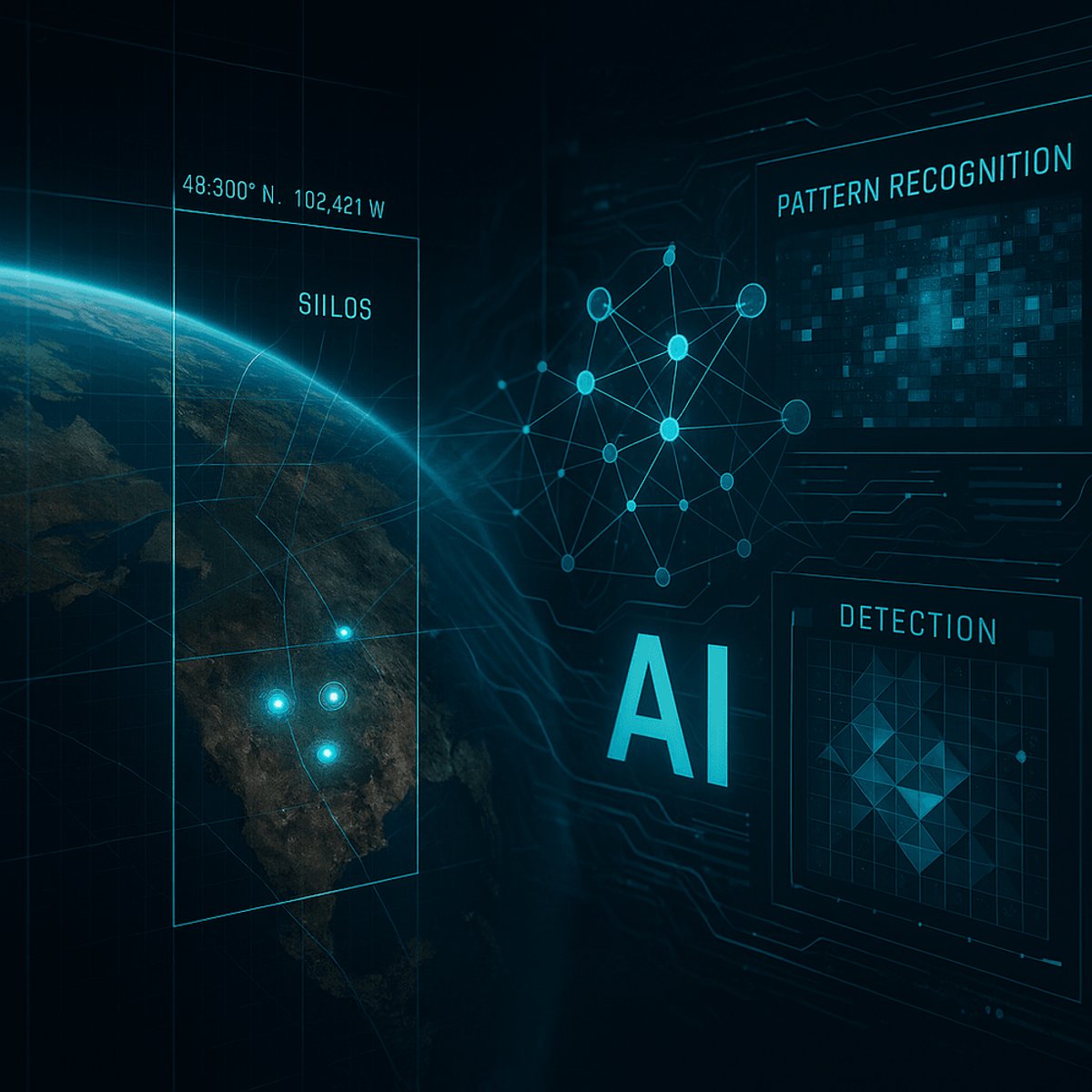
Korda and coauthor Igor Morić laid out their vision in a report called Inspections Without Inspectors, proposing what they call "cooperative technical means." The concept is straightforward: use existing satellite infrastructure to monitor ICBM silos, mobile rocket launchers, and plutonium production facilities. Feed that imagery to AI systems trained on pattern recognition. Let machine learning models flag suspicious changes. Then hand everything to human reviewers for final verification.
"Something that artificial intelligence is good at is pattern recognition," Korda explains. "If you had a large enough and well-curated dataset, you could, in theory, train a model that's able to identify both minute changes at particular locations but also potentially identify individual weapon systems."
The timing couldn't be more urgent. Both the US and Russia are pouring billions into new nuclear weapons programs. China is constructing fresh ICBM silos. South Korea is openly discussing developing its own nuclear deterrent. The infrastructure that once prevented this exact scenario - on-site inspections that fostered trust between adversaries - has collapsed under the weight of geopolitical hostility.
Between 1985 and today, coordinated arms control efforts eliminated roughly 50,000 nuclear weapons from global arsenals. That progress took decades of negotiations, verification protocols, and scientists literally standing inside each other's missile facilities. "No country wants on-site inspectors roaming around on their territory" anymore, Korda notes. So the proposal tries to split the difference: countries would agree to open specific silo hatches at predetermined times when satellites pass overhead, enabling "mutual verification using technology that currently exists."
But the technical hurdles are staggering. Sara Al-Sayed of the Union of Concerned Scientists has been building datasets for AI-based arms control verification, and she's blunt about the limitations. "You could think of all manners of things like missiles, the launchers, the bombers, the submarines, the sites of their production, the testing, the storage, the maintenance, and the dismantlement," she told WIRED. "You really need to think at that granular level of all the objects."
The problem? There's barely any training data. AI systems need massive, well-labeled datasets to perform reliably, but nuclear weapons programs are among the most secretive operations on Earth. "You have to build these bespoke datasets for each country," Korda admits. "Here's how Russia builds ICBM silos. Here's how the United States builds ICBM silos. But even within countries, there can be differences."
Then there's the trust problem - the same issue that killed traditional treaties now threatens their digital replacement. Al-Sayed poses the fundamental question: "How can we make the machines themselves trustworthy?" Current AI systems fail regularly, ship with security vulnerabilities, and operate as black boxes even their designers can't fully explain. "There's an inherent stochasticity of these techniques," she notes, pointing to randomness in data curation, labeling, model performance, and outputs.
If countries can't even agree to honor existing treaties, how would they negotiate the specifics of AI verification systems? What tasks would the AI perform - detecting presence or absence of weapons, classifying objects, tracking changes over time? What counts as a violation? The meta-negotiations required could be as complex as the original arms control talks.
Al-Sayed sees a darker implication: "If you believe that automation is necessary, then you are in this paradigm where you feel like you need to catch every instance of your adversary or arms control treaty partner cheating." That level of suspicion makes meaningful cooperation nearly impossible.
Yet the alternative is potentially worse. With traditional verification dead and nuclear powers racing to expand their arsenals, doing nothing guarantees escalation. The US and Russia reportedly plan to maintain current deployment levels for now, but without binding commitments, that gentleman's agreement could evaporate overnight.
Korda frames the proposal as triage, not salvation. "A successor to New START is not going to put us on the path towards disarmament," he acknowledges. "It's just going to help us prevent a real spiral into hundreds more additional nuclear weapons being deployed."
The Federation of American Scientists knows they're proposing an imperfect system to solve an impossible problem. AI verification would require unprecedented cooperation between hostile powers, training data that barely exists, and trust in systems that routinely fail at far less consequential tasks. But in a world where nations refuse human inspectors and diplomatic channels have frozen, satellite surveillance guided by flawed algorithms might be the only bridge between today's breakdown and tomorrow's potential catastrophe.
The question isn't whether AI-powered arms control is ideal. It's whether the world can afford to have nothing at all.
The death of New START marks the end of an era built on hard-won trust and verification. What comes next is anyone's guess, but the Federation of American Scientists is betting that imperfect AI oversight is better than the void we're staring into now. The proposal acknowledges brutal realities: nations won't accept human inspectors, diplomatic trust has evaporated, and the alternative to flawed AI verification is an unchecked nuclear arms race. Whether machine learning can shoulder the weight of preventing nuclear catastrophe remains an open question - one the world may not have the luxury of debating much longer.