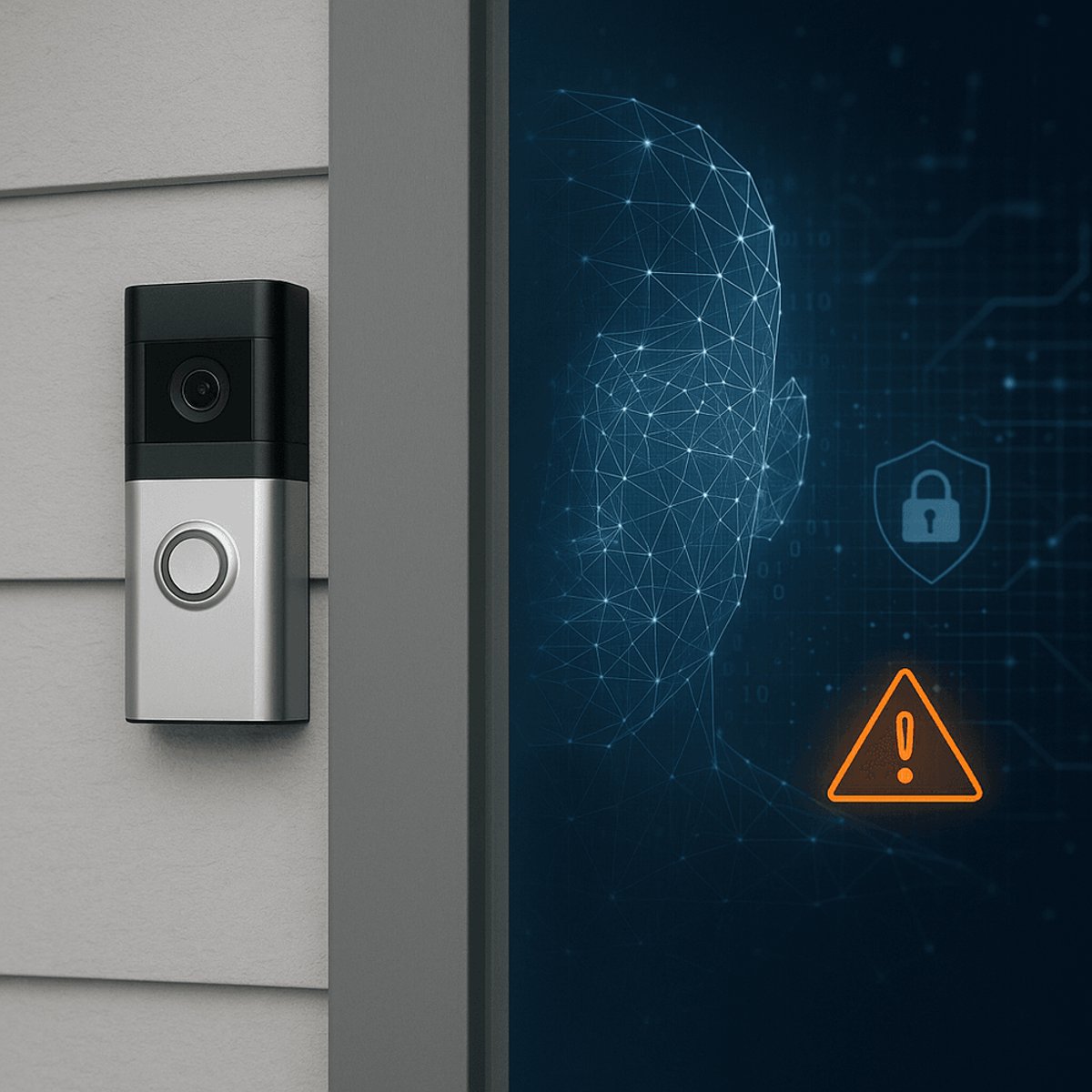
Ring founder Jamie Siminoff has spent weeks trying to ease privacy concerns sparked during the Super Bowl, but his explanations around facial recognition technology are raising more questions than answers. The Amazon-owned doorbell company now faces intensifying scrutiny over how its AI-powered cameras identify and track faces, putting the entire smart home security industry under the microscope at a time when consumer trust in surveillance tech is already fraying.
Ring CEO Jamie Siminoff thought he could clear the air. Instead, he's walked straight into a privacy firestorm that won't die down.
Since an incident during the Super Bowl that thrust Ring's facial recognition capabilities into the spotlight, Siminoff has been on a media tour attempting damage control. But according to industry observers at TechCrunch, his explanations about how the company's AI identifies and catalogs faces are only making privacy advocates more nervous.
The facial recognition question is where things get tangled. Ring, acquired by Amazon in 2018 for over $1 billion, has quietly built one of America's largest distributed surveillance networks through its doorbell cameras. Millions of devices now sit on porches across the country, their AI constantly analyzing who approaches. What exactly happens to those facial scans remains murky, despite Siminoff's recent attempts at transparency.
Amazon's involvement adds another layer of complexity. The e-commerce giant has faced years of criticism over its Rekognition facial recognition service, which it sells to law enforcement agencies. Privacy groups have long worried about potential data sharing between Ring's consumer devices and Amazon's broader surveillance infrastructure, concerns that Siminoff's recent statements haven't adequately addressed.
The timing couldn't be worse for the smart home industry. Consumer trust in connected devices is already shaky after years of data breach scandals and revelations about corporate surveillance practices. Ring itself has weathered previous controversies, including a 2019 incident where hackers accessed customer camera feeds and a 2023 FTC settlement over privacy violations that cost the company $5.8 million.
What makes this situation particularly thorny is the technical reality of how Ring's systems work. The company's newer cameras use on-device AI to identify "familiar faces" and send customized alerts to homeowners. But the line between helpful personalization and invasive biometric tracking is razor-thin, and Siminoff's explanations haven't clearly defined where Ring draws that boundary.
Privacy advocates are demanding answers about data retention, whether facial templates get uploaded to cloud servers, and how Amazon might use this biometric information for other purposes. Electronic privacy groups have pointed out that unlike smartphones with Face ID, which process biometric data locally and never leave the device, Ring's cloud-connected architecture raises different concerns about centralized databases of facial recognition data.
The regulatory landscape is shifting too. Several states have introduced or passed biometric privacy laws in recent years, with Illinois leading the charge through its Biometric Information Privacy Act. Ring's facial recognition features could face legal challenges if the company can't demonstrate clear consent mechanisms and data handling practices that comply with these evolving regulations.
Competitors are watching closely. Google's Nest cameras have deliberately avoided facial recognition features in the U.S. market, instead focusing on object detection that identifies "a person" without biometric identification. Apple's HomeKit Secure Video takes a similar approach, processing video analysis on-device without cloud uploads. Ring's more aggressive embrace of facial recognition now looks like a potential liability rather than a competitive advantage.
Siminoff built Ring from a Shark Tank rejection into a smart home empire by positioning the company as a neighborhood safety tool. But that folksy "making neighborhoods safer" narrative crashes hard against the reality of millions of AI-powered cameras creating searchable databases of faces. His post-Super Bowl media appearances suggest he's still trying to thread that needle, but the privacy questions keep getting sharper.
The broader implications extend beyond Ring. This controversy is testing how much surveillance consumers will accept in exchange for convenience and security. Every smart doorbell, every AI-powered camera, every connected device with computer vision capabilities now faces the same uncomfortable questions about where helpful technology ends and invasive tracking begins.
Ring's privacy crisis isn't going away with vague reassurances. As facial recognition technology becomes standard in consumer devices, companies can't hide behind technical jargon or avoid hard questions about data practices. Siminoff's struggle to calm these fears reveals a fundamental tension in the smart home industry - the same AI capabilities that make products useful also make them powerful surveillance tools. How Ring navigates this moment will likely set the template for how the entire connected home sector handles biometric data. Right now, that template looks dangerously incomplete, and regulators are starting to take notice.