Apple just shipped a privacy feature that fundamentally changes what cell carriers can see. The company quietly rolled out a setting this week that lets iPhone and iPad users block their wireless provider from collecting precise location data - a move that could frustrate law enforcement requests and complicate the ongoing battle between tech giants and surveillance. The feature arrives as U.S. carriers are still reeling from the Salt Typhoon breach, where China-backed hackers spent months inside AT&T and Verizon's systems siphoning location data and call records.
Apple just made it significantly harder for anyone - cops, spies, or hackers - to track your iPhone through your cell carrier. The company rolled out a privacy feature this week that gives users control over how much location precision their device shares with wireless networks, marking a notable escalation in the tech giant's ongoing privacy battle.
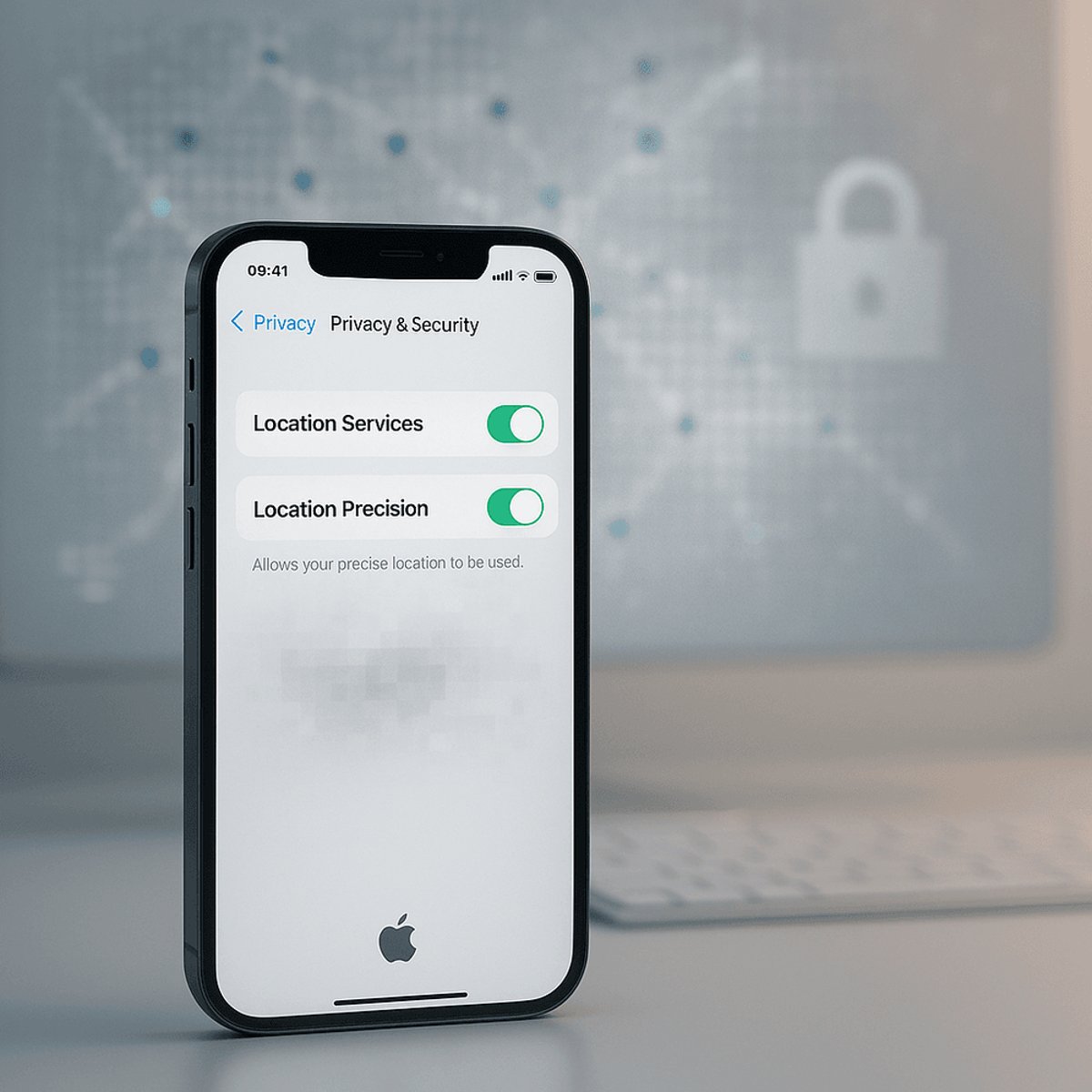
The feature, buried in iOS 26.3 settings, lets users limit location data shared with carriers to approximate neighborhoods rather than pinpoint street addresses. It's available now on iPhone Air, iPhone 16e, and iPad Pro (M5) cellular models, though only for customers on a handful of networks including EE and BT in the UK, Telekom in Germany, AIS and True in Thailand, and Boost Mobile stateside.
Apple won't say why it built this now, and the company declined to comment on the record when reached by TechCrunch. But the timing tells its own story. Over the past year, U.S. carriers have been dealing with one of the most significant breaches in telecom history - the Salt Typhoon intrusion, where China-backed hackers burrowed into AT&T and Verizon's systems seeking call logs and location data of senior American officials.
The vulnerability Apple's addressing isn't new. For years, law enforcement agencies have been tapping carriers to access real-time location tracking and historical movement patterns. Courts have increasingly scrutinized these requests, but the data pipeline remained wide open. Hackers exploited the same access - surveillance vendors have been caught using SS7 vulnerabilities to track anyone, anywhere in the world.
What makes Apple's approach clever is that it operates at the device level. "Most people aren't aware that devices can send location data outside of just apps," Gary Miller, a mobile security researcher at Citizen Lab and senior director of network intelligence at iVerify, told TechCrunch. "While [the devices] can limit GPS disclosure at the app level, they haven't been able to lock down precise location disclosure to the network."
Here's how it works - telecom operators triangulate your approximate location based on which cell towers your phone connects to, but your device itself provides the precise GPS coordinates back to the carrier. Apple's new toggle essentially fuzzes that data before it leaves your phone. Turn it on, and your carrier sees you're somewhere in the Mission District, not standing outside a specific clinic or meeting spot.
Crucially, Apple says the feature doesn't touch location data shared with apps or with emergency services during 911 calls. That addresses the two biggest objections - developers still get accurate location for features like mapping and ride-sharing, and first responders can still find you in an emergency.
The limited carrier rollout suggests Apple's negotiating this feature network by network, likely facing pushback from carriers who use location data for everything from network optimization to targeted advertising. The company hasn't published a timeline for broader availability.
"Apple's feature, while limited to very few operator networks, is a step in the right direction in providing users with greater privacy controls," Miller said. It's a measured endorsement that acknowledges both the feature's potential and its current limitations.
The move fits Apple's broader privacy positioning - the company has spent years building end-to-end encryption, on-device processing, and now network-level privacy controls into iOS. Each feature chips away at the surveillance infrastructure that's been built into consumer technology over decades.
But it also sets up friction. Law enforcement agencies have grown accustomed to obtaining location data from carriers with a court order, a process that's faster and often requires less legal justification than getting it directly from Apple. This feature forces them to either obtain data from Apple itself (which has consistently fought broad requests) or accept less precise information from carriers.
The broader implications could reshape how telecom surveillance works. If Apple expands this to all carriers and Samsung or Google follow with similar Android features, the firehose of precise location data that's flowed from devices to carriers for decades could slow to a trickle.
For now, it's an opt-in feature on three device models across a handful of networks. But in an industry where Apple's privacy moves tend to become expectations, this could be the opening salvo in a larger battle over who controls - and who can access - the digital breadcrumbs we all leave behind.
Apple's carrier location-masking feature represents a fundamental shift in mobile privacy architecture - the first time a major manufacturer has given users control over what their wireless network can see. While the current rollout is limited to three device models and a handful of carriers, the implications ripple far beyond iOS. If this becomes table stakes for smartphones, the location surveillance infrastructure that law enforcement and intelligence agencies have relied on for decades will need a major rethink. The question now isn't whether other manufacturers will follow Apple's lead, but how quickly carriers will be forced to accept that the era of unfettered device tracking is ending. For the millions of users on Salt Typhoon-compromised networks, that shift can't come fast enough.