Dell Technologies CEO Michael Dell just sounded the first caution bell on the AI data center gold rush. Speaking on CNBC's "Closing Bell: Overtime," Dell said that while demand for AI computing power remains "tremendous," there will inevitably come a point when there are "too many of these things built." The warning comes as Dell's own AI server business exploded 69% last quarter.
Dell Technologies CEO Michael Dell just became the first major enterprise leader to publicly acknowledge what many in Silicon Valley whisper privately - the AI data center boom can't last forever. Speaking Tuesday on CNBC's "Closing Bell: Overtime," Dell delivered a reality check wrapped in optimism: "I'm sure at some point there'll be too many of these things built, but we don't see any signs of that."
The timing of Dell's warning is telling. His company's server networking business just posted staggering growth - up 58% last year and 69% in the most recent quarter. Dell shares jumped over 3% Tuesday after the company raised its annual revenue growth expectations from 3-4% to 7-9%, with earnings per share targets jumping from 8% to 15%. The hardware maker is riding the AI wave harder than almost anyone, selling servers packed with Nvidia's Blackwell Ultra chips to customers like CoreWeave and Elon Musk's xAI.
But Dell's market timing instincts have been honed over decades. The 59-year-old founder built his company by anticipating technology shifts, and his latest comments suggest he's already thinking about the inevitable correction. "As large language models have evolved to more multimodal and multi-agent systems, the demand for AI processing power and capacity has continued to be strong," Dell explained, before adding his cautionary note about eventual oversupply.
The numbers backing Dell's optimism are undeniable. The company reported strong second-quarter earnings in August and announced plans to ship $20 billion worth of AI servers in fiscal 2026 - double what it sold last year. That's a massive shift for a company that traditionally focused on enterprise PCs and basic server infrastructure. Now Dell finds itself at the center of the most expensive infrastructure buildout in tech history.
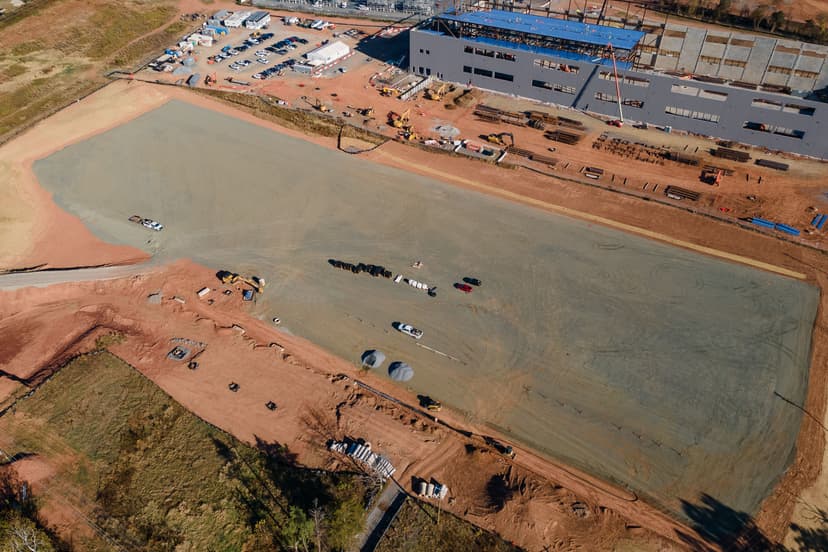
Dell's warning reflects broader industry dynamics that are becoming harder to ignore. Major cloud providers are pouring hundreds of billions into AI infrastructure, with Microsoft, Google, and Amazon leading the charge. Smaller players like CoreWeave have raised massive funding rounds specifically to build GPU-powered data centers. Even crypto mining operations are pivoting to AI compute.
The question isn't whether demand exists today - it clearly does. Companies are desperate for AI compute capacity, willing to sign multi-year contracts worth hundreds of millions. The question is whether this demand can sustain the current pace of buildout. Dell's comments suggest even the biggest beneficiaries are starting to wonder.
Industry insiders point to several potential inflection points. First, AI model training efficiency continues improving, meaning companies might need less raw compute over time. Second, the current wave of enterprise AI adoption could plateau as companies realize many use cases don't justify the costs. Third, new chip architectures from AMD and others could disrupt Nvidia's dominance, potentially shifting demand patterns.
Dell's positioning gives him unique visibility into these trends. Unlike pure-play cloud providers, Dell sells to everyone - hyperscalers, enterprises, startups, and government agencies. When he says demand remains strong but warns about eventual oversupply, it's worth paying attention. The company's revised growth targets suggest they're betting on at least two more years of robust AI infrastructure spending.
What makes Dell's comments particularly significant is the contrast with other industry leaders. Nvidia CEO Jensen Huang continues preaching about insatiable AI demand. Cloud CEOs talk about multi-decade infrastructure cycles. Dell is the first to publicly acknowledge that this party has an ending, even if it's not visible yet.
Dell's measured warning about AI data center oversupply marks a potential turning point in the industry's narrative. While his company continues benefiting enormously from the AI infrastructure boom - with $20 billion in server shipments planned for next year - his acknowledgment of eventual market saturation suggests even the biggest winners are thinking beyond the current frenzy. For investors and enterprises planning major AI infrastructure investments, Dell's comments serve as a reminder that even the most powerful technology cycles eventually reach equilibrium. The question isn't if the AI data center buildout will slow down, but when - and who will be left holding the excess capacity.