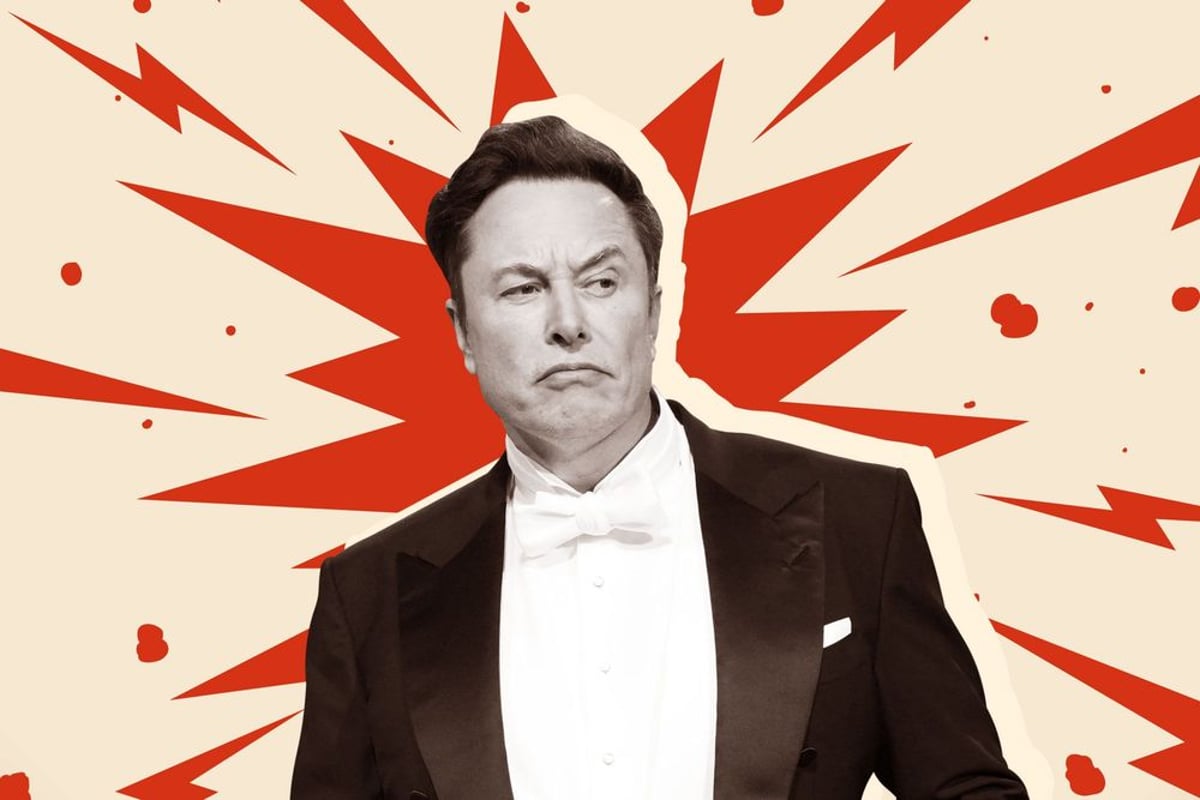
The Department of Justice just dropped 1,500 mentions of Elon Musk in its Jeffrey Epstein files, and the timing couldn't be worse. SpaceX is lining up what could be a record-breaking IPO later this year, while Musk simultaneously pushes a merger between SpaceX and xAI. Now emails show he asked Epstein about "the wildest party" on his island - contradicting years of public denials. Corporate governance experts say the revelations could dent investor confidence just as Musk needs it most.
The Department of Justice just released its largest trove of Jeffrey Epstein case documents to date, and Elon Musk's name appears at least 1,500 times. The files show email exchanges from 2012 and 2013 where Musk asked Epstein, "What day/night will be the wildest party on your island?" Epstein even offered helicopter transport.
It's a direct contradiction to Musk's longtime claims that he "REFUSED" invitations from the convicted sex offender. And while there's no allegation of wrongdoing, the timing is spectacularly bad for the world's richest man.
SpaceX is currently positioning itself for what could be a historic initial public offering later this year. At the same time, Reuters reported last week that Musk wants to merge SpaceX with xAI, his artificial intelligence startup. That merger was officially announced as this story developed. Both moves require intense investor confidence and regulatory scrutiny at a moment when Musk is spending his weekend on X trying to deflect attention from the Epstein revelations.
"The news that Musk sought an invite to Epstein's island could dent his image with investors," Ann Lipton, a professor of corporate governance at the University of Colorado Law School, told The Verge. Since much of Musk's success depends on the optimism he generates among investors, even a small dent could hurt SpaceX's IPO prospects.
But Lipton sees an even bigger risk lurking. "I think the bigger risk to his companies is what we'd call 'distraction costs' - he seems to be spending a lot of time trying to refute allegations that he was involved with Epstein, and that itself might be something investors become concerned about," she said.
Musk has faced the distraction critique before. In 2022, hundreds of SpaceX employees signed an open letter calling his behavior an embarrassment and distraction. That was during his chaotic attempt to back out of buying Twitter. Last year, Tesla shareholders approved a $1 trillion pay package explicitly designed to pull Musk's attention back from his work with the Trump administration's DOGE initiative.
The SpaceX IPO represents the most immediate legal exposure, according to Gregory Shill, a law professor and corporate governance expert at Arizona State University. The SEC disclosure process for public offerings is intensive and carries significant legal risk for any misrepresentation or omission. Musk could mitigate some risk by "inserting an appropriate risk factor in the S-1," including what's known as "key person risk" tied directly to himself, Shill explained.
The political dimension adds another layer of complexity. Former Treasury Secretary Larry Summers resigned from several prominent positions, most notably OpenAI's board, after his Epstein emails surfaced. Prince Andrew lost his royal titles. The Clintons are facing a contempt vote in Congress for refusing to testify in an Epstein probe.
But Musk's party controls Washington right now. There are no Republican calls for him to explain his Epstein contacts. Instead, he spent the weekend on X pointing fingers at other names in the documents - Steve Bannon, Reid Hoffman - while trying to reframe his own emails as innocent networking.
The pattern is familiar by now. Musk has weathered defamation lawsuits, wrongful death cases, sexual misconduct allegations, and reports of drug use. His net worth keeps climbing. He threw what appeared to be a Nazi salute at Trump's inauguration - Tesla stock is up 11% since then.
The real question isn't whether this hurts Musk financially. History suggests it won't. Tesla sales and profits continue falling while investors keep buying. The question is whether the Epstein revelations create enough uncertainty to complicate the delicate mechanics of a major IPO and corporate merger.
"My guess is that without further revelations, investors will treat it as part of the background noise that comes with any Musk investment," Lipton said. In other words, controversy is simply priced in at this point. But "without further revelations" is doing a lot of work in that sentence. The DOJ released millions of pages. If more Musk emails surface, the calculus could shift quickly.
For now, Musk is posting through it, as he always does. Whether that strategy works during an SEC review and billion-dollar merger negotiations is about to be tested in real time.
Musk has spent years building a reputation for being controversy-proof. His net worth climbs regardless of scandals, lawsuits, or inflammatory behavior. But the Epstein emails arrive at a uniquely vulnerable moment - when he needs investor confidence for a record IPO and complex merger. Corporate governance experts are watching for distraction costs and image damage, even as political allies provide cover. Whether controversy remains priced into Musk's empire or finally extracts a financial cost depends on what else might be lurking in those millions of pages. For now, investors seem willing to treat it as background noise. But SpaceX's SEC filing will force a reckoning with what "key person risk" really means when that person is Elon Musk.