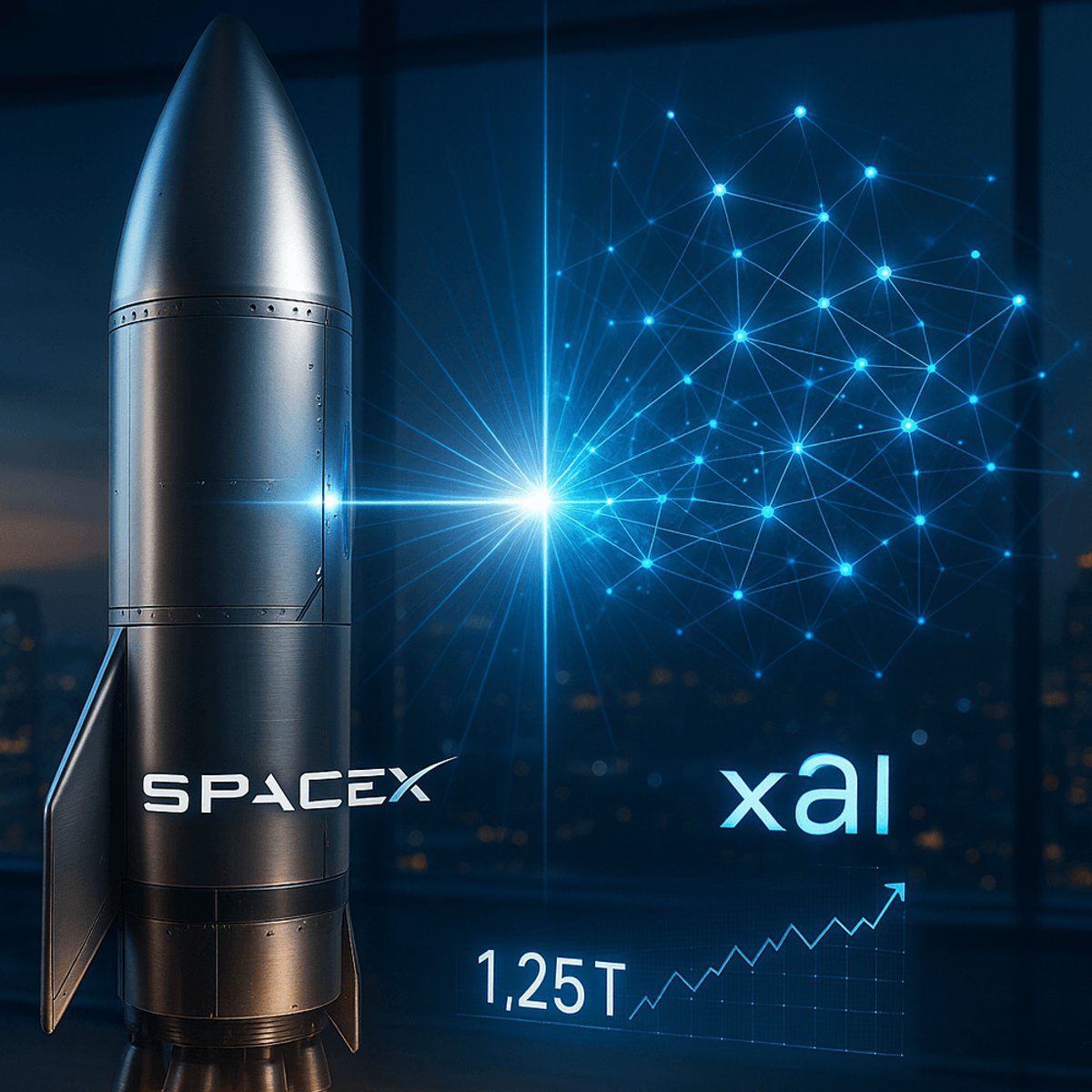
Elon Musk just pulled off his boldest corporate gambit yet. SpaceX is acquiring xAI, the billionaire's artificial intelligence startup, in a deal that sets the stage for what could be one of the largest IPOs in history. The combined entity is eyeing a $1.25 trillion valuation when it goes public, according to Bloomberg. The merger, completed February 2nd per Nevada state records obtained by CNBC, brings together a rocket company valued at $800 billion with an AI startup worth $230 billion, creating what SpaceX calls "the most ambitious, vertically-integrated innovation engine on (and off) Earth."
SpaceX just became an AI company, and the implications are staggering. Elon Musk's rocket maker announced Monday it's acquiring xAI, his two-year-old artificial intelligence startup, in a transaction that creates the most valuable private company ever assembled. The deal cleared on February 2nd, with Space Exploration Technologies Corp. now listed as the managing member of X.AI Holdings in Nevada state records obtained by CNBC.
The combined company is preparing to go public at a jaw-dropping $1.25 trillion valuation, Bloomberg reported. That's larger than Amazon's current market cap and would instantly make it one of the five most valuable public companies on Earth. SpaceX confirmed the acquisition in a blog post Monday, saying the merger brings together "AI, rockets, space-based internet" and its X social media platform into a single vertically-integrated powerhouse.
The math behind this deal is eye-popping. SpaceX opened a secondary share sale last year at an $800 billion valuation, while xAI closed a $20 billion funding round just weeks ago that valued the AI startup at roughly $230 billion, CNBC reported in January. Bringing them together under one roof creates instant synergies, at least on paper. SpaceX's Starlink satellite network, with more than 9,000 satellites in orbit and roughly 9 million customers, could provide the compute infrastructure xAI desperately needs to train its Grok AI models.
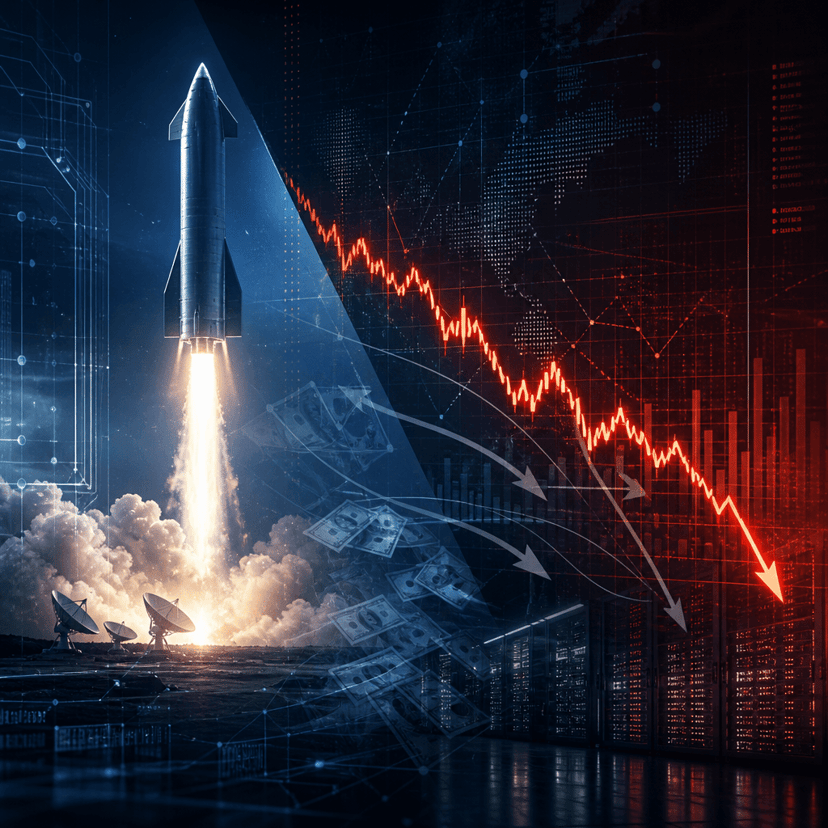
But there's a catch. While SpaceX is wildly profitable—generating an estimated $8 billion in profit on $15 billion to $16 billion of revenue in 2025 according to two people familiar with the results cited by Reuters—xAI is burning through capital at an alarming rate. The startup is racing to catch OpenAI and Google, both of which had years head start in the generative AI arms race. Building the massive data centers and GPU clusters needed to compete requires billions in ongoing investment.
That's where Tesla comes in. Musk's electric vehicle maker, the source of most of his personal wealth, announced last week it's committing about $2 billion to xAI. The investment creates a complex web of financial ties across Musk's business empire, raising questions about conflicts of interest and resource allocation that public market investors will surely scrutinize.
The deal also comes as xAI faces mounting regulatory pressure. Authorities in Europe, India and California have opened probes into the company after its Grok AI tools enabled users to generate sexualized images of children and non-consensual intimate images of adults, mostly women, according to CNBC. Those investigations could complicate the IPO timeline and valuation.
Musk founded xAI in 2023 as a direct competitor to OpenAI, the company he co-founded in 2015 as a nonprofit AI lab before departing in 2018. He's now locked in a bitter legal battle with OpenAI and CEO Sam Altman over the direction of the company and allegations that it's strayed from its original mission. The xAI acquisition gives Musk the resources to wage that war at scale, combining SpaceX's proven execution capabilities with the AI startup's ambitions.
Early last year, Musk had already merged xAI with X, his social network formerly known as Twitter, creating the foundation for this broader consolidation strategy. The pattern is clear: Musk is weaving his various ventures into an interconnected ecosystem where data, infrastructure and technology flow between companies. SpaceX's satellites could train xAI's models. XAI's algorithms could optimize Starlink's network. Tesla's vehicle data could improve both.
But can it work at public company scale? SpaceX has operated largely in the shadows for two decades, avoiding the quarterly earnings scrutiny that comes with being publicly traded. Musk founded the rocket maker in 2002 and built it into the leading provider of orbital launch services through lucrative NASA contracts. The company has mastered the art of ambitious timelines and aggressive risk-taking, a culture that doesn't always mesh well with public market expectations.
The IPO will test whether investors believe Musk can pull off this grand unification. At $1.25 trillion, the combined company would need to justify a valuation larger than Meta and approaching Apple's market cap. That requires not just proving SpaceX's rocket business is sustainable, but that xAI can actually compete with OpenAI's ChatGPT and Google's Gemini in the battle for AI dominance.
Timing matters too. The AI boom has cooled slightly from its 2024 peak as investors demand clearer paths to profitability. Meanwhile, SpaceX faces growing competition from Amazon's Project Kuiper satellite constellation and questions about Starlink's long-term unit economics. Combining a profitable rocket business with a cash-burning AI startup right before an IPO is either brilliant diversification or a recipe for investor confusion.
What's certain is this: Musk is betting everything on vertical integration. If SpaceX-xAI can successfully combine space infrastructure, AI compute and social media data into a functioning whole, it could create competitive moats that rivals can't match. But if the pieces don't fit together as cleanly as the PowerPoint suggests, public market investors will punish the stock mercilessly.
Musk's decision to merge SpaceX with xAI before going public represents the most aggressive consolidation play in his career. The $1.25 trillion valuation target assumes investors will pay a premium for vertical integration across space, AI and communications, betting that synergies between rocket launches, satellite internet and machine learning create something greater than the sum of parts. But the deal also saddles a highly profitable rocket business with an AI startup that's burning billions to catch rivals who had a multi-year head start. Public markets will ultimately decide whether this gambit is visionary or overreach, and that verdict could reshape not just Musk's empire but the entire landscape of AI and space competition.