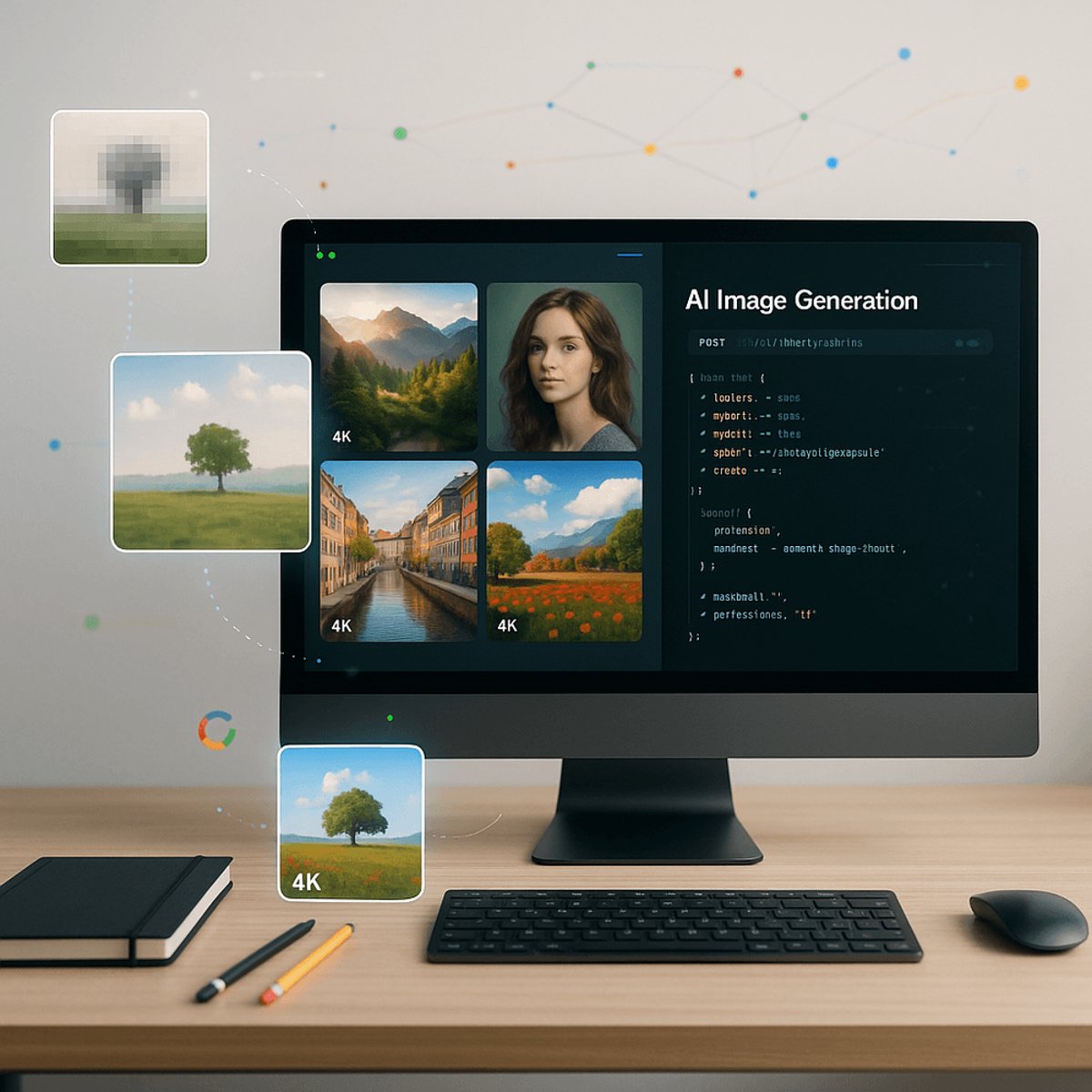
Google just dropped Nano Banana Pro, its most powerful image generation model yet, built on the new Gemini 3 platform. The upgrade brings 4K resolution capabilities, web search integration, and professional-grade editing controls that put it squarely against OpenAI's DALL-E and Adobe's Firefly. For creative professionals and developers, this isn't just an incremental update - it's Google betting big on becoming the go-to platform for AI-powered visual content creation.
Google just fired the latest shot in the AI image generation wars. The company's new Nano Banana Pro model, unveiled today, represents a massive leap forward in both capability and ambition, delivering 4K image generation alongside web search integration that no competitor currently matches.
Built on Google's Gemini 3 large language model released earlier this week, Nano Banana Pro addresses the biggest complaints about its predecessor: resolution limitations and creative control. Where the original Nano Banana topped out at 1024x1024 pixels, the Pro version generates crisp 2K and 4K images that rival professional photography equipment.
But it's the web search integration that really sets this apart. Users can now ask the model to "look up a recipe and generate flash cards" or pull real-time information to create infographics. That's a direct challenge to OpenAI's ChatGPT Plus, which still requires users to manually feed it information.
The professional features read like a wish list from creative agencies. Nano Banana Pro gives users granular control over camera angles, scene lighting, depth of field, focus, and color grading. The model can blend up to 14 objects within a single image while maintaining consistency across up to five people - crucial for brand campaigns and marketing materials.
Google's pricing strategy reveals its target market. At $0.24 per 4K image compared to $0.039 for the original 1024px version, this isn't meant for casual users experimenting with AI art. The company's clearly positioning Nano Banana Pro as a professional tool that competes with Adobe's Firefly and Midjourney's premium tiers.
The rollout strategy shows Google's ecosystem advantage in action. Nano Banana Pro becomes the default image generator in the Gemini app, though free users get limited generations before being bumped back to the original model. Google AI Plus, Pro, and Ultra subscribers get higher thresholds, plus access through Notebook LM, Google Slides, Vids, and the company's new video tool Flow.
Developers can tap the model through the Gemini API, Google AI Studio, and Antigravity, Google's new IDE. That integration path gives Google a distribution advantage that standalone AI image companies can't match.
The company's also baking in SynthID watermarking technology directly into the Gemini app. Users can upload any image and get instant detection of whether it was created or modified by Google's models. It's a smart defensive move as AI-generated content floods social media and regulatory pressure mounts.
What Google didn't mention speaks volumes too. No support for C2PA, the industry-standard watermarking protocol backed by Adobe, Microsoft, and others. That suggests Google's betting its own standard will win through distribution rather than cooperation.
The timing isn't coincidental. Adobe just announced major Firefly updates, Meta's experimenting with AI image features in Instagram, and OpenAI keeps teasing DALL-E improvements. Google needed something that clearly leapfrogs the competition, and 4K generation with web search integration delivers that.
For creative professionals, this changes the calculus entirely. The ability to generate publication-ready 4K images while pulling real-time web data means fewer tool switches and faster workflows. Marketing teams can create campaign assets that incorporate current trends without leaving the Google ecosystem.
Google's Nano Banana Pro isn't just another AI image model - it's a clear statement that the company views visual AI as core infrastructure, not a side project. The combination of 4K generation, web search integration, and deep ecosystem integration creates a compelling package for professionals, even at premium pricing. The real test won't be the image quality, but whether Google can maintain this lead as OpenAI, Adobe, and others inevitably respond with their own upgrades. For now, Google's holding the best hand in the AI image generation game.