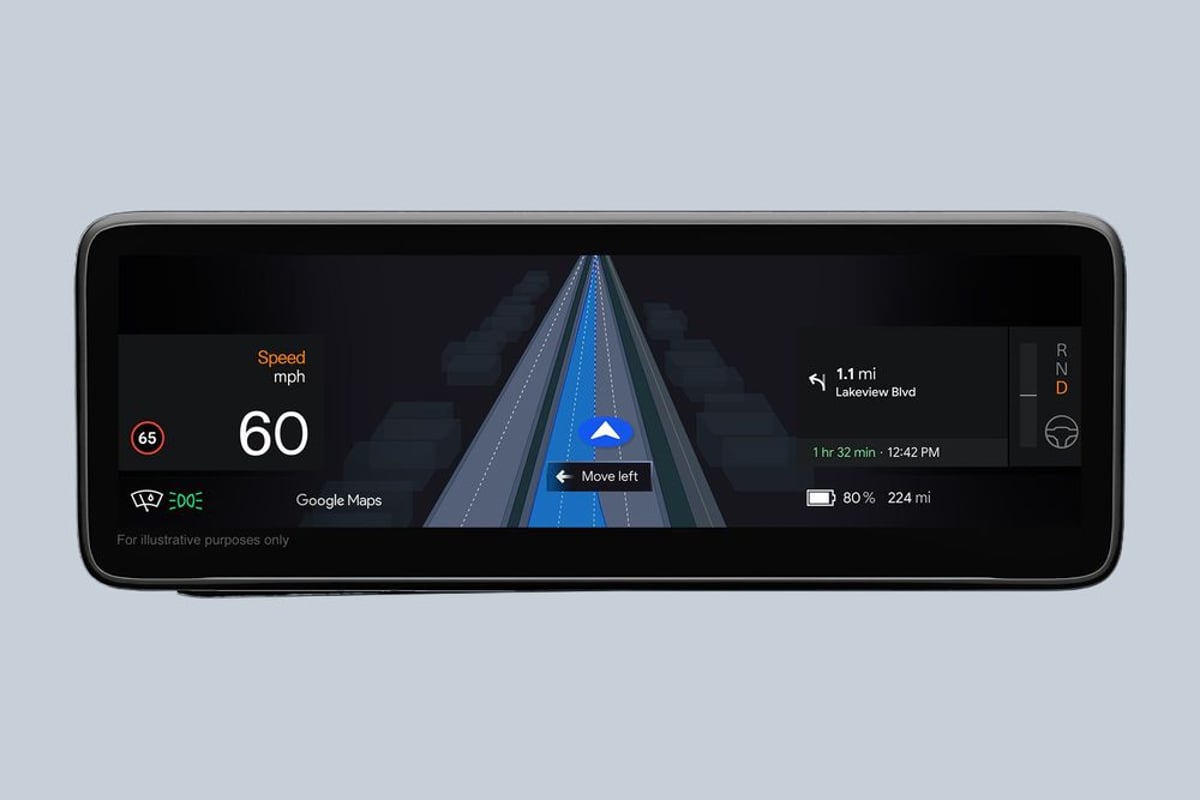
Google just rolled out live lane guidance for Polestar 4 drivers in the US and Sweden, marking the first deployment of camera-powered AI navigation that tells drivers exactly when and where to merge lanes. The feature uses the EV's front-facing camera to analyze road markings in real-time, potentially reducing missed exits and last-minute lane changes that plague highway driving.
Google is taking navigation beyond turn-by-turn directions with its new live lane guidance system, now rolling out exclusively to Polestar 4 electric vehicles in the US and Sweden. The feature represents a significant leap in AI-powered automotive assistance, using the car's front-facing camera to continuously analyze lane markings and road signs in real-time.
The system works by feeding visual data from the vehicle's camera directly into Google Maps' AI engine, which then provides customized audio and visual cues about optimal lane positioning. According to Google's blog post, drivers stuck in the left lane with an upcoming right-side exit will receive specific guidance about when to begin merging across multiple lanes.
"With live lane guidance, just glance at your dash display to see exactly which lane you can be in at any given moment," Google explained in Tuesday's announcement. The feature aims to eliminate the common highway anxiety of realizing you're in the wrong lane with limited time to safely merge.
Polestar's head of UX/UI Sid Odedra positioned the launch as part of a broader safety strategy. "Live lane guidance continues the path of Polestar's driver centric UX strategy, reducing driver stress and improving safety by making missed exits and last-minute lane changes much less of a worry," Odedra said in a statement.
The integration builds on Google's five-year partnership with Polestar, which uses Android Automotive OS to power its infotainment systems. This deep software integration has already brought features like Google Chrome browser and high-definition mapping capabilities to Polestar vehicles.
The timing of this launch reflects the growing sophistication of in-vehicle AI systems. While traditional GPS navigation relies on pre-mapped data and satellite positioning, live lane guidance represents a shift toward real-time computer vision analysis. The system must process visual information, interpret road infrastructure, and correlate that data with navigation routes - all while maintaining the split-second responsiveness required for highway driving.
For now, the feature remains limited to highway driving and requires vehicles equipped with Google's built-in Android platform. Google hasn't disclosed specific technical requirements for the camera hardware or processing power needed to run the AI analysis locally versus in the cloud.
The restricted rollout suggests Google is treating this as a controlled pilot before broader deployment. The company confirmed plans to expand both the geographic availability and the types of roads supported, while also working with additional automakers to integrate similar systems.
Industry observers see this as Google's latest move to cement its position in automotive software, competing with Apple's CarPlay and emerging players in the connected car space. The live lane guidance feature exists alongside standard Google Maps capabilities like live traffic alerts and estimated drive times, but represents a more advanced integration that requires deeper hardware partnerships.
The launch also highlights the increasing importance of camera-based systems in modern vehicles, as automakers look beyond traditional sensors for advanced driver assistance features. While Tesla has popularized camera-heavy approaches for autonomous driving, Google's implementation focuses specifically on navigation enhancement rather than full vehicle control.
Google's live lane guidance represents a meaningful step toward more intelligent navigation systems that understand not just where you're going, but how to get there safely. While currently limited to a single vehicle model in two markets, this camera-powered AI approach could reshape how we think about in-car navigation. The real test will be whether drivers find the system genuinely helpful or just another digital distraction - and how quickly Google can scale the technology across its growing roster of automotive partners.