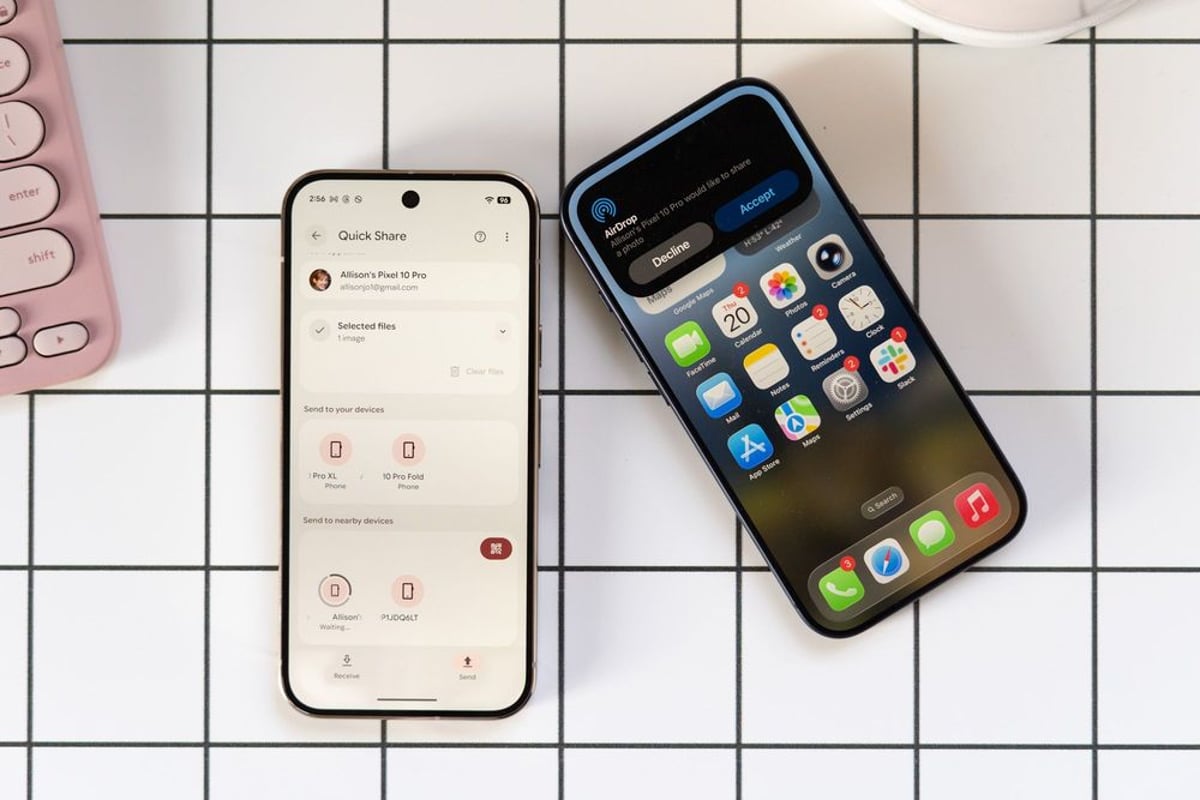
Google is breaking down the iOS-Android barrier at scale. After quietly testing AirDrop compatibility on its Pixel 10 lineup last year, the company just confirmed it's expanding Quick Share integration to third-party Android manufacturers - potentially bringing seamless file transfers between iPhones and hundreds of millions of Android devices. Eric Kay, Google's VP of engineering for Android, told Android Authority that "a lot more" devices will get the feature "very soon," marking a rare moment of détente in the decades-long iOS-Android rivalry.
Google just made its biggest move yet to erase the blue bubble-green bubble divide. The company confirmed it's bringing AirDrop compatibility to Android devices beyond its own Pixel lineup, a shift that could fundamentally change how billions of people share files across the iOS-Android chasm.
Eric Kay, vice president of engineering for Android at Google, dropped the news during a press briefing this week. "We spent a lot of time and energy to make sure that we could build something that was compatible not only with iPhone but iPads and MacBooks," Kay told Android Authority. "Now that we've proven it out, we're working with our partners to expand it into the rest of the ecosystem, and you should see some exciting announcements coming very soon."
The timing is strategic. Google first rolled out AirDrop support to its Pixel 10 devices in late 2025, positioning the flagship as the only Android phone that could natively communicate with Apple's proprietary wireless transfer protocol through Quick Share - Android's answer to AirDrop, previously known as Nearby Share. The pilot program apparently went well enough to warrant a full ecosystem expansion.
But Google isn't naming names yet. While the company hasn't revealed which manufacturers are getting Quick Share-AirDrop integration first, the breadcrumbs are already visible. London-based Nothing teased AirDrop support back in November, and chipmaker Qualcomm - whose Snapdragon processors power most flagship Android phones - hinted at similar compatibility around the same time. That suggests devices from Samsung, OnePlus, Motorola, and other Android heavyweights could be next in line.
The technical achievement here shouldn't be understated. Apple's AirDrop has long been a walled garden, using a combination of Bluetooth Low Energy and peer-to-peer Wi-Fi to create ad-hoc connections between Apple devices. Getting Android phones to speak that language required reverse-engineering Apple's protocols and building interoperability layers that didn't exist before. Google's Quick Share had to become bilingual.
This development arrives as both companies face mounting pressure to play nice. The European Union's Digital Markets Act has been forcing Apple to open up its ecosystem, including mandating more user-friendly data portability between iOS and competing platforms. Kay acknowledged Google and Apple have been collaborating on improved data transfer processes since early 2024, with joint efforts spotted in Android Canary 2512 builds tested on Pixel devices last December.
"We're also going to be working to make it easy for people who do decide to switch to transfer their data and make sure they've got everything they had from their old phone," Kay said during the briefing. Translation: Google wants to make jumping ship from iPhone as painless as possible, while Apple's being nudged by regulators to stop making it difficult.
The enterprise implications are massive. Corporate IT departments have long struggled with mixed-device environments where iPhone users couldn't easily share files with Android colleagues without third-party apps or cloud uploads. Native cross-platform file sharing could streamline workflows in BYOD (bring your own device) workplaces and reduce friction in industries like healthcare, construction, and field services where quick media transfers are critical.
For Apple, this represents a calculated risk. AirDrop has been a sticky feature keeping users locked into the Apple ecosystem - once you experience the magic of instant photo sharing between devices, switching to Android feels like a downgrade. But regulatory pressure and competitive dynamics may have forced Cupertino's hand. If Android phones can AirDrop, one of Apple's key differentiators evaporates.
The rollout strategy will be telling. If Google prioritizes flagship devices from Samsung and other major partners first, we'll see Quick Share-AirDrop compatibility hit hundreds of millions of phones within months. But if the feature trickles out slowly or gets buried in software updates, adoption could lag. Kay's "very soon" timeline suggests Google wants to move fast, likely aiming for announcements around Mobile World Congress in late February or Google I/O in May.
What remains unclear is whether Apple will reciprocate by making iPhones better at receiving files from Android devices, or if this will remain a one-way street where Android phones do the heavy lifting to accommodate iOS users. Early testing suggests the integration works both ways, but Apple hasn't officially commented on the partnership's scope.
The broader trend here is unmistakable: the smartphone platform wars are entering a new phase where interoperability trumps exclusivity, at least on the features regulators care about. Messaging via RCS, data portability, and now file sharing are all becoming cross-platform battlegrounds where neither Apple nor Google can afford to be seen as the company blocking progress.
Google's decision to spread AirDrop compatibility across the Android ecosystem marks a turning point in how tech giants approach platform interoperability. What started as a Pixel exclusive is becoming an industry-wide feature that could reshape user expectations around cross-platform compatibility. The real test comes in the next few months as Google's manufacturing partners roll out support - and as enterprise IT departments evaluate whether this finally solves their mixed-device file sharing headaches. If Nothing and Qualcomm's early signals are any indication, the days of asking "Are you iPhone or Android?" before sharing a photo might finally be ending.