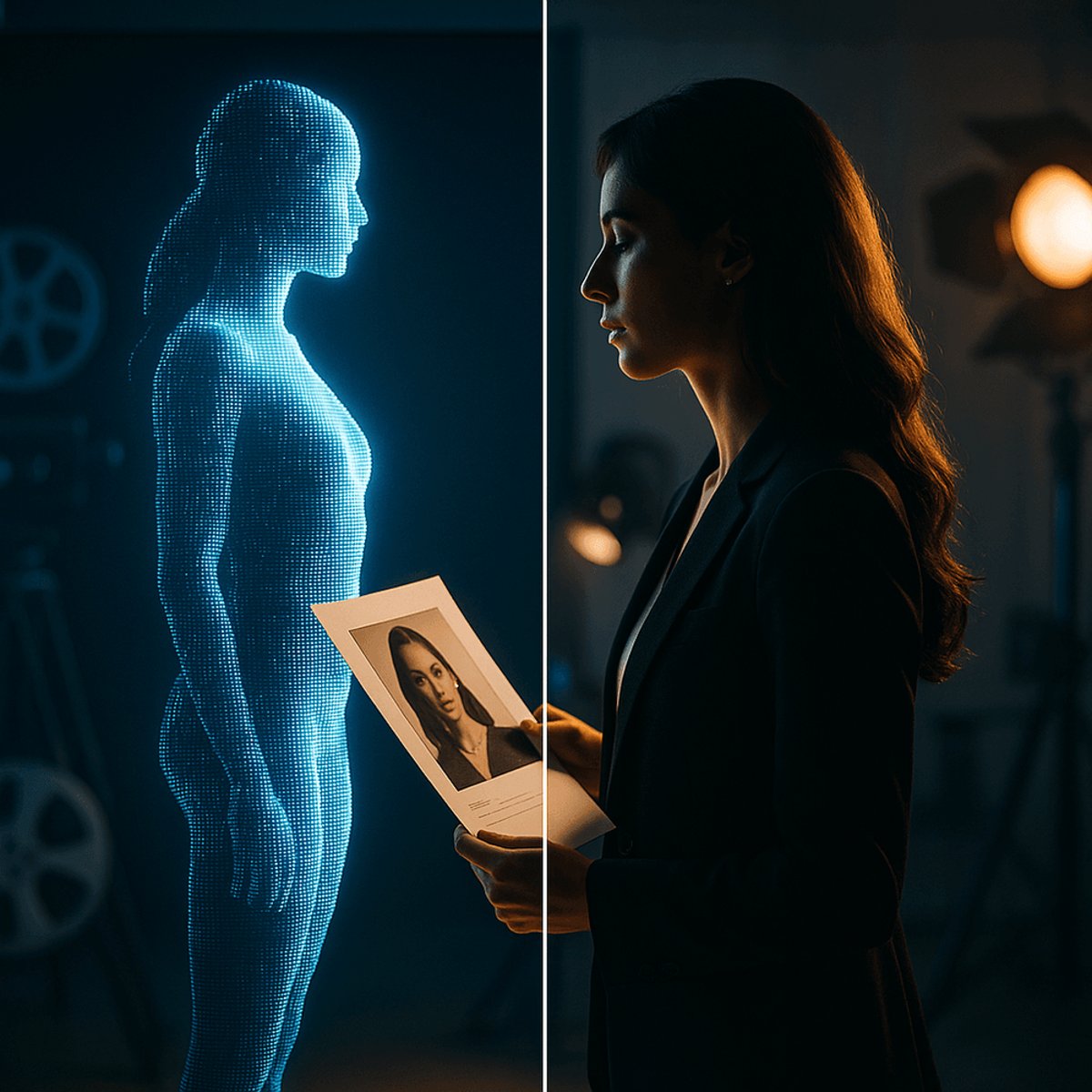
Hollywood's nightmare just got a face and an Instagram account. Tilly Norwood isn't real, but the backlash against this AI-generated actress seeking actual representation is very much alive. With Emily Blunt calling it "really, really scary" and SAG-AFTRA firing back with stern warnings, the entertainment industry's AI reckoning has officially begun.
The entertainment industry just got its first real glimpse of its AI-powered future, and the reaction has been swift and brutal. Tilly Norwood looks like any other aspiring actress on Instagram - London-based, 40,000 followers, professionally shot headshots. Except she doesn't exist.
Created by Xicoia, the AI division of production company Particle6, Norwood represents something Hollywood has been dreading for years: a synthetic performer sophisticated enough to fool audiences and potentially replace human actors. Dutch producer Eline Van der Velden, who founded Particle6, introduced Norwood at the Zurich Film Festival in September and is now actively seeking representation for her digital creation.
The industry's response has been immediate and visceral. Emily Blunt, the acclaimed actress known for "Oppenheimer" and "A Quiet Place," discovered Norwood's existence during a Variety podcast recording. "Good Lord, we're screwed. That is really, really scary," Blunt said. "Come on, agencies, don't do that. Please stop. Please stop taking away our human connection."
But it's SAG-AFTRA's response that carries the most weight. The union representing entertainment professionals released a blistering statement that pulls no punches about synthetic performers like Norwood.
"To be clear, 'Tilly Norwood' is not an actor, it's a character generated by a computer program that was trained on the work of countless professional performers - without permission or compensation," SAG-AFTRA wrote. The union argues that AI performers lack "life experience to draw from, no emotion" and that audiences aren't interested in "computer-generated content untethered from the human experience."
The timing couldn't be more charged. OpenAI just released Sora 2, making AI-generated video more accessible than ever. This technological leap has made scenarios like Tilly Norwood not just possible, but increasingly practical for studios looking to cut costs.
Van der Velden attempted damage control with a defensive Instagram post on Norwood's account. "She is not a replacement for a human being, but a creative work – a piece of art," Van der Velden wrote. "Like many forms of art before her, she sparks conversation, and that in itself shows the power of creativity."
But the industry isn't buying the "art project" framing. The pushback reflects deeper anxieties about AI's role in creative industries that have been building for years. SAG-AFTRA and the Writers Guild of America have already fought for AI protections in recent contract negotiations, understanding that synthetic performers could fundamentally alter the economics of entertainment.
"Producers should be aware that they may not use synthetic performers without complying with our contractual obligations, which require notice and bargaining whenever a synthetic performer is going to be used," SAG-AFTRA warned in their statement.
The Norwood controversy represents a inflection point for Hollywood. Unlike previous AI discussions focused on scripts or special effects, this touches the core of what makes entertainment human. The question isn't whether AI can create convincing performers - Norwood's 40,000 followers suggest it already can. The question is whether audiences will accept them, and whether the industry's human workforce can survive the transition.
For now, traditional Hollywood is drawing a line in the sand. But with production costs rising and AI capabilities advancing, the pressure to embrace synthetic performers will only intensify. Van der Velden's search for Norwood's representation isn't just about one AI actress - it's a test case for the entire industry's future.
The Tilly Norwood saga is just the opening act in Hollywood's AI drama. While Van der Velden frames her creation as artistic expression, the industry sees an existential threat to human performers. As AI video technology advances and production costs rise, more synthetic actors are inevitable. The real question isn't whether Hollywood will accept AI performers, but how it will protect human creativity in the process. For now, the resistance is fierce - but technology rarely waits for consensus.