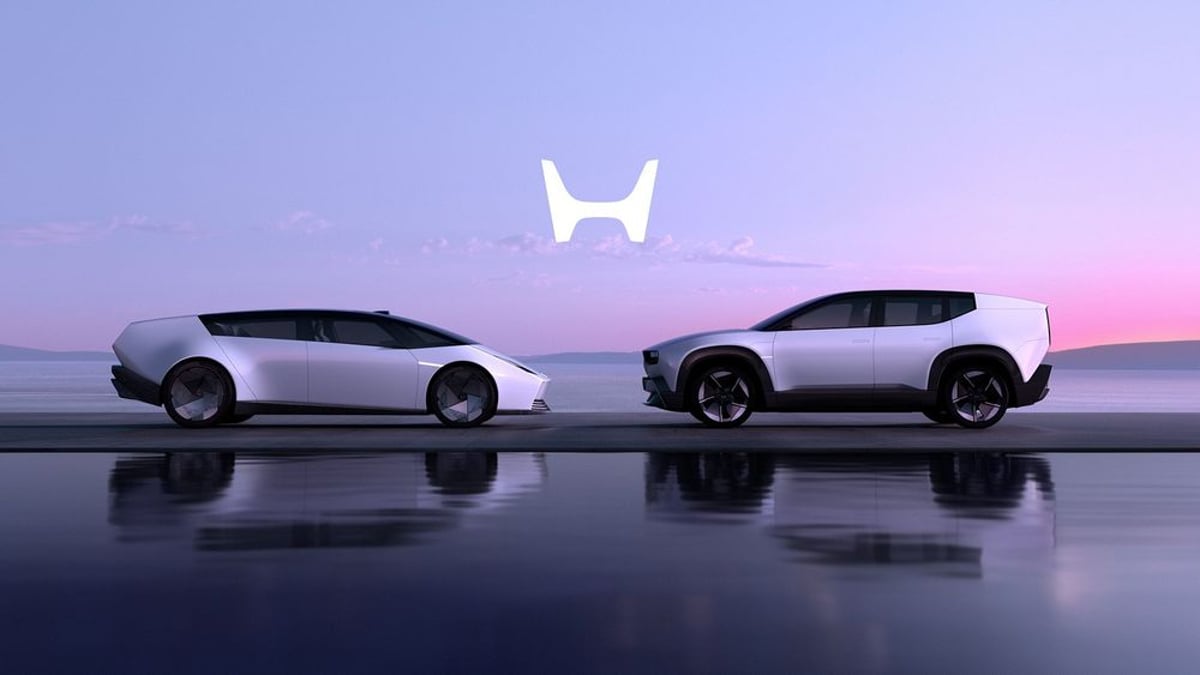
Honda just pulled the plug on its entire Zero electric vehicle lineup - the SUV, Saloon, and Acura RSX - marking a stunning retreat from what was supposed to be the company's EV future. The Japanese automaker is staring down its first annual loss since going public 50 years ago, with projected losses hitting ¥630 billion (roughly $4.4 billion) by the end of this month. It's a brutal casualty of President Trump's tariffs and a rapidly shifting auto landscape that's leaving traditional carmakers scrambling.
Honda is abandoning its electric vehicle ambitions in spectacular fashion. The company announced today it's scrapping the entire Zero Series lineup - the sleek sedan and SUV that were supposed to lead Honda's charge into the EV era, along with the sporty Acura RSX that debuted to fanfare last year. The reason? An "extremely challenging earnings situation" that's about to make history for all the wrong reasons.
The numbers are brutal. Honda expects to post a net loss between ¥360 billion and ¥630 billion (that's $2.5 to $4.4 billion) for the fiscal year ending this month. According to The Financial Times, this would mark Honda's first annual loss since the company went public half a century ago in 1976. For a manufacturer that's weathered oil crises, recessions, and the 2008 financial meltdown without posting a full-year loss, this is seismic.
The Zero Series was supposed to be Honda's answer to Tesla and the wave of Chinese EV makers flooding global markets. Unveiled at CES earlier this year with much fanfare, the Zero SUV and Saloon promised cutting-edge battery technology and Honda's legendary reliability wrapped in a futuristic package. The Acura RSX was positioned as the performance halo car that would prove electric vehicles could be thrilling. None of them will ever see a showroom floor.
What happened? Start with President Trump's tariffs, which have hammered automakers importing vehicles and components into the US market. Honda, which manufactures extensively in North America but still relies on global supply chains for key components, has been caught in the crossfire. The tariffs have squeezed margins just as the company was trying to fund a massive transition to electric powertrains.
But the tariffs aren't the whole story. Honda's troubles reflect a deeper crisis across the traditional auto industry. The company had been one of the more aggressive legacy players in electrification, but aggressive doesn't mean profitable. Developing new EV platforms from scratch is phenomenally expensive, and Honda was betting billions on technology that hasn't yet proven it can make money outside of the luxury segment.
The failed merger with Nissan earlier this year was supposed to solve some of these problems by sharing development costs and achieving scale in battery production. When those talks collapsed, Honda was left holding the bag on massive R&D expenses it can no longer justify. The company is now in full retreat mode, cutting costs wherever it can to stem the bleeding.
The timing couldn't be worse. Chinese EV makers like BYD are ramping up global expansion with vehicles that undercut Japanese and American manufacturers on price while matching them on technology. Meanwhile, Tesla continues to dominate the premium EV market in the US and Europe. Honda's withdrawal from its most ambitious EV program leaves it without a clear answer to either threat.
Industry analysts are already speculating this won't be the last major automaker to scale back EV ambitions in 2026. The gap between bullish EV projections from three years ago and today's market reality is forcing painful recalculations across the industry. Honda's decision to cut its losses now rather than hemorrhage billions more on vehicles that might never turn a profit could look prescient - or it could mark the moment the company ceded the future to competitors.
For Honda loyalists who've been waiting for a compelling electric option from the brand, this is a gut punch. The Zero Series represented genuine innovation and a fresh design language that broke from Honda's conservative recent history. Now it's vaporware, joining a growing list of EV concepts that never made it to production as market conditions shifted.
The ripple effects will extend beyond Honda's balance sheet. Suppliers who'd tooled up for Zero Series production are now stuck with stranded capacity. Dealers who'd invested in EV charging infrastructure and training are left without products to sell. And Honda's engineering teams who spent years developing these vehicles are likely facing layoffs as the company restructures around a more conservative product roadmap.
Honda's Zero cancellation is more than one company's retreat - it's a warning signal for the entire auto industry. The path to electrification is proving far more expensive and uncertain than the confident projections of just a few years ago suggested. With trade tensions adding unpredictability to an already challenging transition, expect more automakers to follow Honda's lead in scaling back ambitious EV timelines. The question now isn't whether traditional manufacturers can catch Tesla and Chinese competitors in electric vehicles, but whether they can survive the transition at all. For Honda, survival means pulling back to fight another day, even if it means sacrificing the future it had promised.