Microsoft is floating a radical UI experiment that could bring macOS-style functionality to Windows 11. The PowerToys team just unveiled the Command Palette Dock, an optional top menu bar that would give users quick access to tools, system monitoring, and commands - borrowing heavily from Linux, macOS, and even older Windows versions. It's a concept for now, but the company's actively seeking feedback from the Windows community on whether this PowerToy deserves to ship.
Microsoft just threw a curveball at the Windows community. The company's PowerToys team is experimenting with something Windows users haven't seen in years - a persistent menu bar that sits at the top of your screen, much like what macOS users have enjoyed for decades. They're calling it the Command Palette Dock, and it represents one of the more interesting UI experiments to emerge from Redmond in recent memory.
The proposal landed on GitHub with concept images and technical specs, immediately sparking debate among Windows enthusiasts. According to Niels Laute, a senior product manager at Microsoft working on PowerToys, the dock is designed from the ground up to be flexible. "It can be positioned on the top, left, right, or bottom edge of the screen, and extensions can be pinned to three distinct regions of the dock: start, center, and end," Laute explained in the GitHub issue thread.
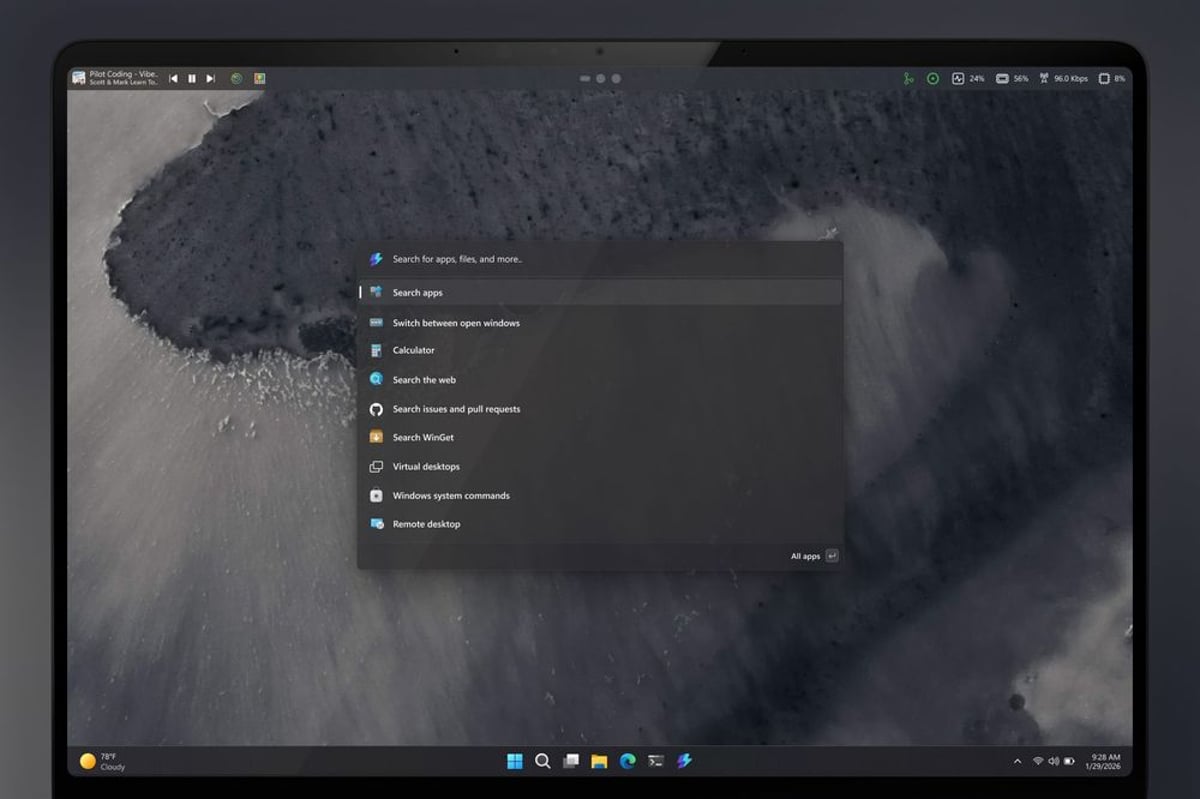
This isn't just about aesthetics. The Command Palette Dock would give users quick access to system resource monitoring - think CPU usage, memory stats, network activity - alongside shortcuts to frequently used tools and commands. It's the kind of persistent utility that power users have been cobbling together with third-party apps for years, now potentially baked into Microsoft's official PowerToys suite.
The customization options go deep. Users would be able to tweak background colors, adjust styling, and apply custom themes to match their desktop setup. Extensions can be freely reordered between the three dock regions, and the whole thing can snap to any screen edge. That flexibility matters in an era where Windows runs on everything from ultrawide monitors to tablet hybrids.
What makes this particularly interesting is how it builds on Microsoft's existing Command Palette launcher, which shipped last year as a Spotlight-style quick access tool for Windows 11. That feature already lets users quickly fire up commands, launch apps, and access development tools without hunting through menus. The dock would essentially make that functionality persistent and always visible, rather than something you summon with a keyboard shortcut.
The timing feels significant. Microsoft has been rethinking Windows 11's interface in fits and starts, sometimes adding features users love, sometimes removing ones they relied on. A customizable dock represents a middle ground - optional for users who want their taskbar minimal, but there for power users who need constant system visibility.
Developers can already experiment with an early version by importing the project from Microsoft's PowerToys GitHub repository into Visual Studio. The fact that Microsoft is soliciting public feedback this early suggests the company genuinely hasn't decided whether to ship this. That's either refreshingly transparent or a sign the team needs validation before investing serious engineering resources.
The concept images show a sleek horizontal bar with widget-style elements displaying system info, pinned apps, and quick toggles. It's reminiscent of what Linux desktop environments like KDE and GNOME have offered for years, and what Apple has refined to an art form in macOS. For Windows, it would mark a return to persistent menu bars not seen since Windows 7's days of customizable toolbars.
There's obvious appeal for developers, sysadmins, and anyone who needs constant visibility into what their machine is doing. But whether mainstream Windows 11 users would adopt it remains an open question. PowerToys has always occupied a strange space - officially supported by Microsoft, but targeted at enthusiasts willing to tinker.
The feedback phase will be critical. If the community response is lukewarm, this could quietly disappear. But if Windows users show genuine enthusiasm, Microsoft might finally give them the persistent system dashboard they've been requesting for years.
This Command Palette Dock experiment represents Microsoft's willingness to borrow good ideas from competing platforms while giving Windows users something they've lacked for years - persistent, customizable system visibility. Whether it ships depends entirely on community response over the coming weeks. For power users who've relied on third-party solutions to monitor system resources and access tools quickly, this could become an essential addition to the PowerToys arsenal. For everyone else, it's a reminder that Windows 11 is still evolving, even if that evolution sometimes looks backward to features older operating systems got right the first time.