The Milano Cortina 2026 Winter Olympics just closed, and Samsung made it clear the company's betting big on AI as the connective tissue for major global events. The tech giant distributed nearly 3,800 Galaxy Z Flip7 Olympic Edition devices to athletes, embedded 26 Galaxy S25 Ultra phones into the Opening Ceremony broadcast, and deployed over 850 AI-powered translation devices across venues. It's less about the podium selfies and more about Samsung stress-testing its Galaxy AI features at scale - with LA28 already in sight.
Samsung just wrapped its biggest Olympics activation in years, and the real story isn't the podium selfies - it's the company turning the Winter Games into a live stress test for Galaxy AI. From Milan's historic Palazzo Serbelloni to the slopes of Livigno, Samsung deployed its latest hardware and AI-powered features across nearly every touchpoint of the Milano Cortina 2026 experience. With the LA28 Summer Games less than two years away, the Korean tech giant is clearly positioning itself as the infrastructure layer for how fans, athletes, and broadcasters experience major sporting events.
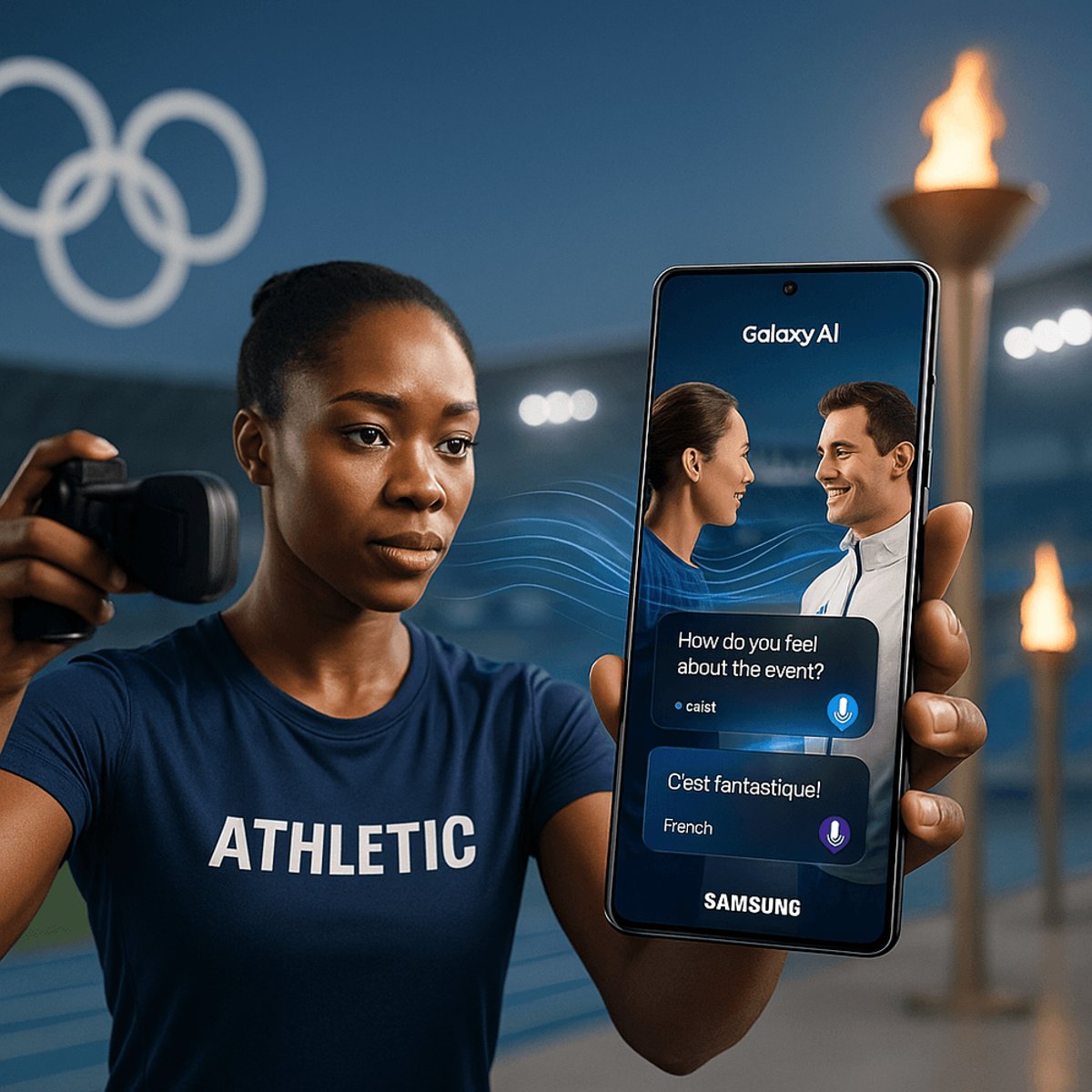
The numbers tell the deployment story. Samsung distributed the Galaxy Z Flip7 Olympic Edition to nearly 3,800 Olympians and Paralympians, according to the company's recap. But the device wasn't just a sponsor giveaway - it doubled as a field test for Galaxy AI capabilities under intense, real-world conditions. Features like Interpreter (on-device real-time translation), Dual Recording (simultaneous front and rear camera capture), Photo Assist, and Now Brief all shipped on the Olympic Edition, giving Samsung live feedback from thousands of users across multiple languages and use cases.
The Interpreter feature got particular attention. Samsung equipped more than 850 support volunteers with Galaxy devices running the AI-powered translation tool, processed entirely on-device without network connectivity. That's a critical distinction in mountain venues where cellular infrastructure can be spotty. The move positions Samsung's on-device AI processing as a competitive advantage over cloud-dependent rivals, especially in environments where connectivity isn't guaranteed.
But Samsung's most aggressive play came in broadcast integration. For the first time at an Olympic Winter Games Opening Ceremony, 26 Galaxy S25 Ultra devices were embedded directly into Olympic Broadcasting Services (OBS) coverage. Positioned across athlete tunnels, stadium stands, and dynamic camera rigs, the phones captured wireless, real-time footage that complemented traditional broadcast infrastructure. It's a clear signal that Samsung wants its devices seen not just as consumer gadgets, but as legitimate broadcast tools - a narrative Apple has been pushing with iPhone Pro models for years.
The Victory Selfie feature - where medalists capture podium moments with the Galaxy Z Flip7 - became an official part of every medal ceremony across all Olympic and Paralympic events. Samsung says 73 athletes across 18 countries participated in Team Samsung Galaxy, sharing "Open always wins" content throughout the Games. The feature started as a viral moment at previous Olympics, but now it's institutionalized, giving Samsung guaranteed visibility at every medal presentation through LA28.
Inside Samsung House at Palazzo Serbelloni in Milan, the company hosted National Olympic Committee events, athlete visits, and media engagements. The venue featured an Olympic Edition Gallery showcasing Samsung's nearly four decades of Olympic partnership devices. It's brand building, but it also reinforces Samsung's long-term commitment to the Olympic movement - a stark contrast to tech companies that parachute in with one-off sponsorships.
Samsung also deployed 64 Galaxy Charging Stations across host cities and venues, keeping spectators powered during multi-hour event days. The company's monitors supported officiating in Short-Track Speed Skating, contributing to operational consistency during competition. These aren't headline features, but they demonstrate how deeply Samsung embedded itself into Games infrastructure.
The broader context here is Samsung's escalating competition with Apple and Chinese manufacturers like Xiaomi in the premium smartphone market. Galaxy AI is Samsung's current differentiation play, especially as hardware specs across flagship devices converge. The Olympics gave Samsung a global stage to showcase these features working at scale, under pressure, across diverse user groups and connectivity environments.
With LA28 on the horizon, Samsung's already laying groundwork for an even larger activation. The company's recap explicitly positions Milano Cortina as a stepping stone, promising to "continue to open up the Olympic and Paralympic experience with new perspectives, new technologies and new generations" through the Summer Games. Expect more broadcast integration, more AI features, and more devices distributed to athletes as Samsung tries to own the intersection of sports and mobile technology.
The Olympic partnership also gives Samsung a massive content and marketing engine. User-generated content from 3,800 athletes using Galaxy devices creates organic social proof that no ad campaign can replicate. Every Victory Selfie, every behind-the-scenes video captured with Dual Recording, every translation facilitated by Interpreter - it's all essentially free advertising for Galaxy AI capabilities.
But there's also risk. If devices fail, if AI translation misfires, or if broadcast integration creates technical issues during live coverage, Samsung's brand takes the hit on a global stage. The company's betting that its hardware and software are mature enough to handle the pressure. Milano Cortina appears to have validated that bet, setting the stage for an even bigger push in Los Angeles.
Samsung's Milano Cortina 2026 activation was less about brand visibility and more about proving Galaxy AI works at scale under real-world pressure. Distributing thousands of devices, embedding phones into live broadcast infrastructure, and deploying on-device translation across mountain venues gave the company invaluable field data ahead of LA28. It's a playbook that treats major sporting events as both marketing stage and product testing ground - and with the Summer Games approaching, expect Samsung to double down on positioning itself as the mobile infrastructure layer for how the world experiences live sports.