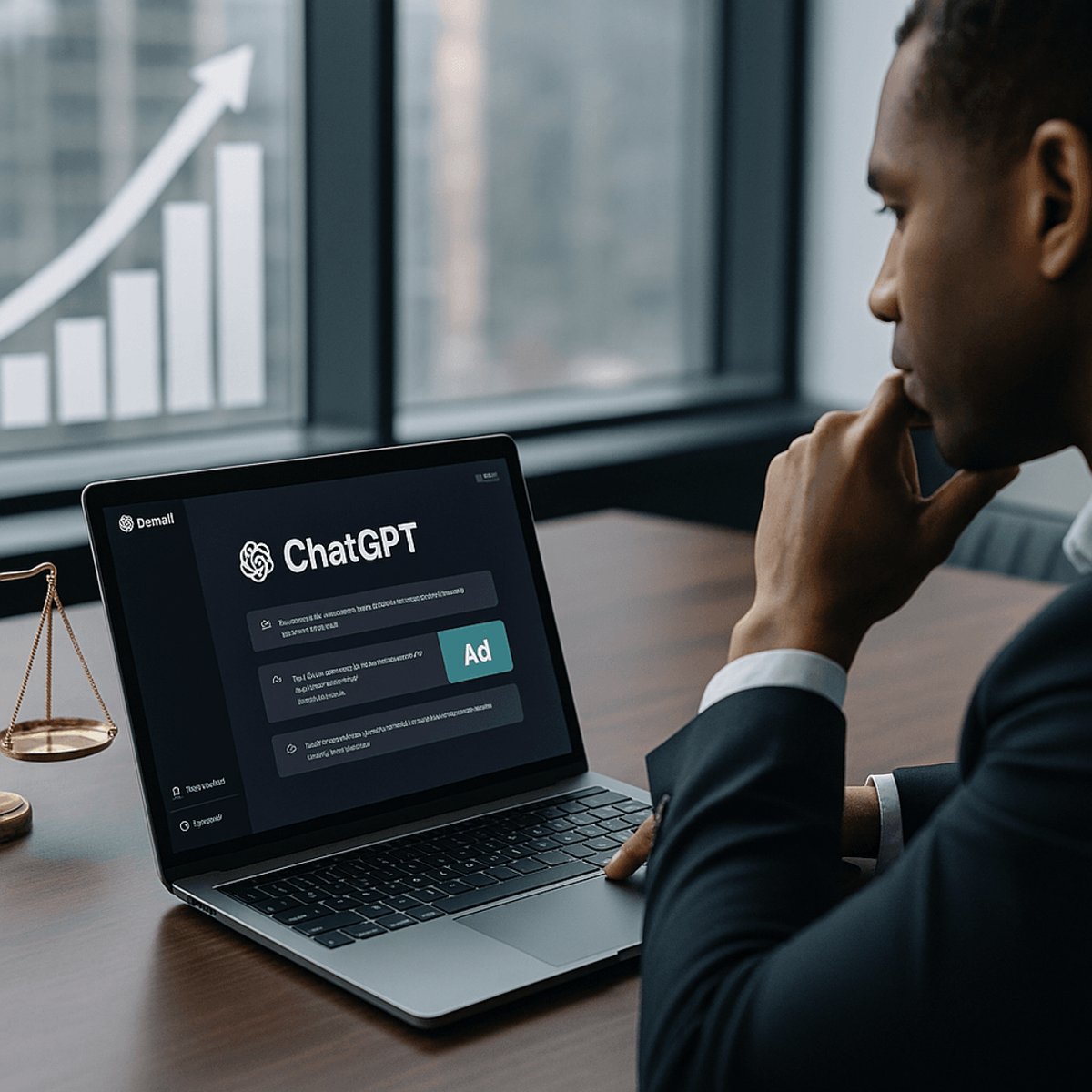
OpenAI is officially moving into advertising, and COO Brad Lightcap wants everyone to pump the brakes on judgment. In an exclusive interview with TechCrunch, Lightcap revealed the company's ad strategy will unfold over months, not weeks, as the AI giant carefully tests how to monetize its massive user base without destroying the product experience that made ChatGPT a household name. The announcement marks a pivotal shift for a company that's raised billions on the promise of subscription revenue alone.
OpenAI just confirmed what many in the industry suspected - it's testing the advertising waters, and it wants the world to know this won't be a Facebook-style pivot overnight.
COO Brad Lightcap sat down with TechCrunch to lay out the company's philosophy on ads, and his message is clear: give us time. "Ads can add to the product experience of users if they are done right," Lightcap said, urging patience as OpenAI figures out how to thread the needle between monetization and user trust. He's asking for "a few months" to see how the rollout performs.
The timing couldn't be more interesting. OpenAI is simultaneously pushing deeper into enterprise markets while exploring consumer monetization beyond its $20-per-month ChatGPT Plus subscription. The company's valuation recently hit stratospheric levels, but investors are increasingly pressing AI startups to prove they can generate sustainable revenue, not just burn through capital on compute costs.
Lightcap's emphasis on iteration suggests OpenAI learned from the missteps of other tech giants. Meta faced years of privacy backlash over its ad targeting. Google has wrestled with ad placement in search results without degrading quality. Now OpenAI faces an even trickier challenge - how do you insert ads into conversational AI without breaking the illusion of helpful, unbiased assistance?
The advertising industry is watching closely. Brands have been clamoring for access to ChatGPT's 200-plus million weekly active users, but the format remains unclear. Will ads appear as sponsored responses? Branded suggestions within conversations? Display units in the interface? Lightcap isn't saying yet, but his caution suggests OpenAI is still experimenting with formats.
What's particularly revealing is the framing - Lightcap doesn't apologize for exploring ads. Instead, he's positioning them as potentially enhancing the user experience, echoing arguments Google made decades ago about relevant ads being useful information. That confident stance suggests OpenAI believes it can crack the code where others have faced user revolt.
The business implications are massive. Advertising could unlock billions in additional revenue without requiring OpenAI to convert free users to paid subscriptions. For context, Google generates over $200 billion annually from ads. Even a fraction of that would transform OpenAI's financials and justify its eye-watering valuation.
But there's risk too. OpenAI has cultivated an image as the thoughtful AI leader, distinct from ad-driven tech giants. Introducing advertising could alienate users who see ChatGPT as a neutral tool, not a marketing channel. The company's nonprofit origins make the pivot even more delicate - critics are already questioning whether OpenAI has strayed too far from its original mission.
Lightcap's measured approach might be strategic positioning for inevitable backlash. By framing ads as experimental and gradual, OpenAI gives itself cover to adjust or retreat if users rebel. The "iterative process" language is straight from the startup playbook - test, learn, pivot.
Competitors are taking notes. Microsoft, which has invested over $13 billion in OpenAI, already runs ads in Bing Chat. Google is exploring ad formats in Bard. Anthropic and other AI startups will watch closely to see if OpenAI can make ads work without sacrificing product quality.
The coming months will reveal whether Lightcap's optimism is justified or wishful thinking. Can conversational AI support advertising without feeling like every response is compromised? Will users tolerate sponsored content in exchange for free access? Those questions will shape not just OpenAI's future, but the entire AI industry's monetization playbook.
OpenAI's cautious step into advertising represents a defining moment for the AI industry's business model evolution. If Lightcap and his team can deliver ads that genuinely enhance rather than disrupt the user experience, they'll unlock a revenue stream that could sustain the company's massive infrastructure costs while keeping ChatGPT free for millions. But if the execution feels forced or compromises the trust users place in AI assistants, the backlash could be swift and brutal. The next few months aren't just about testing ad formats - they're about determining whether conversational AI can support the advertising model that's funded the internet for decades, or if AI companies will need to find entirely new paths to profitability.