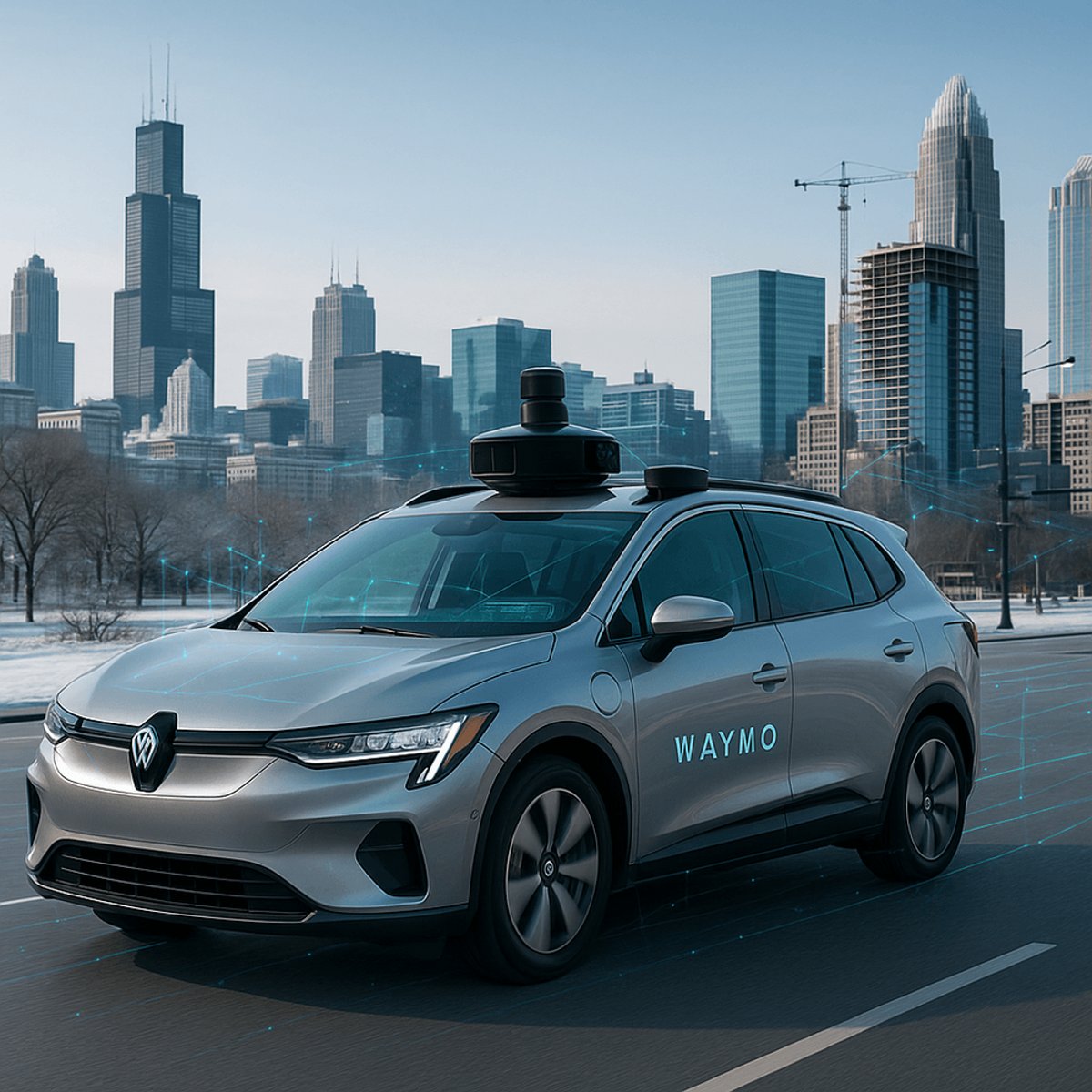
Waymo is pushing deeper into America's heartland and Southeast. Alphabet's autonomous vehicle unit announced it's beginning mapping and data collection operations in Chicago and Charlotte this week, marking its first major expansion push of 2026. The timing isn't coincidental - Waymo says it's now running fully driverless robotaxis across 10 U.S. cities, a milestone that positions it miles ahead of rivals like Cruise and Zoox in the race to commercialize self-driving technology.
Waymo is taking its self-driving ambitions to the Midwest and Southeast. The company confirmed to TechCrunch that mapping vehicles will hit the streets of Chicago and Charlotte this week, laying the groundwork for what could eventually become full robotaxi service in both metros.
The announcement comes as Waymo celebrates a quieter but more significant milestone - it's now operating fully autonomous rides without safety drivers in 10 U.S. cities. That's double the footprint the company had just 18 months ago, and it puts serious distance between Waymo and competitors still struggling to move beyond limited pilot programs.
Chicago and Charlotte represent a strategic pivot for Waymo. Until now, the company has focused heavily on Sun Belt cities with favorable weather and sprawling street grids - think Phoenix, Los Angeles, and Austin. Chicago throws a wrench into that pattern. The Windy City's brutal winters, with snow, ice, and temperatures that regularly dip below zero, will test whether Waymo's sensor suite can handle conditions that have historically plagued autonomous systems. Lidar and camera performance degrades in heavy precipitation, and road markings disappear under snow cover.
Charlotte poses different challenges. The North Carolina metro has exploded in population over the past decade, becoming a major financial hub outside New York. But its infrastructure reflects rapid, sprawling growth - think wide arterials, complex interchange systems, and a patchwork of newly constructed suburbs. It's the kind of environment where edge cases multiply: construction zones that change weekly, pedestrian crossings in unexpected places, and traffic patterns that don't match the neat grids of older cities.
The mapping phase typically takes months. Waymo's vehicles - outfitted with the company's fifth-generation autonomous driving system - will cruise both cities collecting millions of data points about road geometry, traffic signals, lane markings, and typical traffic flow patterns. That data feeds into the high-definition maps that autonomous vehicles rely on to navigate safely. Unlike consumer GPS, these maps are precise to the centimeter and include details like the exact height of curbs and the location of fire hydrants.
What Waymo isn't saying is when paying customers might actually be able to hail a robotaxi in either city. The gap between mapping and commercial launch can stretch from months to years, depending on regulatory approvals, testing requirements, and how quickly the AI systems adapt to local driving behaviors. In Phoenix, where Waymo has operated longest, that process took roughly two years from initial mapping to fully driverless paid rides.
But the company's confidence is showing. Ten cities with active robotaxi operations represents the largest deployment of autonomous vehicles in commercial service anywhere in the world. While competitors like Cruise have stumbled - GM's AV unit famously paused operations after a pedestrian dragging incident in San Francisco - Waymo has maintained a relatively clean safety record across millions of autonomous miles.
The expansion also signals where Waymo sees the business case for robotaxis maturing. Both Chicago and Charlotte are major metros with populations over 2 million in their metro areas, dense enough to support ride-hail services but sprawling enough that car ownership remains dominant. They're cities where Uber and Lyft have thrived, suggesting demand for convenient, affordable transportation alternatives.
For riders in both cities, don't expect to summon a Waymo immediately. The mapping phase is just step one in a multi-year process. But for the autonomous vehicle industry, it's another data point suggesting the technology is moving from science project to actual transportation service.
Waymo's push into Chicago and Charlotte isn't just about adding cities to a list - it's about proving autonomous vehicles can handle the messy reality of American transportation infrastructure. If the company can crack harsh Midwest winters and sprawling Southern suburbs, it removes two of the biggest question marks hanging over the robotaxi industry's scalability. For now, residents of both cities will see mapping vehicles cruising their neighborhoods. Whether they'll eventually trust those vehicles enough to climb in the back seat without a human driver remains the billion-dollar question.