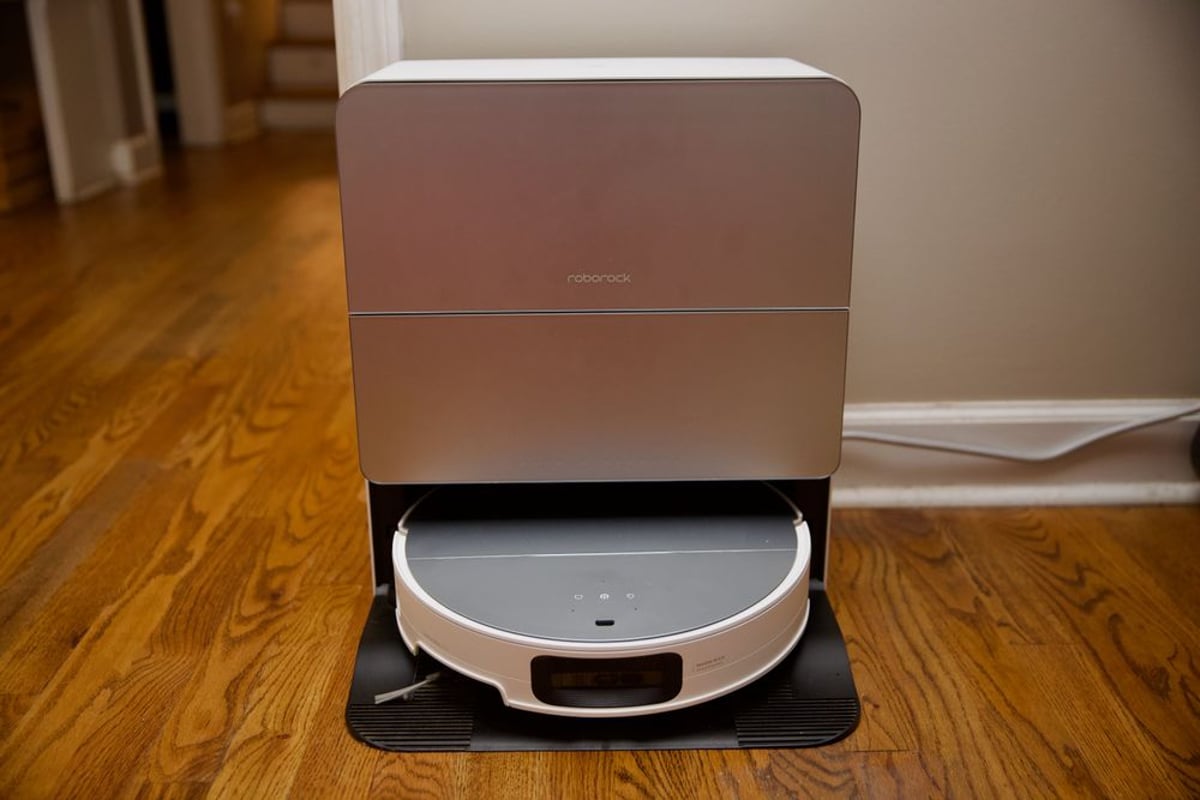
The smart home market's getting aggressive with extended holiday pricing as Roborock keeps its flagship Saros 10 robovac at a record $500 discount. The $1,100 price point represents the deepest cut yet for the AI-powered vacuum-mop hybrid that's been climbing best-seller lists since launch, signaling how competitive the consumer robotics space has become.
Roborock isn't backing down from its aggressive holiday pricing strategy. The company's Saros 10 robovac continues trading at $1,099.99 - a hefty $500 off its $1,599.99 launch price - across Amazon and direct channels, maintaining what industry watchers are calling the deepest discount in the premium robovac category this year. The extended pricing window suggests manufacturers are pushing hard to capture market share in the rapidly expanding smart home automation sector, which hit $80 billion globally in 2024 according to recent IDC data. But this isn't just about moving inventory - it's about establishing dominance in a category that's becoming central to connected home strategies. The Saros 10's standout feature is raw power: 22,000Pa of suction that demolishes everything from pet hair to cereal debris without breaking a sweat. During The Verge's extensive testing, the unit's Duo Divide brush system consistently outperformed competing models, particularly on high-pile carpets where most robovacs struggle. Even after months of continuous use, testers found zero hair tangles - a common pain point that typically requires manual intervention every few weeks. What sets this model apart from the pack isn't just brute force cleaning. The engineering here is legitimately impressive: a 10mm self-lifting mechanism lets it navigate room transitions that would strand lesser models, while the retractable lidar tower allows it to slip under furniture as low as 8cm. These aren't just spec sheet improvements - they translate to real-world reliability in homes with varied floor plans and furniture configurations. The mopping functionality adds another layer of versatility. Unlike basic vibrating pads that barely qualify as "cleaning," the Saros 10's system actively scrubs with enough pressure to handle sticky spills while smart enough to lift away from carpets automatically. It's the kind of thoughtful design that separates premium devices from budget alternatives flooding the market. Perhaps more strategically significant is the Matter integration. As smart home ecosystems consolidate around interoperability standards, devices supporting Matter protocols gain competitive advantages with platform-agnostic connectivity. The built-in "Rocky" voice assistant adds another layer of convenience, though it's worth noting this puts Roborock in direct competition with Amazon's Alexa ecosystem and Google's Assistant platform. The pricing strategy here reveals broader market dynamics. With venture funding for robotics startups down 40% year-over-year according to PitchBook data, established players like Roborock are capitalizing on reduced competition by maintaining premium features while cutting prices to expand market reach. It's a calculated move that could position them favorably as the smart home market matures and consolidates.
The extended $500 discount on Roborock's Saros 10 reflects more than just post-holiday inventory clearing - it signals an industry-wide push to establish market position as smart home adoption accelerates. With 22,000Pa of suction power, Matter integration, and genuine innovation in navigation and cleaning, the $1,100 price point makes this one of the most compelling premium robovacs available. For consumers, it represents a rare opportunity to access flagship-level features at a significant discount. For the industry, it shows how competitive dynamics are reshaping pricing strategies in connected home devices.