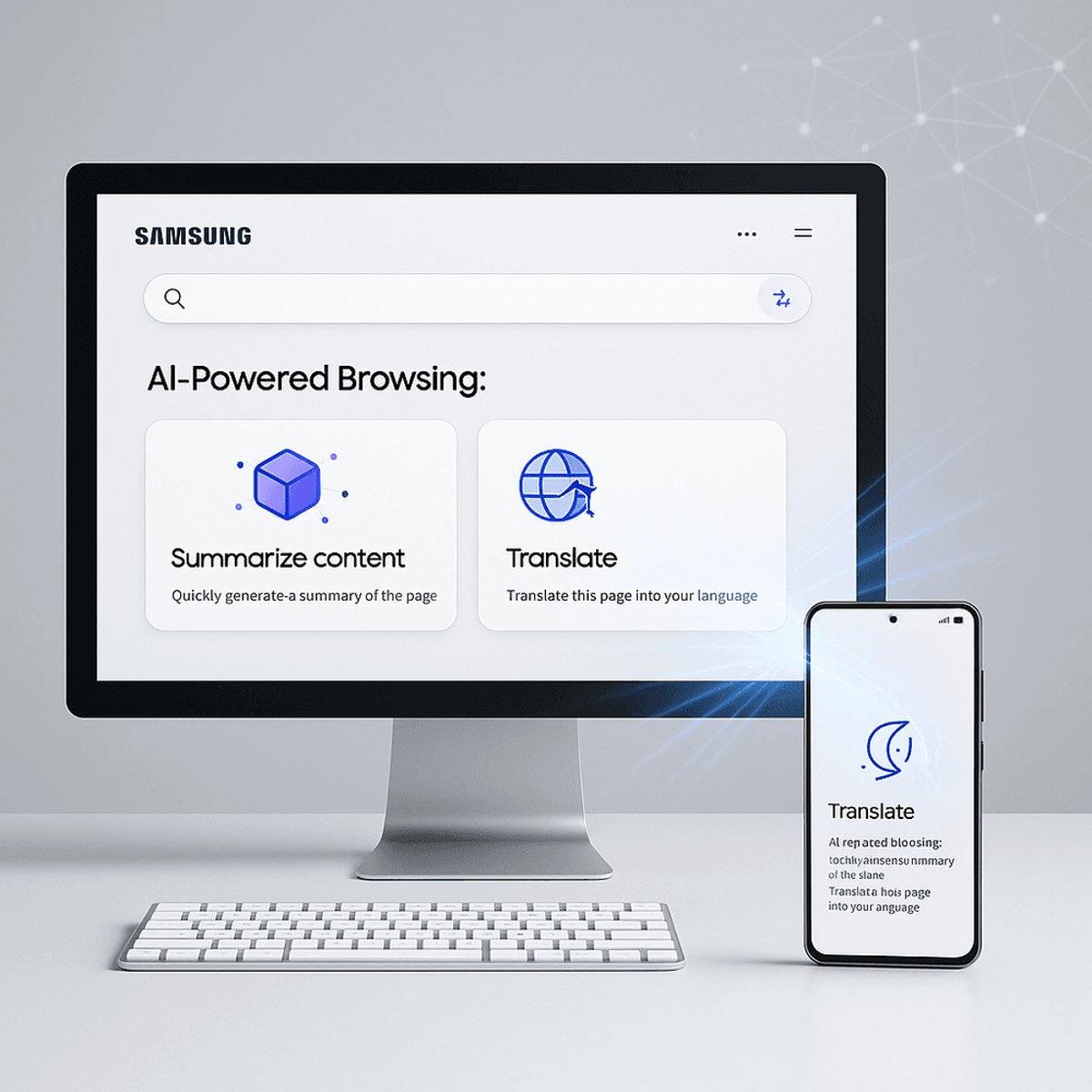
Samsung just threw down the gauntlet in the browser wars. The tech giant launched Samsung Internet for PC in beta today, bringing its popular mobile browser to desktop with Galaxy AI integration and seamless cross-device syncing. The move signals Samsung's ambitious push into ambient AI, positioning its browser as more than just a web portal but as an intelligent platform that anticipates user needs across the Galaxy ecosystem.
Samsung just made its boldest move yet in the browser space. The company's surprise launch of Samsung Internet for PC beta today marks the first time its popular mobile browser has ventured beyond smartphones, and it's coming loaded with Galaxy AI features that could shake up how we think about desktop browsing.
"We're excited to invite users to shape the future of browsing with us," Won-Joon Choi, Samsung's COO of Mobile eXperience, told reporters in Samsung's official announcement. "This beta program unlocks a more connected experience across mobile and PC, while setting the stage for more intelligent browsing experiences to come."
The timing couldn't be more strategic. While Google dominates desktop browsing with Chrome and Microsoft pushes Edge integration with Windows, Samsung is betting on something different - true cross-device intelligence that follows users wherever they go.
Samsung Internet for PC isn't just a desktop port of the mobile app. The browser syncs bookmarks, browsing history, and Samsung Pass data across devices, but the real differentiator is Galaxy AI integration. Users logged into their Samsung Account get access to Browsing Assist, which can instantly summarize web pages and translate content on the fly.
The cross-device handoff feature feels particularly clever. Switch from your Galaxy phone to your PC, and Samsung Internet will prompt you to pick up exactly where you left off - provided both devices are signed into the same Samsung account with Wi-Fi and Bluetooth enabled. It's the kind of seamless experience Apple has perfected with Safari and Handoff, but now available to Samsung's massive Android user base.
Security features mirror what Samsung's built into its mobile browser. Smart anti-tracking blocks third-party trackers automatically, while a Privacy Dashboard gives users real-time visibility into what's being blocked. "Samsung Internet is designed for the future of browsing," according to the company's statement, "bringing users safe, reliable and intelligent experiences that don't compromise on security or trust."
What's most intriguing is Samsung's vision for "ambient AI" - the idea that artificial intelligence should be seamlessly woven into everyday interactions rather than treated as a separate feature. Choi hinted at this future, describing how Samsung Internet will evolve "from a PC browser that waits for input to an integrated AI platform that understands users while protecting personal data at every level."
The beta launches today for Windows 11 and Windows 10 users (version 1809 and above) in the United States and Korea. Samsung plans broader international expansion but hasn't shared specific timelines. Interested users can sign up at browser.samsung.com/beta.
For Samsung, this represents more than just expanding their software footprint. It's about ecosystem lock-in. The more Samsung services users rely on across their devices, the stronger the incentive to stick with Galaxy phones, tablets, and potentially future Samsung PCs. Meta tried similar ecosystem plays with Facebook-branded apps, while Apple has perfected it with Safari, iCloud, and Handoff.
The competitive implications are significant. Samsung Internet already commands meaningful market share on Android, particularly in markets where Samsung phones dominate. Now those users have a reason to choose Samsung's browser on desktop too, potentially chipping away at Chrome's overwhelming dominance.
Whether Samsung can execute on its ambient AI vision remains the big question. The company's track record with software has been mixed - some Galaxy features feel genuinely innovative while others end up as bloatware users disable. But with Galaxy AI already showing promise in Samsung's latest phones and tablets, the browser expansion feels like a natural next step in building a truly connected ecosystem.
Samsung's browser expansion represents more than a new product launch - it's a strategic play for ecosystem dominance in the AI era. By bringing Galaxy AI to desktop browsing and enabling true cross-device experiences, Samsung is positioning itself as the alternative to Google's Chrome-centric web. The beta's success in the US and Korea could determine whether Samsung becomes a serious desktop browser contender or remains primarily a mobile player. For users tired of Chrome's data collection or seeking tighter integration with their Samsung devices, this could be the alternative they've been waiting for.