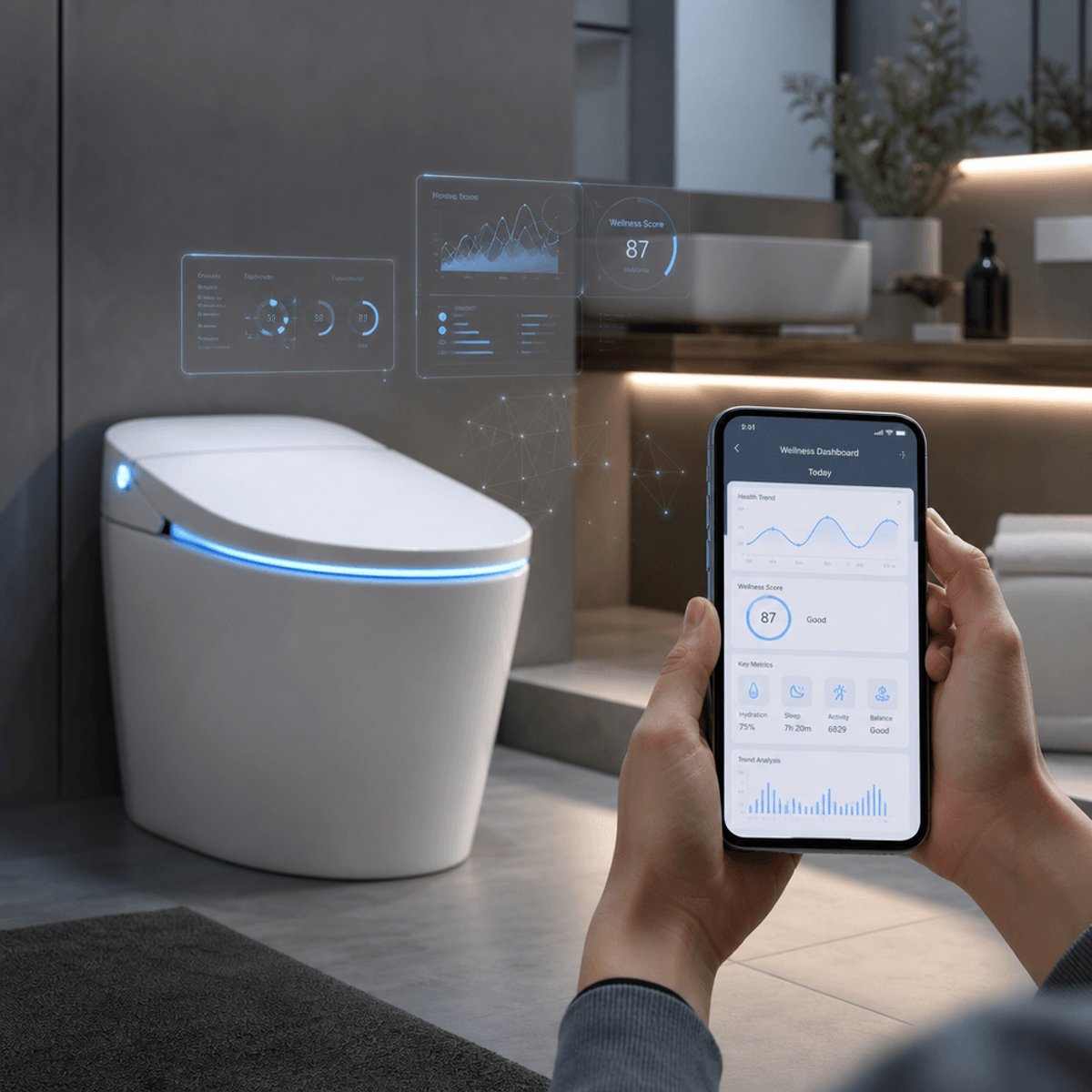
The bathroom is quietly becoming the newest frontier for artificial intelligence. A wave of smart toilets and add-on sensors now promise to scan your waste and flag potential gut health issues in real time. But according to a new investigation from Wired, the medical upside for most people may be far smaller than the marketing suggests.
There's a new category of smart home gadget quietly working its way into bathrooms, and it's not a fancy bidet. It's a toilet, or more often a toilet attachment, equipped with a camera and machine learning software that studies what you flush and tries to tell you something about your gut health. According to reporting from Wired, a handful of startups and established fixture makers have started shipping these systems, betting that consumers who already track steps, sleep and heart rate with wearables are ready to extend that obsession to digestion.
The pitch sounds straightforward enough. A sensor mounted inside or beneath the bowl captures an image before the flush, an algorithm classifies the result against established frameworks like the Bristol Stool Chart, and the data gets pushed to a companion app that logs trends over time. Some systems go further, using colorimetric analysis to flag signs of blood or unusual coloration that could, in theory, warrant a doctor's visit. It's the kind of ambient, passive health tracking that fits neatly into the broader push toward what the industry calls preventive or predictive wellness tech, a trend we've covered before in pieces on wearable health sensors moving mainstream.
But the reception from the medical community, as captured in Wired's reporting, is a lot more measured than the product pages. Gastroenterologists quoted in the piece note that for the average healthy adult, day-to-day variation in stool appearance is normal and rarely predictive of anything serious. The concern isn't that the technology doesn't work as advertised, it's that flagging minor anomalies to people with no underlying symptoms could just as easily generate anxiety and unnecessary doctor visits as it could catch something meaningful early. That tension, useful signal versus noisy alarm, is the same one that's dogged consumer wearables since the early Fitbit days, when heart rate spikes sent healthy users scrambling to urgent care.
[Image: A smart toilet sensor module mounted beneath a bowl, paired with a smartphone app dashboard showing stool tracking data]
There's also the practical question of who actually benefits. People managing chronic gastrointestinal conditions, like inflammatory bowel disease, might genuinely find value in consistent, quantified tracking rather than relying on memory and guesswork between doctor visits. That's a real and underserved need. But the smart toilet category, at least so far, is being marketed broadly to general wellness consumers rather than narrowly to patients with diagnosed conditions, which is where the skepticism from clinicians starts to bite. A gadget that's genuinely useful for a subset of patients with IBS or Crohn's disease isn't automatically useful, or even advisable, for someone with a perfectly ordinary digestive system.
[Video iframe: Explainer on how AI-powered health sensors are entering unconventional consumer categories]
There's a regulatory wrinkle here too. Devices that claim to detect signs of disease, even loosely, risk crossing into medical device territory, which brings a whole different compliance burden than a typical smart home product. So far, most of these toilet systems have stayed on the wellness side of that line, avoiding explicit diagnostic claims and instead framing themselves as tracking and awareness tools. But as the sophistication of the underlying computer vision and machine learning models improves, and as companies look for ways to differentiate in a crowded smart home market, that line could get tested. It's not hard to imagine a future where the FDA takes a closer look at what these products are actually claiming to do, particularly if any of them start suggesting they can catch early signs of colorectal cancer or other serious conditions.
For now, the smart toilet remains a niche curiosity more than a mainstream health tool, limited by price, awkward installation, and a general public that's still getting used to the idea of a camera in the bowl. But the underlying bet, that ambient AI sensing can be embedded into everyday fixtures most people already use daily, is one worth watching. It's the same logic that's driving smart mirrors, smart mattresses and continuous glucose monitors out of medical settings and into consumer bathrooms and bedrooms. Whether the bathroom turns out to be a genuinely useful data source or just another gadget nobody needed may depend less on the AI itself and more on whether companies can prove it actually changes health outcomes rather than just generating more data to scroll through.
Smart toilets sit at an odd intersection of novelty gadget and genuine medical tool, and right now the evidence leans more toward the former for the average user. There's clear potential for people managing chronic gut conditions, but for everyone else, the added anxiety of decoding ambiguous health flags may outweigh the benefit of passive tracking. As with so much AI-powered consumer health tech, the real test isn't whether the algorithm works, it's whether the data actually leads to better outcomes rather than just more things to worry about.