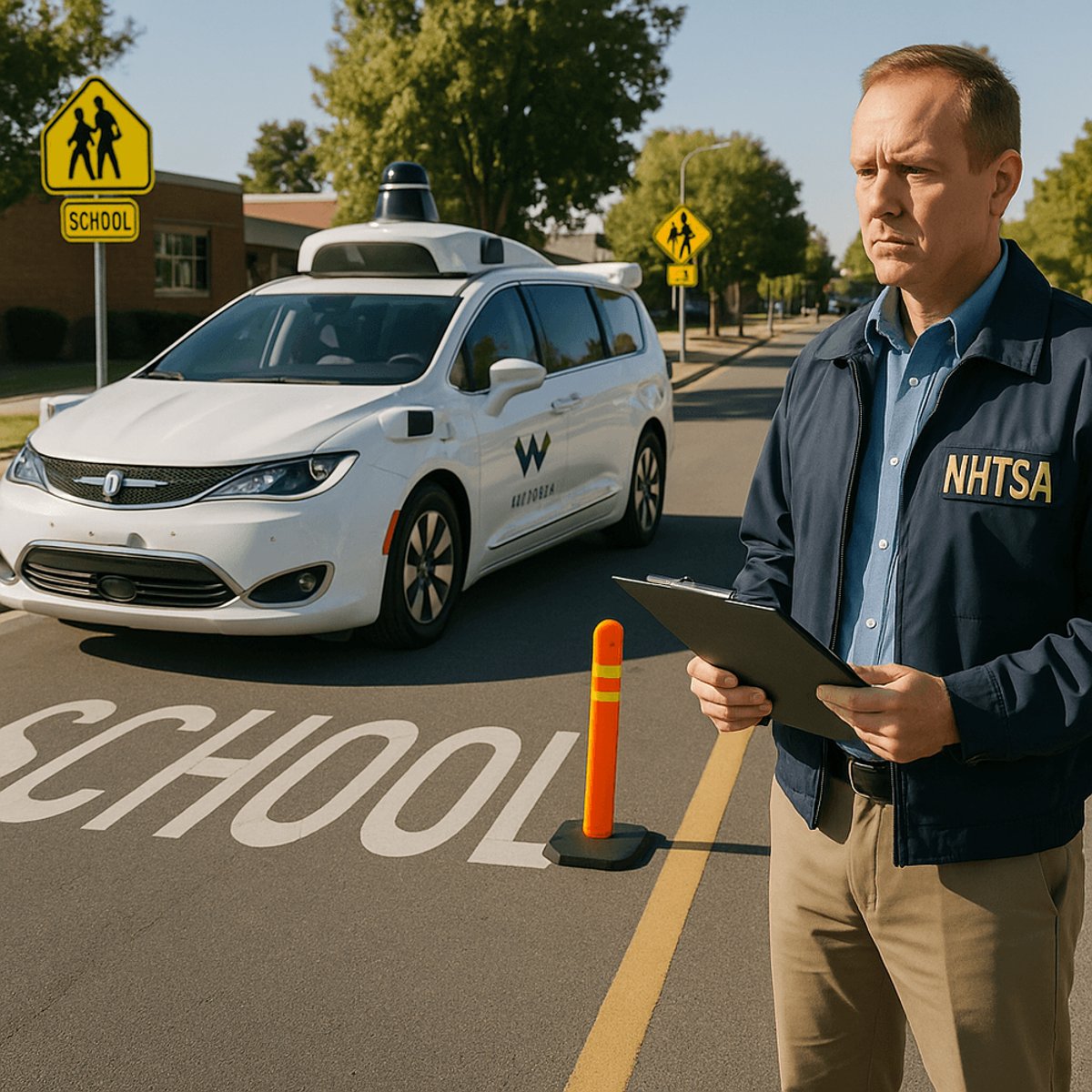
A Waymo robotaxi struck a child near an elementary school in Santa Monica on January 23, marking the latest safety incident to plague Google's autonomous vehicle unit. The child, whose age hasn't been disclosed, sustained minor injuries after stepping into the road from behind a parked SUV, according to Waymo's incident report. The National Highway Traffic Safety Administration has opened a formal investigation, adding to mounting regulatory scrutiny of the company's self-driving operations.
Waymo is facing fresh regulatory scrutiny after one of its autonomous vehicles struck a child near an elementary school in Santa Monica, intensifying the safety debate around driverless cars operating in residential neighborhoods.
The incident occurred on January 23 when a young pedestrian stepped into the roadway from behind a tall SUV, moving directly into the robotaxi's path. The vehicle detected the child and braked hard from approximately 17 miles per hour, but still made contact at 6 mph, according to Waymo's disclosure. The company said its sensors "immediately detected the individual as soon as they began to emerge from behind the stopped vehicle."
The child stood up immediately after the collision, walked to the sidewalk, and the robotaxi called 911, Waymo said. The vehicle remained stopped and moved to the side of the road until law enforcement cleared it to leave the scene. While the child's exact age hasn't been released, Waymo reported that injuries were minor.
The National Highway Traffic Safety Administration opened an investigation into the crash within days. "We will cooperate fully with them throughout the process," Waymo stated in its blog post. It's a familiar position for the Alphabet-owned company, which now finds itself juggling three separate federal safety investigations.
The timing couldn't be worse for Waymo. The company is already fighting fires on two other fronts - both involving schools. NHTSA launched a probe in October after a Waymo robotaxi illegally passed a stopped school bus in Atlanta, Georgia. Last week, the National Transportation Safety Board opened its own investigation after approximately 20 similar incidents were reported in Austin, Texas.
The pattern emerging from these investigations raises uncomfortable questions about how autonomous vehicles handle scenarios involving children. School zones represent some of the most unpredictable environments for self-driving systems - kids dart between parked cars, school buses stop frequently with flashing lights, and crossing guards manually direct traffic in ways that may not follow standard rules.
Waymo has built its reputation on safety, routinely releasing data showing its vehicles get into fewer accidents per mile than human drivers. The company operates commercial robotaxi services in San Francisco, Los Angeles, Phoenix, and Austin, with recent expansions into Atlanta and Miami. It's logged millions of autonomous miles across these markets.
But critics argue that raw mileage statistics don't capture the full picture. The question isn't just how often autonomous vehicles crash, but what types of crashes they cause and whether they can handle edge cases - like a child suddenly appearing from behind a parked SUV near a school.
The Santa Monica incident highlights a persistent challenge in autonomous vehicle development: occluded pedestrians. When people or objects block the view of pedestrians, even advanced sensor systems have limited time to react. Human drivers struggle with these scenarios too, which is why school zones have reduced speed limits and heightened enforcement.
Waymo's system did detect the child and brake hard, reducing speed from 17 mph to 6 mph before impact. That response time and braking performance will likely be central to NHTSA's investigation. Regulators will want to know if a human driver in the same situation would have performed better, worse, or similarly.
The broader autonomous vehicle industry is watching closely. Cruise, General Motors' self-driving subsidiary, saw its California operations suspended in 2023 after a pedestrian was dragged by one of its vehicles. The company still hasn't fully recovered from the regulatory and public relations fallout.
For Waymo, which has positioned itself as the industry leader in safety and transparency, these mounting investigations represent a critical test. The company has been more open than most competitors about disclosures, voluntarily reporting incidents to regulators and the public. But transparency only goes so far if the underlying safety questions remain unanswered.
Parents in neighborhoods where Waymo operates are already expressing concerns on social media and at city council meetings. School zones are supposed to be the safest places on the road, with multiple layers of protection for children. When autonomous vehicles struggle in these exact environments, it undermines public trust in the technology's readiness for widespread deployment.
Waymo hasn't indicated any plans to modify its operations around schools or adjust its technology in response to the incidents. The company maintains that its safety record remains strong and that cooperation with investigators will help improve the entire industry's understanding of autonomous vehicle behavior.
The Santa Monica collision lands Waymo in unfamiliar territory - defending its safety record across three simultaneous federal investigations, all involving scenarios around schools and children. As regulators dig into what went wrong and whether Waymo's technology is equipped to handle the chaos of school zones, the company's response will likely shape not just its own future, but the timeline for broader autonomous vehicle deployment nationwide. The industry's promise of safer-than-human driving faces its toughest test when the casualties involve the most vulnerable road users.