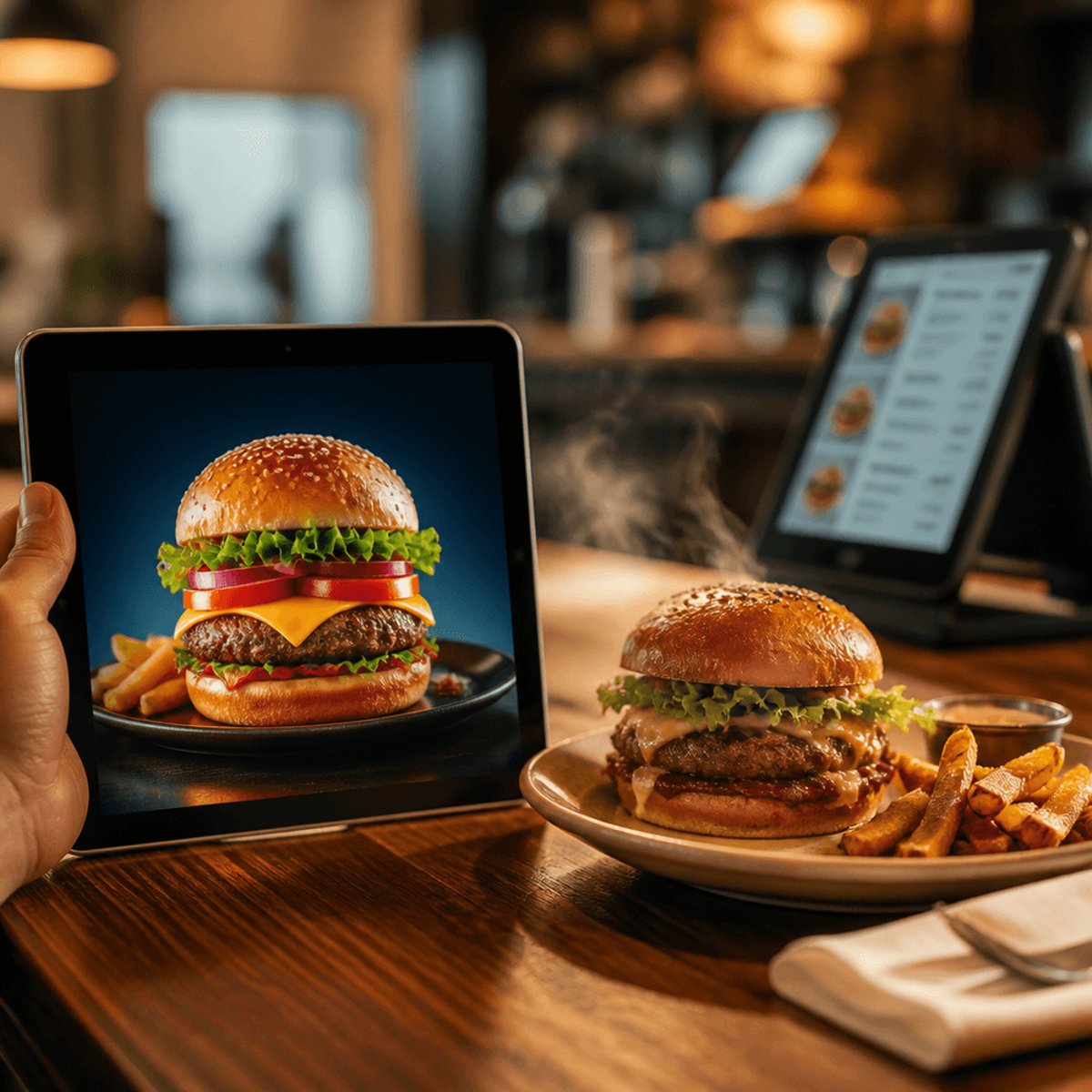
Restaurant menus are getting a strange makeover. Diners across social media are sharing screenshots of eerily plastic, oddly proportioned food photos that were clearly generated by AI, and the internet can't stop laughing, or cringing. According to Wired, the viral trend is just the visible tip of a much bigger shift happening behind the scenes at restaurants everywhere.
It started as a joke on social media: screenshots of restaurant menus featuring food photos that look almost right but not quite. A burger with too many sesame seeds arranged in an unnatural halo. Fries that glow with an oddly waxy sheen. A steak that seems to melt into the plate. Diners have been collecting these images for weeks now, and according to Wired, the culprit behind the uncanny valley of dinner menus is generative AI.
The report notes that small and mid-sized restaurants, the kind that can't afford a professional food photographer or a full marketing team, have quietly started leaning on AI image generators to fill out their menus, delivery apps, and social media pages. It's cheap, it's fast, and for a lot of owners juggling rent, staffing, and razor-thin margins, that tradeoff has felt worth it. The problem is that these tools still struggle with the fine details that make food look appetizing rather than alien: the way steam should curl off a bowl of noodles, the natural glisten of oil on a stir fry, the texture of bread crust.
What's interesting, and what Wired frames as the real story here, isn't just that the photos look weird. It's that this is a preview of something bigger. AI isn't just touching up marketing images anymore. It's being folded into how restaurants plan menus, price dishes, and even decide what to cook based on predicted demand. The viral, slightly off-putting photos are just the most visible, meme-able symptom of a much quieter shift where AI tools are increasingly involved in decisions that used to be entirely human.
This isn't happening in a vacuum. The broader food and hospitality industry has been experimenting with AI for a while now, from chatbot-run drive-thru orders to AI-generated recipe suggestions on grocery apps. What makes the menu photo trend land differently is that it's something regular people can see and judge instantly. You don't need to understand machine learning to notice that a photo of a taco looks like it was dreamed up by something that has never actually eaten one.
There's also a cost angle worth sitting with. Professional food photography for a single dish can run anywhere from fifty to a few hundred dollars once you factor in styling, lighting, and editing. For a restaurant with a menu of thirty items, that adds up fast. AI image generation tools, many of which cost less than a streaming subscription per month, offer an obvious shortcut. It's the same calculation that's driven small businesses toward AI for everything from customer service emails to social captions: not because the output is better, but because it's good enough, or at least good enough to ship.
The backlash, though, is real and growing. Diners on platforms like TikTok and Reddit have started calling out restaurants directly, and some owners have quietly swapped the AI images back out for real photos, or no photos at all, after getting mocked online. That reaction says something about where the line still sits for consumers. People seem fine with AI helping behind the scenes, but they notice, and they care, when it touches something as sensory and personal as the food they're about to eat.
What happens next probably depends on how fast these image tools improve. AI-generated visuals have gotten dramatically better at rendering realistic textures and lighting over just the past year, and food is exactly the kind of subject that could benefit from those gains, glossy surfaces, complex textures, natural imperfections. If the tools catch up, the uncanny valley menu photo might just quietly disappear, the same way a lot of early AI writing tells did once the outputs got smoother. Until then, expect the screenshots to keep circulating, and expect more restaurants to get caught in the crossfire of a trend they probably didn't even realize they were part of.
The viral snapshots of warped burgers and glowing fries make for an easy laugh, but the underlying story is less funny and more telling about where restaurant tech is headed. AI is no longer just a backend tool quietly optimizing inventory or scheduling, it's now visible on the menu itself, shaping the first impression a diner gets before they even sit down. Whether that ends up being a passing embarrassment or a permanent fixture of budget-conscious restaurant marketing probably depends on how quickly the technology improves and how much diners are willing to overlook in exchange for lower prices and faster service.