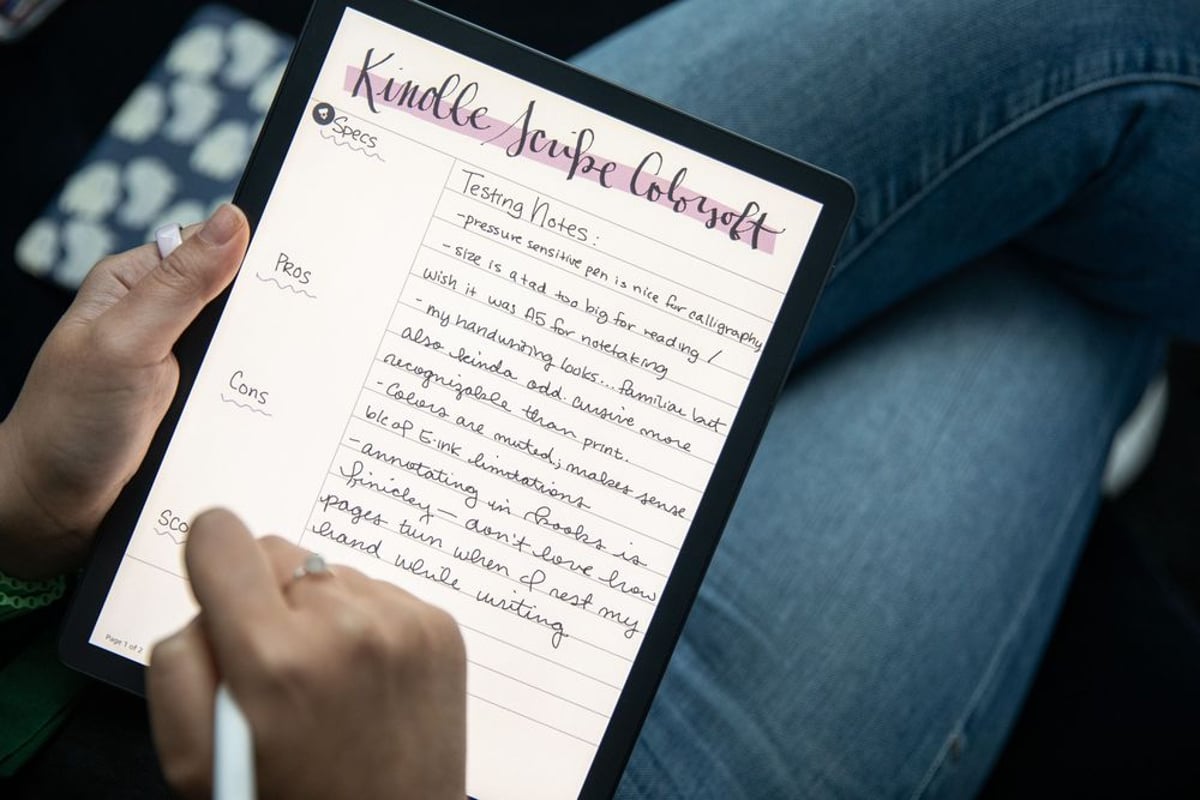
Amazon just pushed the Kindle Scribe into productivity device territory. Starting February 12th, the company's rolling out Send to Alexa Plus, a feature that pipes your handwritten notes and documents straight into its Alexa Plus AI assistant. The system can then summarize your scribbles, generate to-do lists, create calendar events, or help you brainstorm—turning the e-ink tablet into something closer to a digital assistant than just an e-reader with note-taking tacked on.
Amazon is making a play to reposition its Kindle Scribe lineup as legitimate productivity devices. The new Send to Alexa Plus feature, launching today for both the Kindle Scribe and the color-enabled Kindle Scribe Colorsoft, bridges the gap between analog note-taking and digital task management in a way the company hasn't attempted before.
Here's how it works: you take notes on the Scribe's e-ink display or import PDF documents, then send them to Amazon's AI-powered Alexa Plus assistant. The AI processes your handwriting or document text and can generate summaries, extract action items into to-do lists, create calendar events, set reminders, or even help you brainstorm next steps. It's Amazon's answer to the growing demand for devices that blur the line between consumption and creation.
The Verge's Sheena Vasani spent about a day testing the feature, primarily for caregiving tasks. Her verdict? It works best when you need to digest information into something actionable. The AI accurately summarized both handwritten notes and PDF documents, though she noted some limitations that Amazon will likely need to address as users push the system harder.
This launch matters because it represents a strategic shift for Amazon's hardware division. The Kindle Scribe debuted as an e-reader with note-taking capabilities—a hedge against the reMarkable and other digital paper tablets eating into Amazon's reading ecosystem. But Send to Alexa Plus transforms the device's value proposition entirely. You're no longer just marking up books or jotting down thoughts. You're feeding an AI system that can turn those inputs into structured, actionable data.
The timing also aligns with Amazon's broader AI ambitions. The company's been racing to catch up with competitors like Google, Microsoft, and OpenAI in the generative AI space. Alexa Plus launched last year as Amazon's upgraded, AI-powered voice assistant, but it needed killer use cases beyond answering questions. Integrating it with Kindle hardware creates a feedback loop: the more you use the Scribe for note-taking, the more valuable Alexa Plus becomes, and vice versa.
From a product standpoint, this addresses one of the Scribe's biggest weaknesses. Previous reviews, including The Verge's assessment of the Kindle Scribe Colorsoft, praised the hardware but questioned whether anyone really needed an Amazon-branded note-taking tablet when reMarkable and Supernote had already carved out that niche. Send to Alexa Plus gives Amazon a differentiation angle those competitors can't match: seamless integration with a mature AI assistant that lives across Echo devices, Fire tablets, and the Alexa app.
The feature's reliance on AI summarization and task extraction also taps into a growing trend in consumer tech—ambient productivity tools that reduce friction between capture and action. Apple's doing similar things with its handwriting recognition and Shortcuts integration on iPad. Microsoft's pushing Copilot into OneNote. Amazon's approach is arguably more accessible since it doesn't require users to learn complex workflows or automation rules. You write, you send, the AI handles the rest.
But there are questions Amazon hasn't answered yet. The company hasn't disclosed whether Send to Alexa Plus requires a subscription to Alexa Plus or if it's included with the Scribe purchase. Alexa Plus typically costs extra, and if users need to pay ongoing fees on top of the device's $339-plus price tag, adoption could stall. Amazon also hasn't detailed what happens to your handwritten data—whether it's stored locally, processed in the cloud, or used to train future AI models.
Competitive pressure's another factor. Meta and Google are both aggressively pushing AI features into hardware, from smart glasses to phones. If Amazon wants the Scribe to compete beyond its Kindle ecosystem loyalists, it'll need to keep iterating fast. The ability to summarize notes is table stakes. Users will soon expect real-time collaboration features, better handwriting-to-text accuracy, and deeper integration with third-party productivity apps like Notion, Todoist, or Google Calendar.
For now, though, Amazon's carved out a compelling narrative: the Kindle Scribe isn't just for readers anymore. It's for anyone who wants to bridge the tactile satisfaction of handwriting with the efficiency of AI-powered task management. Whether that's enough to justify the device's premium pricing in a crowded market remains to be seen, but Amazon's betting that AI integration can turn a niche e-reader into a productivity essential.
Amazon's Send to Alexa Plus feature transforms the Kindle Scribe from a niche e-reader into a genuine productivity tool by leveraging AI to turn handwritten notes into actionable tasks. It's a smart move that differentiates the Scribe from competitors and deepens the value of Amazon's Alexa Plus ecosystem. The real test will be whether users find the AI processing accurate and useful enough to justify the device's premium price—and whether Amazon can keep iterating fast enough to stay ahead of Apple, Google, and Microsoft's own ambient productivity plays. For now, it's the clearest signal yet that Amazon sees AI integration as the path forward for its entire hardware lineup.