Apple just pulled off a stunning reversal in China, posting 38% revenue growth in its latest quarter after 18 straight months of decline. The comeback wasn't fueled by breakthrough tech - the company simply priced the iPhone 17 at 5,999 RMB to qualify for Beijing's massive $43 billion electronics subsidy program, undercutting premium rivals like Huawei and Xiaomi at the exact moment millions of Chinese users were ready to upgrade from their aging iPhone 13 devices.
Apple is thriving in China again, and the tech giant didn't need folding screens or advanced AI to pull it off. The company reported a 38% revenue surge in China during its latest earnings call, driven almost entirely by iPhone demand that CEO Tim Cook called a "great quarter" for the region.
The turnaround marks a dramatic shift from the previous year and a half. Between 2024 and early 2025, Apple's China sales had declined for 18 consecutive months as domestic competitors like Huawei and Xiaomi gained ground with feature-rich flagship devices. Huawei even released a $2,800 trifold smartphone in September 2024, beating global rivals to market with the innovative form factor.
But Apple's comeback strategy reveals something crucial about the Chinese market - consumers still value brand prestige and ecosystem integration over marginal technical improvements. According to Wired, the company set new records for iPhone upgrades and saw double-digit growth in Android switchers, despite Apple Intelligence remaining unavailable in mainland China.
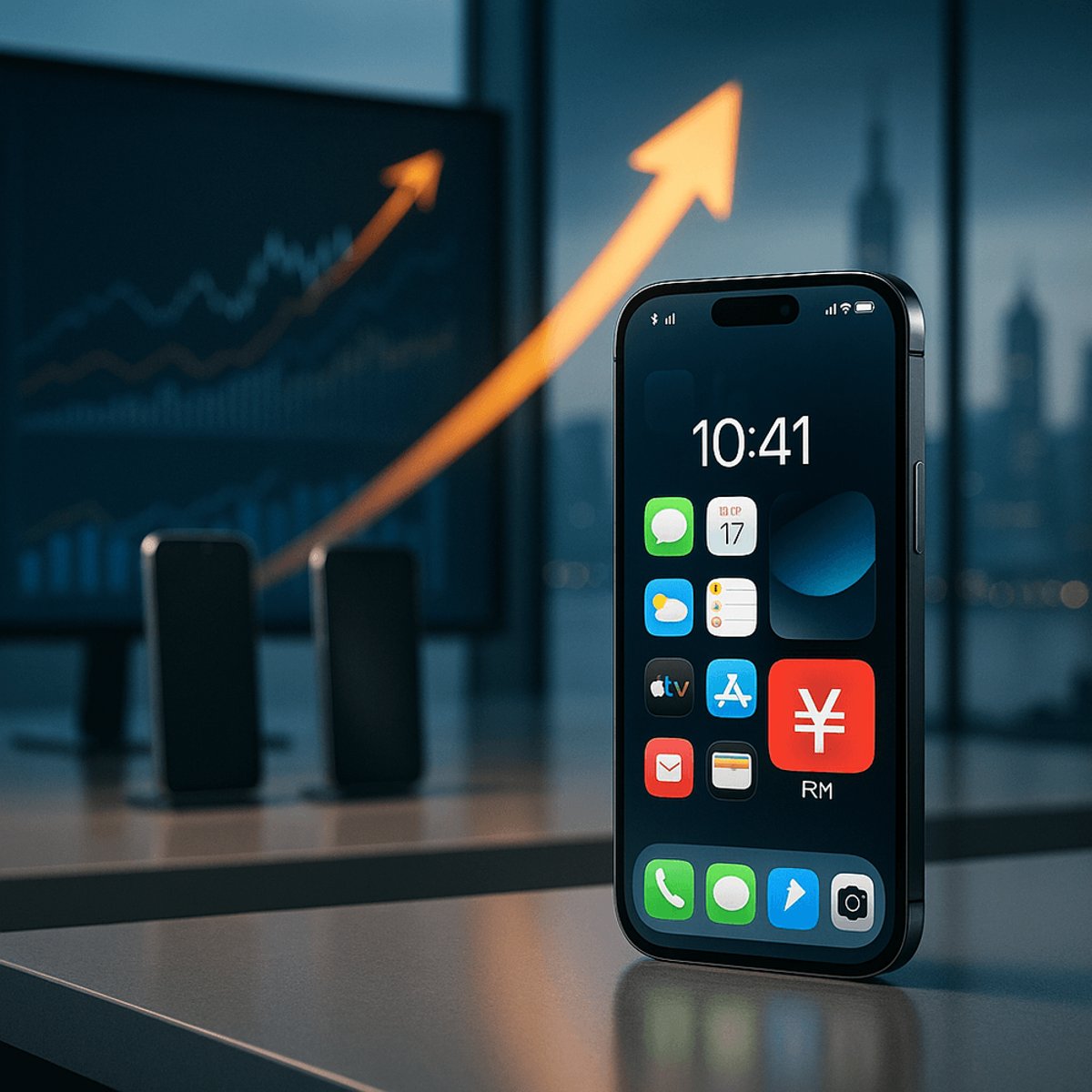
The iPhone 17's success hinged on strategic pricing more than innovation. Apple listed the baseline model at exactly 5,999 RMB (about $860), just under the 6,000 RMB threshold for Beijing's electronics subsidy program. That timing proved critical - the Chinese government spent roughly $43 billion in 2025 subsidizing purchases of electronics, appliances, and cars to stimulate the economy, offering up to 15% discounts on qualifying smartphones.
"Apple's last peak sales period came with the iPhone 13 series, and after a span of three to four years, its existing users have gradually entered the upgrade cycle this year," Arthur Guo, a Beijing-based research manager at IDC, told Wired. The convergence of government incentives and natural upgrade cycles created perfect conditions for Apple's resurgence.
The baseline iPhone 17 represented a bigger leap than usual from its predecessor. Traditionally, early adopters gravitate toward Pro and Pro Max models at launch, but the 2025 baseline device incorporated features previously reserved for premium variants. That convinced more users to upgrade immediately rather than wait, according to Gerrit Schneemann, a senior analyst at Counterpoint Research.
Chinese competitors weren't necessarily losing ground - they just weren't gaining it as fast. Guo noted that domestic brands like Xiaomi, Vivo, and Oppo posted strong growth, particularly with their higher-priced Pro and Pro Max variants. The exception was Huawei, which released its flagship device later than usual in late November and faced initial supply constraints. As Apple's most formidable high-end competitor in China, Huawei's absence during much of Q4 almost certainly boosted iPhone sales.
The China performance mirrors Apple's global momentum. Counterpoint data published this week shows the company captured a record 69% of the US smartphone market last quarter. While Chinese brands tout folding displays and sophisticated AI capabilities, Apple continues winning with incremental upgrades and ecosystem lock-in.
"It's a good story if you're Apple. It's the same old story if you're not Apple," Schneemann told Wired, summarizing the challenge facing domestic manufacturers. Despite nationalist rhetoric about supporting homegrown brands, Chinese consumers demonstrated they'll still choose iPhones when the price is right.
The victory carries a warning for the industry. As smartphone makers head into 2026 facing a memory chip shortage that could disrupt production, Apple has positioned itself with stronger momentum than rivals. The company proved it doesn't need to match competitors feature-for-feature - just price strategically and leverage government policy.
For Chinese tech giants, the lesson stings. They've invested heavily in innovation, from Huawei's trifold screens to advanced camera systems that technically outperform the iPhone. But all it took for Apple to regain dominance was upgrading the display and timing the launch to coincide with subsidies. "I'm not too sure how somebody like Oppo or Vivo or Xiaomi can break that kind of stranglehold," Schneemann added.
Apple's China comeback reveals the enduring power of brand loyalty and strategic pricing over pure technical innovation. By pricing the iPhone 17 to qualify for government subsidies and timing the launch when millions of users were ready to upgrade, the company reversed 18 months of decline without needing folding screens or advanced AI. As the smartphone industry faces chip shortages and economic uncertainty in 2026, Apple has demonstrated it can win in the world's most competitive market by playing to its strengths - ecosystem integration, design consistency, and smart market timing - rather than chasing the latest hardware trends.