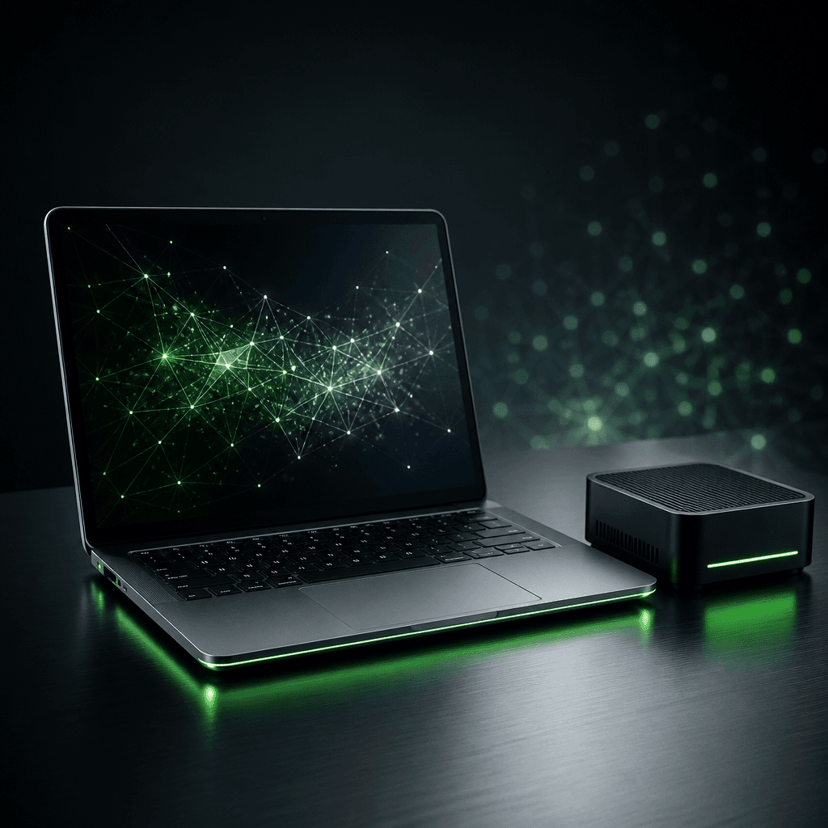
Nvidia just pulled back the curtain on its first wave of RTX Spark-powered machines at IFA 2026, and the pitch is simple: run serious AI models locally, no cloud required. Laptop and mini PC makers lined up alongside Nvidia to show off the new silicon, marking what could be the real starting gun for the so-called AI PC category that chipmakers have been teasing for two years.
Nvidia just gave the world its first real look at machines built around the RTX Spark chip, and it did it on a big stage. At IFA 2026 in Berlin, one of the tech industry's largest consumer electronics showcases, Nvidia rolled out laptops and mini PCs from multiple hardware partners, all built around silicon designed for one specific job: running AI models locally, right on the device sitting on your desk, according to Wired.
That's a notable shift in framing. For the last couple of years, most consumer AI experiences, from chatbots to image generators, have leaned on cloud servers to do the heavy lifting. Your laptop was basically a fancy window into someone else's data center. RTX Spark flips that script, at least for a chunk of the workload. The chip is designed to handle inference and other AI tasks on-device, which means faster response times, better privacy since your data doesn't have to leave the machine, and less dependence on an internet connection to get useful AI features working.
The timing lines up with a broader industry scramble. Apple, Microsoft, and Qualcomm have all been chasing their own version of the 'AI PC,' baking neural processing units into chips and marketing laptops around on-device AI capability. Nvidia's move suggests the company isn't content to just supply the GPUs that power AI in the cloud, it wants a seat at the table for the machines sitting on your desk too. That's a meaningful expansion for a company whose fortunes over the past few years have been overwhelmingly tied to data-center demand.
Details on exact specs, pricing, and battery performance are still thin, which isn't unusual for a first showing at a trade show like IFA. What's clear is that Nvidia brought multiple partners to the table rather than launching a single reference design, a sign it's trying to seed the market broadly rather than control the hardware end-to-end the way some rivals do. That approach mirrors how Nvidia has historically worked with OEMs on its GeForce gaming laptops, letting partners handle industrial design and branding while Nvidia owns the silicon and software stack underneath.
The bigger question is whether RTX Spark machines can actually deliver AI performance that feels meaningfully different from what's already possible on existing hardware. Consumers have heard the 'AI PC' pitch before, and plenty of reviewers have pointed out that many on-device AI features so far amount to marginal improvements rather than must-have capabilities. If RTX Spark can run larger, more capable models locally, things like more sophisticated local chatbots, real-time video processing, or offline creative tools, that could be the differentiator that actually moves units.
For now, industry watchers will be looking at a few concrete signals in the coming months. First, which laptop and mini PC makers commit to RTX Spark designs beyond the initial IFA showcase, and how many SKUs actually ship. Second, real-world benchmarks once these machines land in reviewers' hands, particularly around battery life, since running AI workloads locally tends to be power-hungry compared to offloading to the cloud. Third, pricing, since AI-capable silicon tends to carry a premium, and it's an open question whether consumers will pay extra for capability many aren't yet using regularly.
Nvidia's stock and reputation have ridden the AI wave about as far as any company in tech, driven almost entirely by data-center GPU sales to companies like OpenAI and hyperscalers building out AI infrastructure. Pushing into consumer AI PCs is a logical next chapter, extending the same underlying technology into a market Nvidia hasn't dominated the way it has enterprise AI compute. Whether RTX Spark becomes the next big consumer hardware category or just another entry in the crowded AI PC conversation will depend a lot on what ships in the coming quarters, and whether it actually feels different to use.
The RTX Spark reveal is less about a single product and more about Nvidia staking a claim in the next phase of the AI hardware race, one that plays out on desks and laps instead of in server racks. If the promise of fast, private, on-device AI actually holds up once these machines hit reviewers' hands, RTX Spark could become the reference point every other chipmaker gets measured against. If it doesn't, it risks becoming another AI PC buzzword that consumers shrug off. Either way, the coming months of benchmarks, pricing reveals, and OEM commitments will tell us a lot more than a trade show stage ever could.