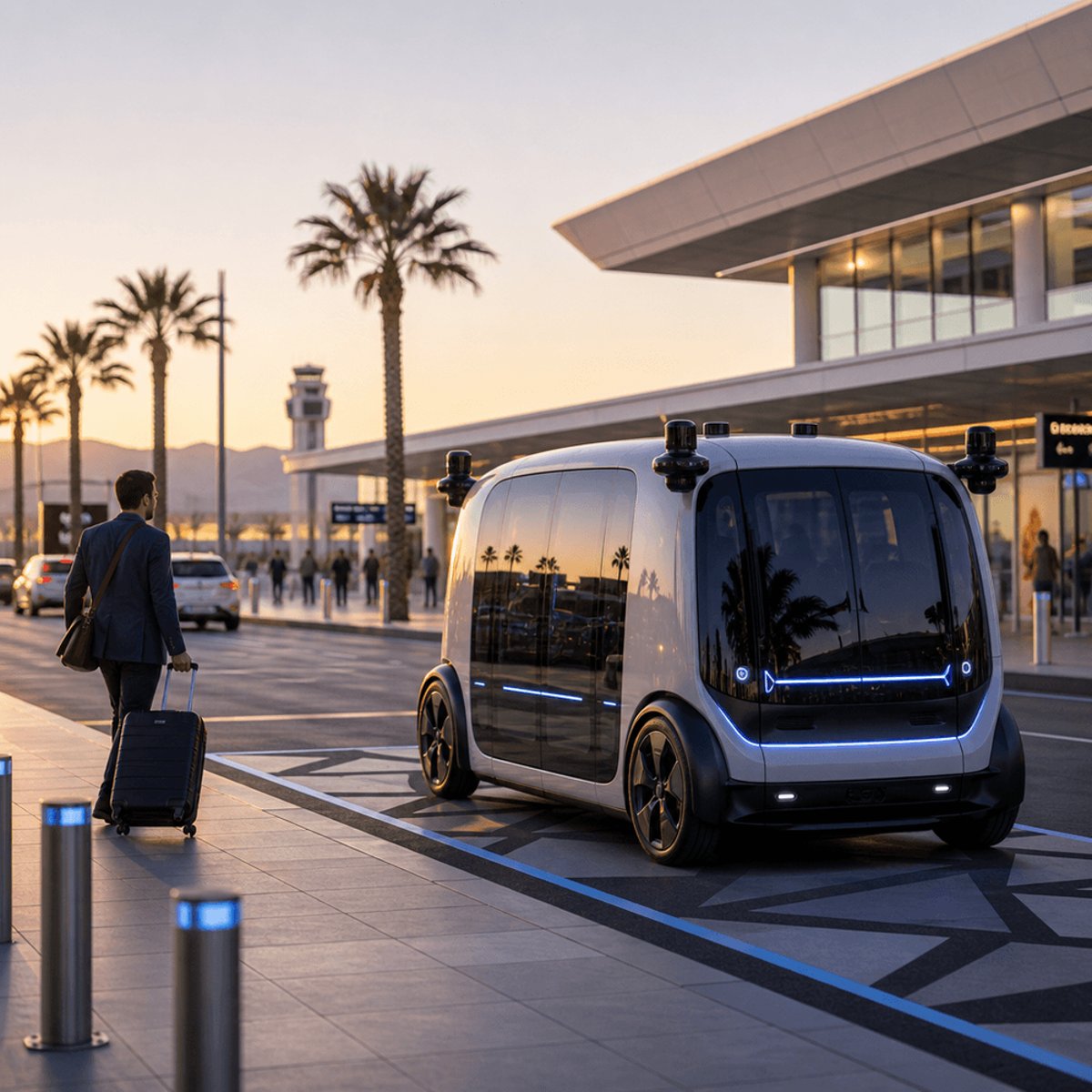
Amazon's self-driving unit Zoox just planted its flag in one of the most lucrative corners of the ride-hailing business: airport pickups. The company is rolling its robotaxi service out to Las Vegas's Harry Reid International Airport, according to TechCrunch, just weeks after it started actually charging riders for trips. For a company that's spent years testing in closed loops, this is the moment it starts looking like a real business.
Zoox just made its most consequential move yet in the robotaxi wars. Amazon's self-driving subsidiary is bringing its purpose-built autonomous vehicles to Las Vegas's Harry Reid International Airport, according to TechCrunch, a destination that ride-hailing companies fight over because of how much money flows through it every single day.
The timing isn't random. Zoox only recently flipped the switch on charging riders for trips, a milestone that separates a company running a demo from one actually running a business. Going from free pilot rides to a paid airport route in the span of weeks signals that Amazon is done tiptoeing and ready to push Zoox toward commercial scale.
Airports matter more than almost any other pickup point in ride-hailing. They're high-frequency, high-dollar, and packed with travelers who don't care whose badge is on the car door as long as it shows up on time. That's exactly why Uber and Lyft treat airport queues as prime real estate, and why Waymo, owned by Google parent Alphabet, has been aggressively pushing into airport service in cities like Phoenix. Zoox muscling into Las Vegas puts it on a collision course with both the incumbents and its most advanced robotaxi rival.
Las Vegas itself is a smart proving ground. The city runs on tourism, its streets are wide and relatively predictable compared to dense urban cores like San Francisco, and it already has a cultural appetite for autonomous novelty, from Vegas Loop tunnels to self-driving shuttle experiments on the Strip. Zoox has been testing there for a while, but folding the airport into its live, paying-customer service is a different tier of commitment.
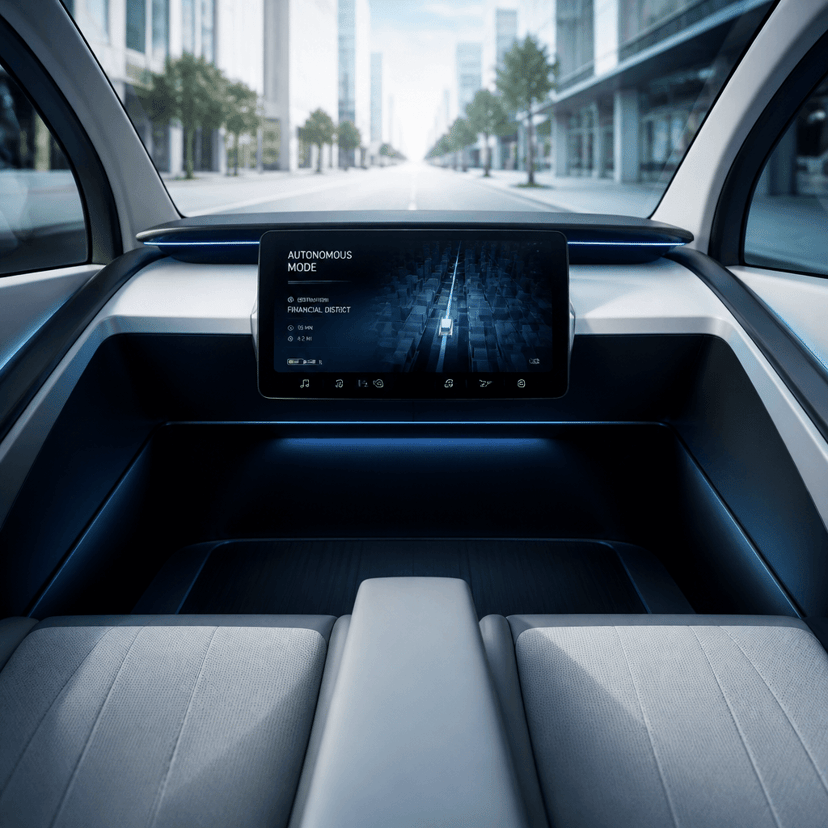
Zoox's vehicle itself remains its biggest differentiator. Unlike Waymo's retrofitted Jaguars or Cruise's modified Chevy Bolts, Zoox built its car from scratch with no steering wheel and seating that faces inward, a bet that a bespoke autonomous vehicle design will eventually beat retrofits on cost and rider experience. Amazon acquired Zoox back in 2020 for roughly $1.2 billion, and the company has spent the years since in heavy testing mode across Austin, San Francisco, and Las Vegas before finally starting to charge fares.
The airport expansion also says something about how Amazon is thinking about Zoox inside its broader empire. This is a company that already runs one of the most sophisticated logistics networks on the planet, and slotting a robotaxi fleet into an airport pickup zone is as much a test of operations and scheduling software as it is of self-driving tech. If Zoox can nail the chaotic curb-side choreography of an airport, that's a strong signal it can handle dense urban routes too.
Competitively, the pressure is rising fast. Waymo has already logged millions of paid rides and keeps adding cities. Tesla has been promising its own robotaxi rollout tied to its Full Self-Driving software. Cruise, once GM's flagship autonomous bet, pulled back sharply after safety setbacks, leaving an opening that both Waymo and Zoox are racing to fill. Every new city and every new use case, like airport service, becomes a data point investors and regulators use to judge who's actually ready for prime time versus who's still finding their footing.
What happens next in Vegas will be worth watching closely. Does Zoox scale its fleet size quickly to meet airport demand, or does it start small and cautious the way it has in other markets? Does Amazon start bundling Zoox rides with other services, the way it's woven Prime into seemingly everything else it touches? And how do human safety drivers, regulatory oversight, and rider trust hold up once the cars are handling one of the most unpredictable environments in ride-hailing: an airport pickup lane at rush hour, with impatient travelers and tight timelines. Zoox has cleared the first hurdle by charging money. Now it has to prove it can handle the crowd.
For riders, Zoox landing at Las Vegas's airport means one more option competing for their business the next time they land and need a ride. For the industry, it's a clear signal that Amazon isn't content to let Waymo run away with the robotaxi race, and that airport service, long dominated by Uber and Lyft, is now squarely in the crosshairs of the self-driving crowd. The real test starts now: can Zoox handle the chaos of a live airport curb at scale, day after day, without the hiccups that have tripped up rivals before it.